Why Jean Batthany Thinks Leaders Should Practice The Art Of The Pause
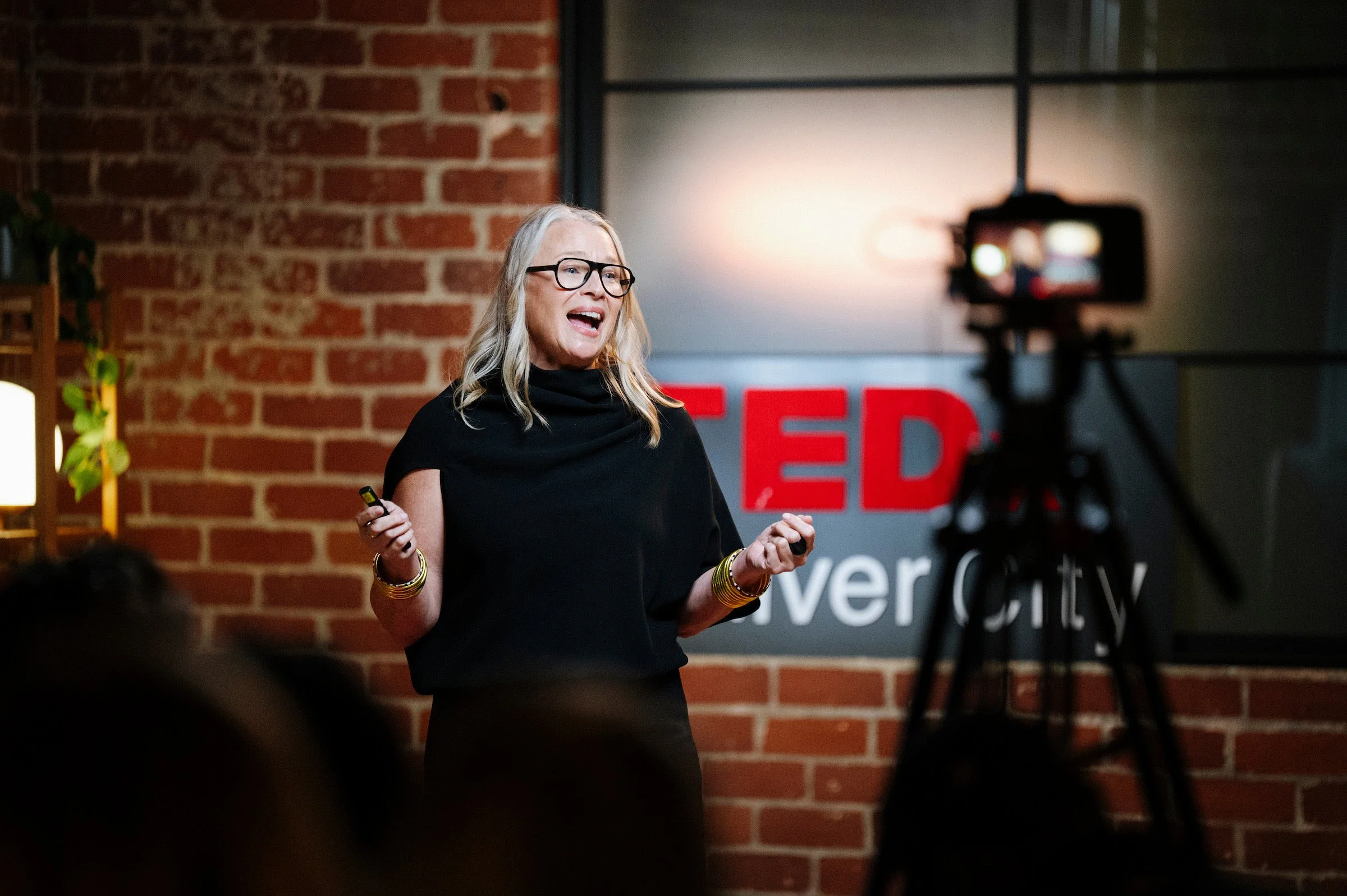
Jean Batthany, Founder of The Art of the Pause | Hannah Arista Photography
Jean Batthany spent thirty years climbing to the top of the creative industry. Then she lost everything in a single year — and built a philosophy that may be the most important idea in business that no one is actually practicing.
There is a number that should stop every leader in their tracks.
An estimated 12 billion working days are lost every year to depression and anxiety, at a cost of US$1 trillion annually in lost productivity — according to the World Health Organization. That staggering figure does not stem from laziness or disengagement. It stems from a system that has been extracting human creativity and energy at a rate the human nervous system was never designed to sustain.
And yet the dominant corporate response to this crisis is, almost universally, to ask people to be more resilient. To push through. To do more with less. To treat the symptoms while doubling down on the cause.
Jean Batthany spent thirty years inside that system, rose to the very top of it — Chief Creative Officer at Walmart, following tenures at Disney and DDB — and lost almost everything in a single calendar year. Her role was eliminated in a restructuring. Her father died. Her divorce was finalised. What she found on the other side of the loss is now a philosophy, a platform, and a direct provocation to every leader who believes the path to better output runs through more pressure rather than less. She calls it The Art of the Pause.
"We are in a burnout epidemic," she told me. "The reported burnout rate is 65%, an all-time high and rising — and for Gen Z it's probably closer to 75%."
The reason, she argues, is structural rather than personal. "We're consuming more than we create. We're too attached to our phones, to dopamine, to toxic productivity. But the deeper issue is that we literally cannot be creative when we're burnt out. And the science behind the fact that we cannot be in creative flow when we're afraid — that to me is really crucial. When we're existing in a lot of these corporate cultures, when we're afraid, we're not going to put our neck out and do something innovative."
Batthany is not describing a wellness problem. She is describing a creative output problem — and she has the career scars to prove the distinction matters. The idea she arrived at through her own forced pause is something she calls ‘regenerative creativity’, a framework drawn from regenerative farming principles. "If you look at the simplicity of regenerative farming," she explained, "there are seasons where the soil lies fallow, and that will be followed by seasons of exponential growth. Where is that time to lie fallow, so our creative ground is more fertile? That's the pregnant pause — where the idea is forming that you cannot see yet."
The farming analogy is not decorative. It reflects a hard truth about how creative cultures actually operate. "A lot of corporate cultures are extracting creativity through fear and scarcity," she said. "Faster, faster, faster — more campaigns, more widgets, more performance marketing, more decisions. And it's sucking the life and the creativity and the joy out of people in the process."
What she is proposing instead is a different operating model entirely. "To live a creative life — and to me that is successful — it means a life of curiosity and time to wonder and wander and play. And so the question becomes, how do you create the conditions for curiosity as a basis, so ideas will flow with abundance?"
The business case is not a matter of opinion. "Creativity is in the top three skills needed for the future — not creativity with a capital C, but the ability to create, to problem-solve, to innovate," she said. "But the problem is we can't be creative when we're burnt out." The trillion-dollar WHO figure is the invoice for that failure, written at civilisational scale.
For leaders, Batthany's message is concrete. "In the time off, I realised that what was really doing me in mentally, physically, spiritually was the lack of time and space to be proactive versus reactive. Everything was react, react, react, decision, decision — but where is the headspace to have big, beautiful ideas? To make mistakes and try and ask what if and think ten steps ahead, as opposed to in the quarter for the quarter?"
She is clear-eyed about what this requires from organisations. It is not a meditation app or a mental health day tacked onto the calendar. It is a redesign of how work is structured — specifically, how much of each person's time is genuinely protected for the kind of thinking that cannot happen under deadline pressure. "Creating the conditions for creativity is how you start to talk about it," she said. "Leave people and places better than you find them. Create with people, not for people. Build diversity of thought. Build guilds of partners."
The principle she returns to most insistently is also the one most antithetical to how most organisations actually operate: "Rest is radical. It's a radical idea to do nothing. And when I say do nothing, I don't mean completely stop — it's the act of consistent, short breaks and pauses, which have been proven to lighten our cognitive load, increase creativity, and boost productivity. Antithetical to what we've all thought. The grind, glorifying the hustle culture — that does not help you produce more. Actually giving yourself time to break and rest and refuel and recover drives better outcomes."
Three years after losing her job, Jean Batthany walks the beach every morning. She is still doing creative work — fractional engagements, campaign development, the ideas still coming with the same energy they always did, perhaps more. "I still get high off of ideas," she said. "And like really having enough time to still walk and go to the gym and sweat in the sauna and plan trips. Every day feels successful. And I'm so grateful."
The leaders reading this are not all on the verge of losing their jobs. But the trillion-dollar burnout bill belongs to all of us — to the organisations that keep asking depleted people to produce at full capacity, and to the people who keep saying yes because the culture has made stopping feel like failure.
Batthany's challenge to the industry is direct: "Instead of cultures where we're extracting creativity through fear and scarcity, how do we create the conditions for curiosity? Because that's what's going to save us from the current state."
The most radical thing a leader can do right now is learn to stop and rest.
Not because stopping is easy — for high achievers it may be the hardest thing they ever do.
Because it is the only way in which real creativity actually grows.
At Conspiracy of Love, we help changemakers tell their most powerful stories — stories that inspire action, build movements, and create lasting impact.
Find out more about our Values-Driven Storytelling and GPS to Purpose workshops, and how we can help you scale your impact.