The Generosity Of Strangers Built Wikipedia. At 25, It Needs A New Generation
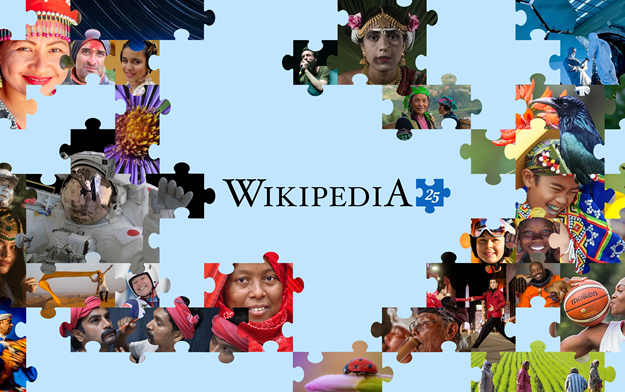
Wikipedia turned 25 this year | Wikipedia
Ask an AI assistant almost any question and the answer arrives instantly, confident and frictionless. What you never see is where it came from. A passage written after midnight by a librarian in Tokyo. A fact checked by a doctor in India who tracked COVID-19 for the world. A line argued over by strangers across three continents who will never meet. Most of it traces back to a single place. You just don't get told.
That place is Wikipedia, and this year it turned 25.
For a quarter of a century, the largest reference work in human history has run on the thing the modern internet has all but abandoned: the unpaid generosity of strangers. Sixty-five million articles. More than 300 languages. Nearly 250,000 volunteer editors. Close to 15 billion views a month. It is the only site among the world’s ten most-visited that is run by a nonprofit. And almost no one stops to ask how it got there.
That question is exactly what worries the people who keep it alive. "A lot of folks think that content just appears by magic, and they don’t know that there is an incredible community of giving and generous humans that spend their time adding content to the platform," says Anusha Alikhan, Chief of Communications at the Wikimedia Foundation, the nonprofit behind Wikipedia. The 25th-anniversary campaign she helped lead was built to make those humans visible before the world forgets they exist.
Bigger Than The Internet
Zack McCune, the Foundation’s Director of Brand, frames the stakes in almost cosmic terms. "We're bigger than the internet. Our mission is bigger than the internet," he says. The goal, in his telling, is "to give the whole world all of the human knowledge that has ever existed in one place, in every language, for free. Forever."
The irony is that Wikipedia has never been more essential and never more invisible. "Wikipedia has now become the backbone of knowledge on the internet," Alikhan says. It powers search engines, voice assistants and generative AI, and ranks among "the highest quality data sets used in training LLMs right now." But that success is quietly hollowing it out. As people read Wikipedia’s words inside chatbots and search results, fewer come to the site itself, and fewer still stay to become editors. Readership is slipping. Editor numbers are flat. Meanwhile the servers strain under the weight of AI companies scraping the encyclopedia in bulk, on a roughly $180 million annual budget funded mostly by donations of between two and eleven dollars.
Alikhan’s message to the technology industry is blunt. AI firms "should not eat their own tails," she says, they should give back to the platform they are "deriving value from." Some have started to. Companies including Google, Perplexity and ProRata now pay for Wikimedia Enterprise, the Foundation’s commercial service. Shamefully, far more do not.
What keeps Wikipedia trustworthy is the same thing that keeps it poor by design. Roughly nine in ten donations are small. There is no billionaire benefactor, no quiet arrangement that buys a flattering edit. "We want to keep our model itself independent from any influence from major donors, people that may want to influence content on the platform," Alikhan says, a deliberate independent model that makes its neutrality possible.

Anusha Alikhan, Chief Communications Officer, and Zack McCune, Director of Global Brand, at the Wikimedia Foundation | Wikipedia
Knowledge Is Human
To carry that idea to the world, the Foundation partnered with Kin, a creative company operating at the intersection of innovation and culture. The result, launched under the banner "Knowledge Is Human," opened with Wikipedia’s first-ever anthem film and grew into a documentary series following volunteer editors from Nigeria, Tokyo, Brazil, the U.K. and the U.S. Every frame was assembled from footage the community itself had already contributed. "Everything that we used to make the film and weave this narrative together was created by the community," says Kwame Taylor-Hayford, one of Kin’s co-founders, the medium quietly proving the message.
For Sophie Ozoux, Kin’s other co-founder, the creative challenge was specific. Wikipedia is meant to look plain, neutral, stripped down. How do you make a deliberately lo-fi institution feel like a movement worth joining, especially for an audience that grew up in a world where Wikipedia already existed? "This idea of starting a movement, making people care about protecting human knowledge was very interesting," she says.
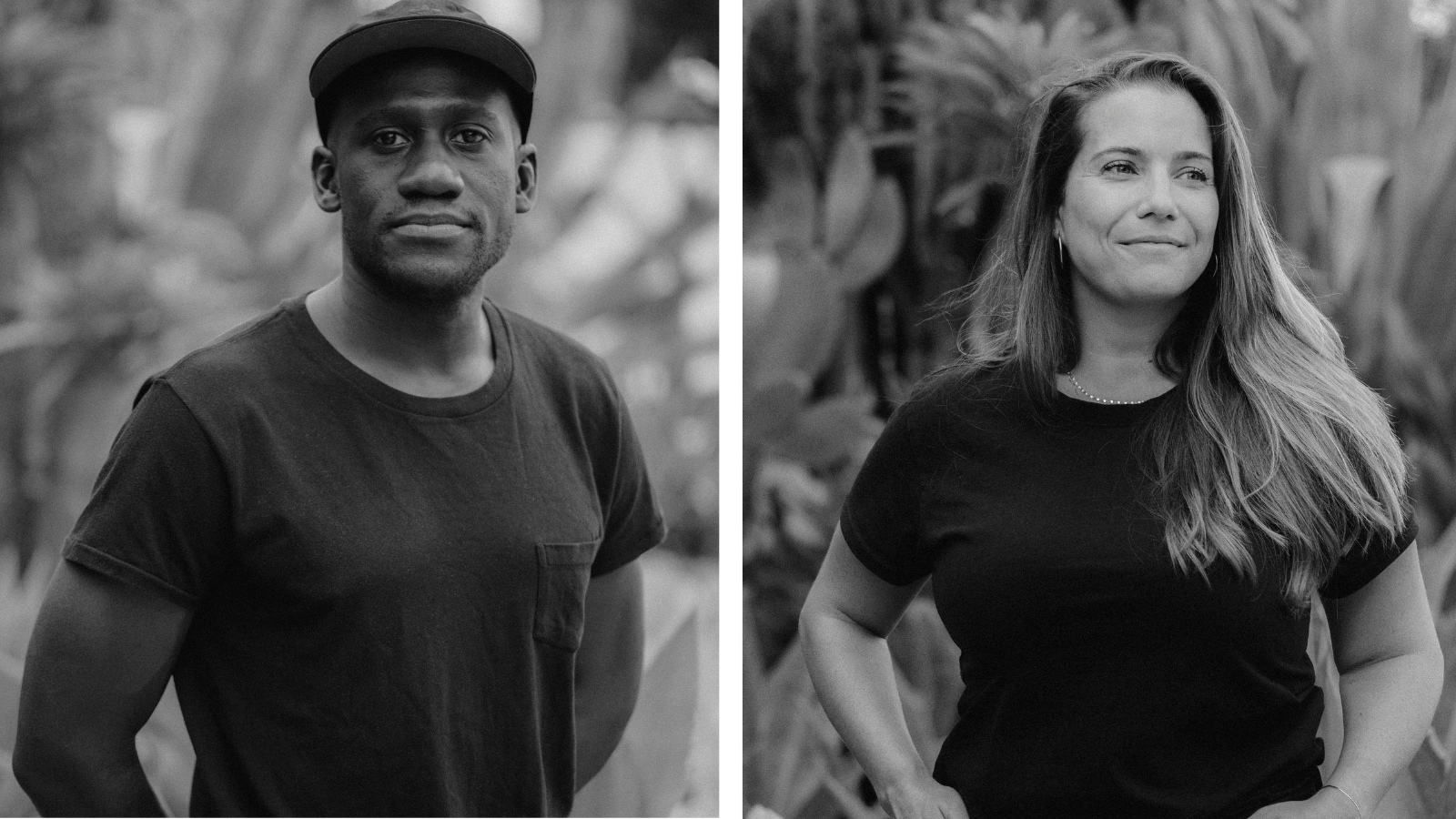
Kwame Taylor-Hayford and Sophie Ozoux and , co-founders of Kin | Kin
The Generational Bet
That generation is where the future will be won or lost. McCune's research found that people under 24 have the lowest awareness of Wikipedia of any group, yet care deeply about the exact things it stands for, including purpose, collaboration and craft. So the campaign recast the anonymous editor as something aspirational. "We can show basically the Wikipedia editor as a digital craftsperson, because they super are," McCune says. "They're driven by passion, they're attentive to detail." The logic is unsentimental. "Wikipedia basically will succeed if we can find the next generations who will power it."
Underneath the strategy sits a larger argument about what kind of internet is still possible. Wikipedia, Alikhan notes, is "one of the last platforms that also shows that consensus is possible, where people from all different backgrounds and perspectives and political persuasions actually shape and edit this content itself." In an age tuned for outrage, a place built on patient agreement is its own quiet radicalism.
Taylor-Hayford puts it in human terms. In a world "that's increasingly becoming very small," where politics turn inward and exclusionary, he sees Wikipedia as "the ultimate example of what the best of us can create, and not just create, but also sustain together." His conclusion is simple. "We need so much more of this in the world."
The Foundation is careful about who it lets near that reputation. Wikipedia partners with brands, streetwear labels, outdoor companies, tech platforms, but screens each one against a single test. "When we evaluate inbound brand partnerships, we do it through how true will it be to our values," McCune says, weighing whether a collaboration is inclusive, international and, above all, neutral. The rare rejections are telling. The one that still stings, he admits, was an episode of Netflix's Lupin that showed its hero hacking Wikipedia.
There is a leadership lesson buried in all of this, and it has nothing to do with growth hacks. The most durable things humans build are rarely owned by anyone. They are tended, by many hands, over long horizons, for reasons that don't show up on a balance sheet.
Soon the people who do that tending will gather in Paris, a thousand of them, at the Foundation's annual Wikimania conference, translators, scientists, retirees and teenagers debating how to close knowledge gaps and keep the record honest. They will argue, and laugh, and reach consensus, and go home to keep editing. The bet behind "Knowledge Is Human" is that the rest of us, watching, might finally recognize what we've been taking for granted, and decide it's worth protecting for the next 25 years.
At Conspiracy of Love, we help changemakers tell their most powerful stories — stories that inspire action, build movements, and create lasting impact.
Find out more about our Values-Driven Storytelling and GPS to Purpose workshops, and how we can help you scale your impact.