The Edison Awards Are Announcing Their 2026 Finalists And Showing Where Innovation Is Headed Next
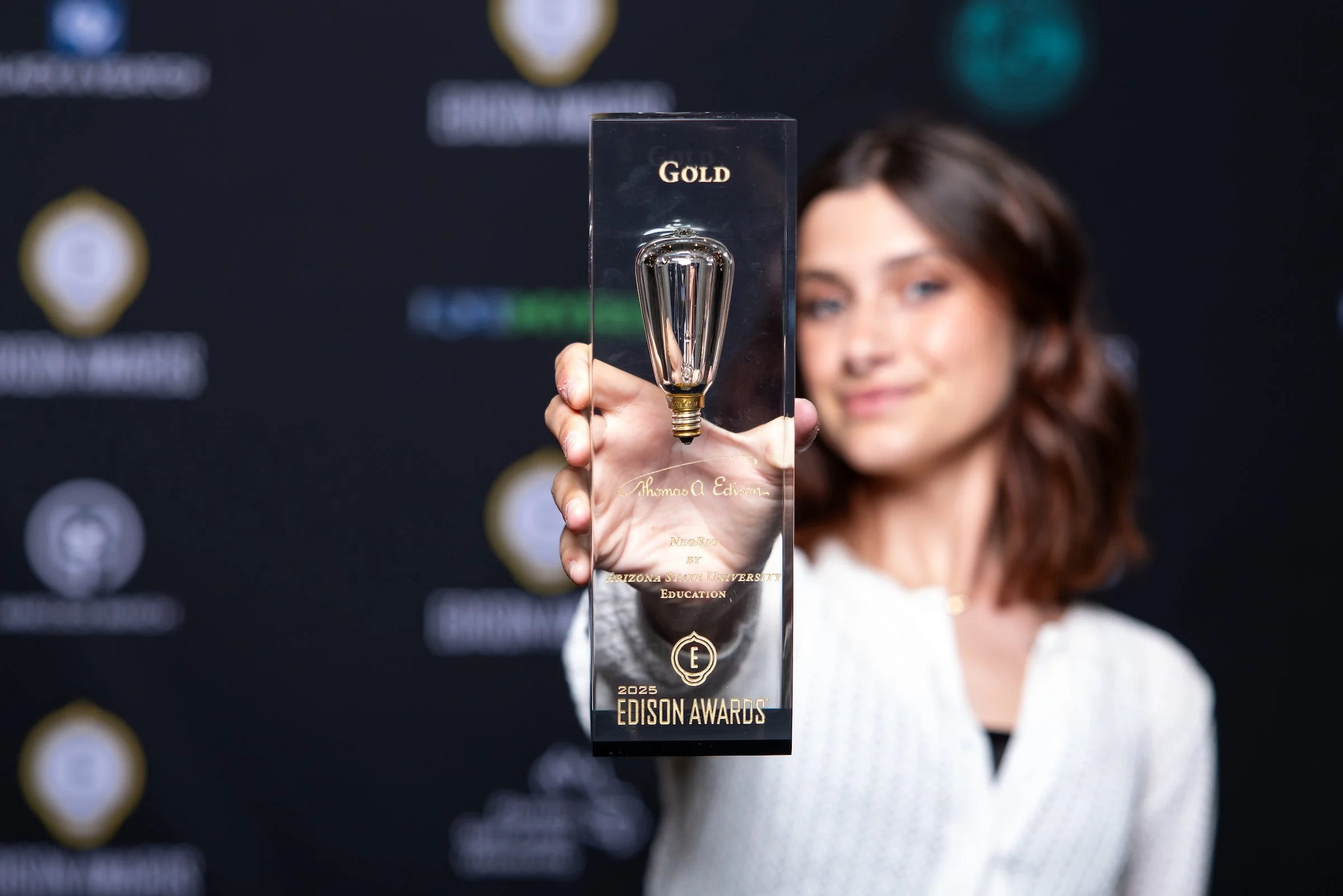
Fort Myers, FL: 2025 Edison Awards | Alyssa Ringler
What if the real test of innovation isn’t how futuristic it sounds, but how quickly it improves life for real people?
That’s the idea behind the Edison Awards, often called “the Oscars of Innovation.” Not because they’re flashy, but because they’ve become one of the clearest signals of what innovation looks like when it moves past hype and into the real world.
Today, the Edison Awards announced the 2026 finalists, selected from thousands of global submissions and evaluated by an independent panel of senior scientists, engineers, designers, and industry leaders. More than 30% of this year’s finalist class comes from health and medtech, materials science, and climate and energy resiliency — categories that increasingly feel like the front lines of progress.
The Edison Awards were founded in 1987, and nearly four decades later, they’ve become a respected proving ground for market-ready innovation. At the center of the platform is Frank Bonafilia, Executive Director of the Edison Awards, who has helped shape the program into a place where invention meets real-world adoption.
“For the last 39 years, the Edison Awards has served as a platform or really driving force of human progress,” Bonafilia says. “We look around the world for new products and services that truly have an impact.”
The standard is straightforward.
“To be clear, they’re not just cool concepts,” Bonafilia says. “They have to be in the market to win an Edison Award.”
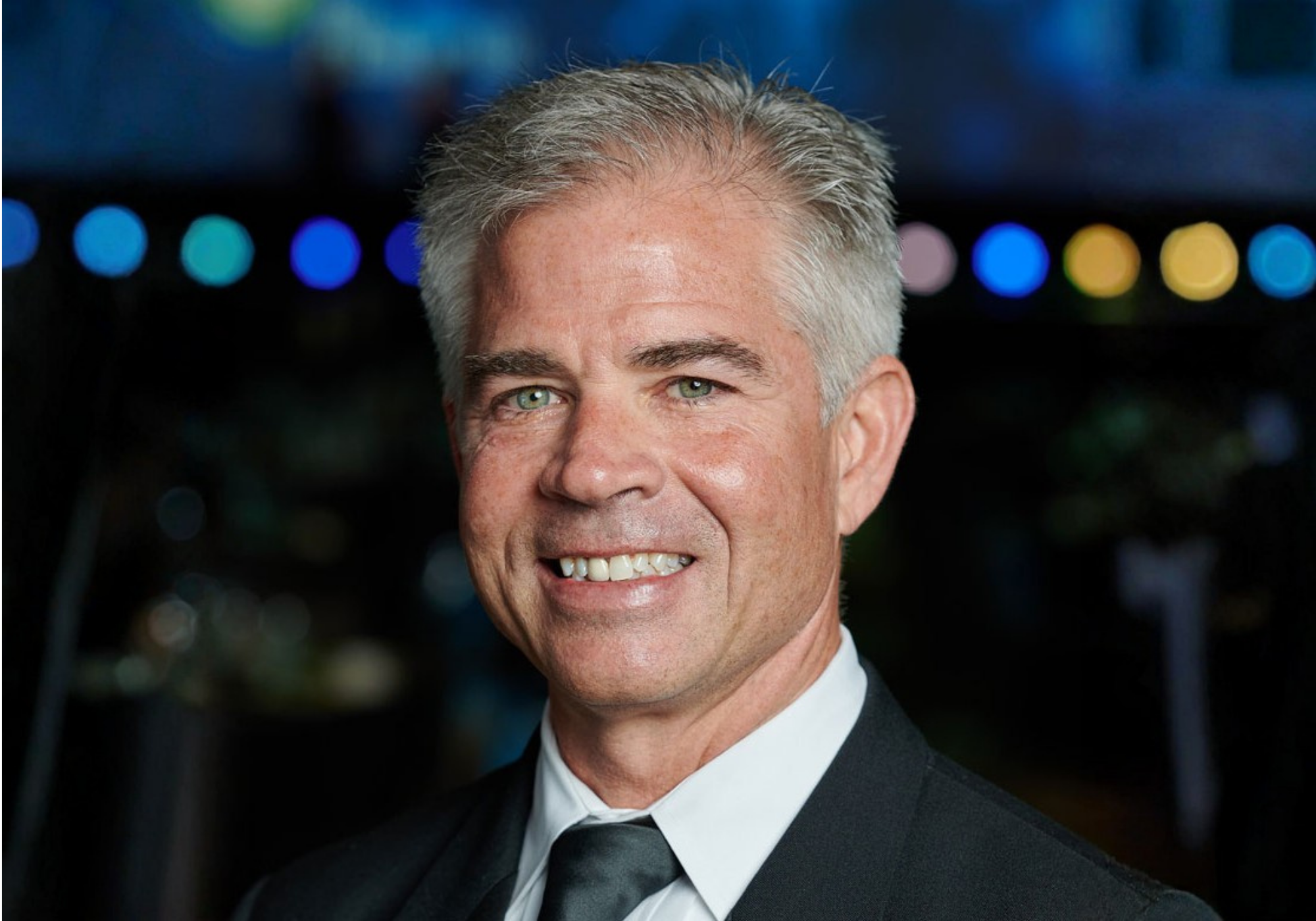
Frank Bonafilia, Executive Director of the Edison Awards | Edison Awards
A global snapshot of what comes next
Bonafilia says that usefulness is no longer concentrated in a single region.
“Innovation is not just happening in Silicon Valley anymore,” he says. “We’ve seen a lot happen in Southeast Asia. Certainly the African market continues to grow. The Middle East is seeing a lot more innovation in that space.”
The breadth of what the program recognizes is visible across the Edison Awards 2025 Finalists, as well as the work supported through the Edison Awards 2025 Fellows.
When innovation looks like access
One of the strongest signals in this year’s finalists is how much innovation is being built for reach — not just performance.
Bonafilia points to the Clara Lionel Foundation’s mobile health clinic, designed to bring care directly into communities, especially those hit hard by hurricanes and natural disasters.
“Doctors used to visit people at their homes,” he says. “And now we’re seeing doctors visit patients in neighborhoods and home through this.”
In those situations, healthcare depends on basics that many people take for granted.
“When an island gets ravaged through a storm, they don’t have access to clean water. They don’t have access to power,” Bonafilia says. “So this was a solution that our judges really felt had an impact on humans in that region.”
He also highlights the Symani surgical system, a remote surgical platform designed to help doctors reach areas that cannot always be addressed through conventional imaging — with major potential in cancer care and more outpatient procedures.
“It will have a huge impact, really for cancer patients,” Bonafilia says.
Climate innovation built for the real world
Bonafilia is drawn to climate innovations that feel less like messaging and more like infrastructure — designed to work in places where systems are fragile.
One example is SolarSPELL from Arizona State University, created for regions without reliable internet access. What stood out for the judges was not just connectivity, but what that connectivity enabled.
“Providing someone with Wi-Fi or access is one thing,” he says. “But having that curated content that actually creates, educates a new workforce based on the needs of that community, that’s a really big deal.”
He also points to next-generation materials innovation through cellular agriculture, where companies rethink what plant-based materials can be and how efficiently they can be produced.
“There’s a company called Galy,” Bonafilia says. “They look at everything that’s made of plant cells, and they believe that if we looked at it through that lens, we can do it faster, more efficient, with less resources.”
Their first focus is cotton — a crop known for how water-intensive it can be.
“Cotton absorbs so much water,” he says. “So how could you create cotton that doesn’t take on that water?”
And in food innovation, he highlights The Better Meat Co. which uses microfungi to create protein-rich food without livestock.
“The ability to do it without the environmental impact of a cow, there’s some real potential there,” Bonafilia says. “Think about all the places in the world who can do this now, that don’t have the resources to have livestock.”
Why recognition can be more valuable than a check
The Edison Awards do not hand winners a cash prize. But Bonafilia argues that recognition often unlocks something more powerful — credibility, partners, and momentum.
“Our winners don’t get a check from us,” he says. “But our winners have secured billions of dollars in funding throughout the Edison Awards history.”
That is by design. Bonafilia describes the Edison Awards as an ecosystem where startups and global companies can connect, compare notes, and build what comes next.
“We’re not just a normal conference,” he says. “We’re an ecosystem of innovators that are coming together because they believe they can make the world a better place through invention, through eventually innovation.”
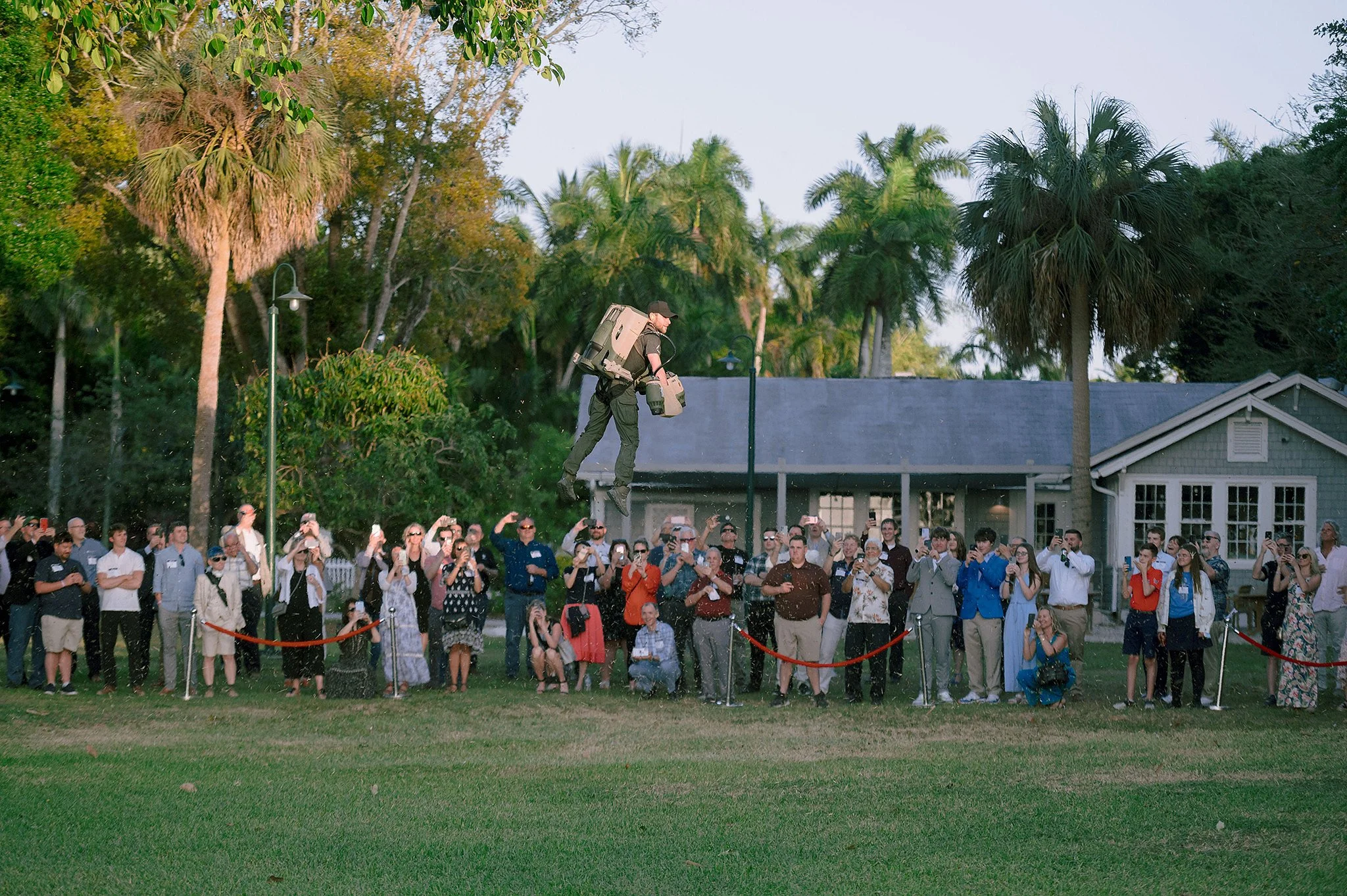
Innovators Showcase jetpack Launch Demo | Edison Awards
The partners behind the scenes
That ecosystem is supported by partners who bring real-world infrastructure and scale into the room. Bonafilia points to Babcock Ranch, a solar-powered community designed around resilience, and Black & Veatch, an engineering leader focused on what he calls “critical human infrastructure” like water and energy.
Bonafilia adds that companies like Cargill use the Edison Awards as a way to test what they’re building against the market — nominating innovations and getting third-party feedback from the judges and broader community.
“They love to nominate and get third-party feedback from that,” he says.
Storytelling is the missing link
Bonafilia believes innovation fails more often from invisibility than from lack of brilliance — and that storytelling is what turns a breakthrough into adoption.
“You can be the best engineers in the world,” he says. “But if you can’t get your product to market and tell that story, a lot of times it’s an idea on a shelf.”
He argues that the best innovations succeed when technical excellence and communication move together, not separately.
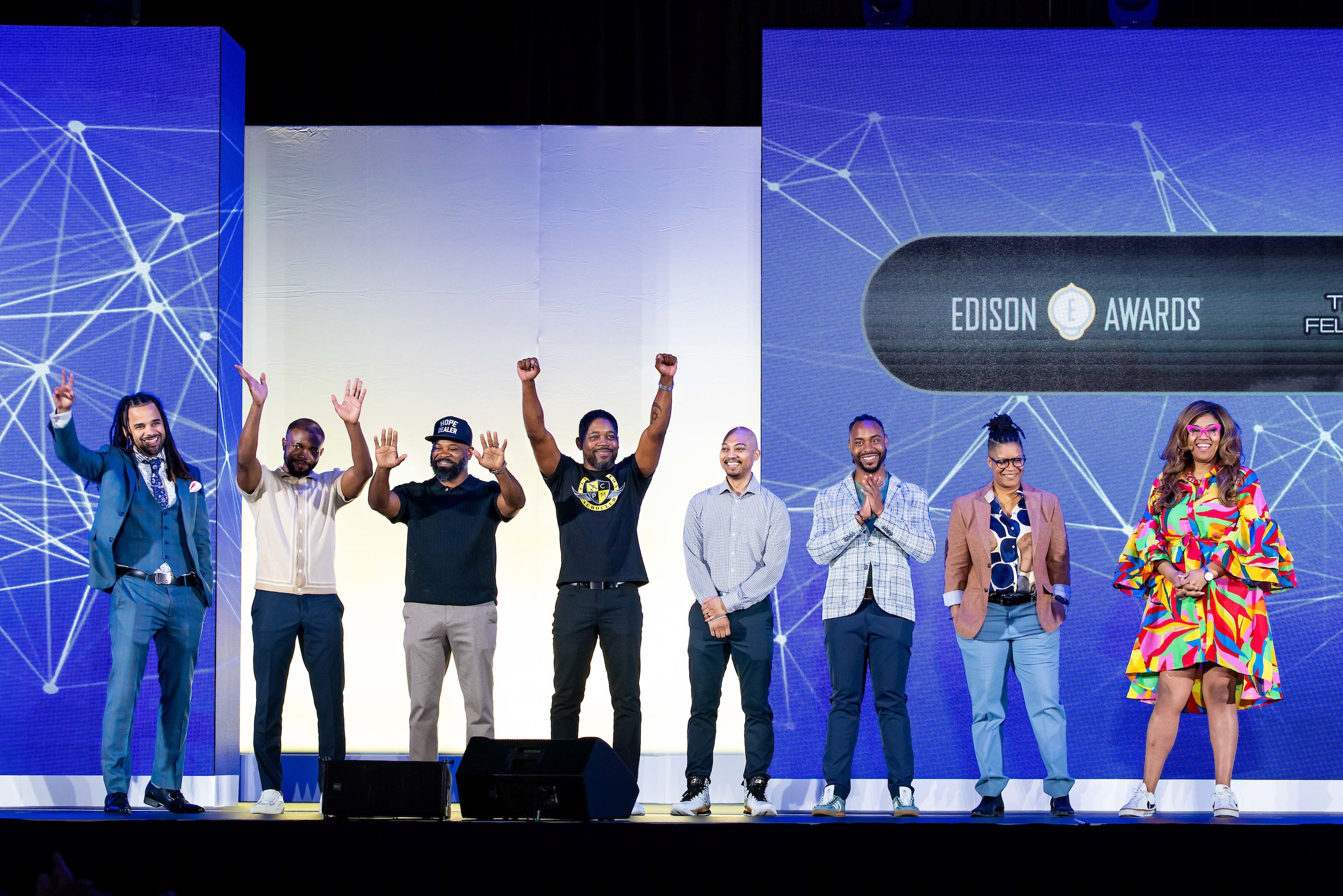
Fort Myers, FL: 2025 Edison Awards Meet the Innovators Forum | Alyssa Ringler
Recognition across generations
Each year, the Edison Awards also recognize Achievement Award honorees for lasting industry impact. Past recipients have included Steve Jobs, Elon Musk, Jensen Huang, Ted Turner, and Martha Stewart. Bonafilia confirms that NBA Commissioner Adam Silver has been named a 2026 Achievement Award honoree.
He also points to the Latimer Fellowship, inspired by Lewis Howard Latimer, whose contributions to patents tied to Alexander Graham Bell and Thomas Edison went unrecognized for generations.
“He was never recognized. He was never spoken of,” Bonafilia says. “So we created a fellowship to remove the barriers of Black and Brown geniuses leveraging the Edison platform.”
“Storytelling is a big part that they’ve never learned,” he adds.
What happens next
The Edison Awards return to Fort Myers, Florida, April 15–16, 2026, with a two-day innovation showcase, future-focused talks, and a black-tie gala where Gold, Silver, and Bronze winners will be revealed. Bonafilia notes that tickets are available for the daytime experience, including Meet the Innovators and the showcase, while the gala is reserved for winners. Details are available through 2026 Edison Awards Registration.
“If you really peel back the onion,” Bonafilia says, “the one thing that you’ll see with a lot of our winners is that they lead with love.” We can’t wait to see what they create next.
At Conspiracy of Love, we help changemakers tell their most powerful stories — stories that inspire action, build movements, and create lasting impact.
Find out more about our Values-Driven Storytelling and GPS to Purpose workshops, and how we can help you scale your impact.