How Opolis And StokedPlastics Are Reinventing Sustainable Materials Through Desirable Design
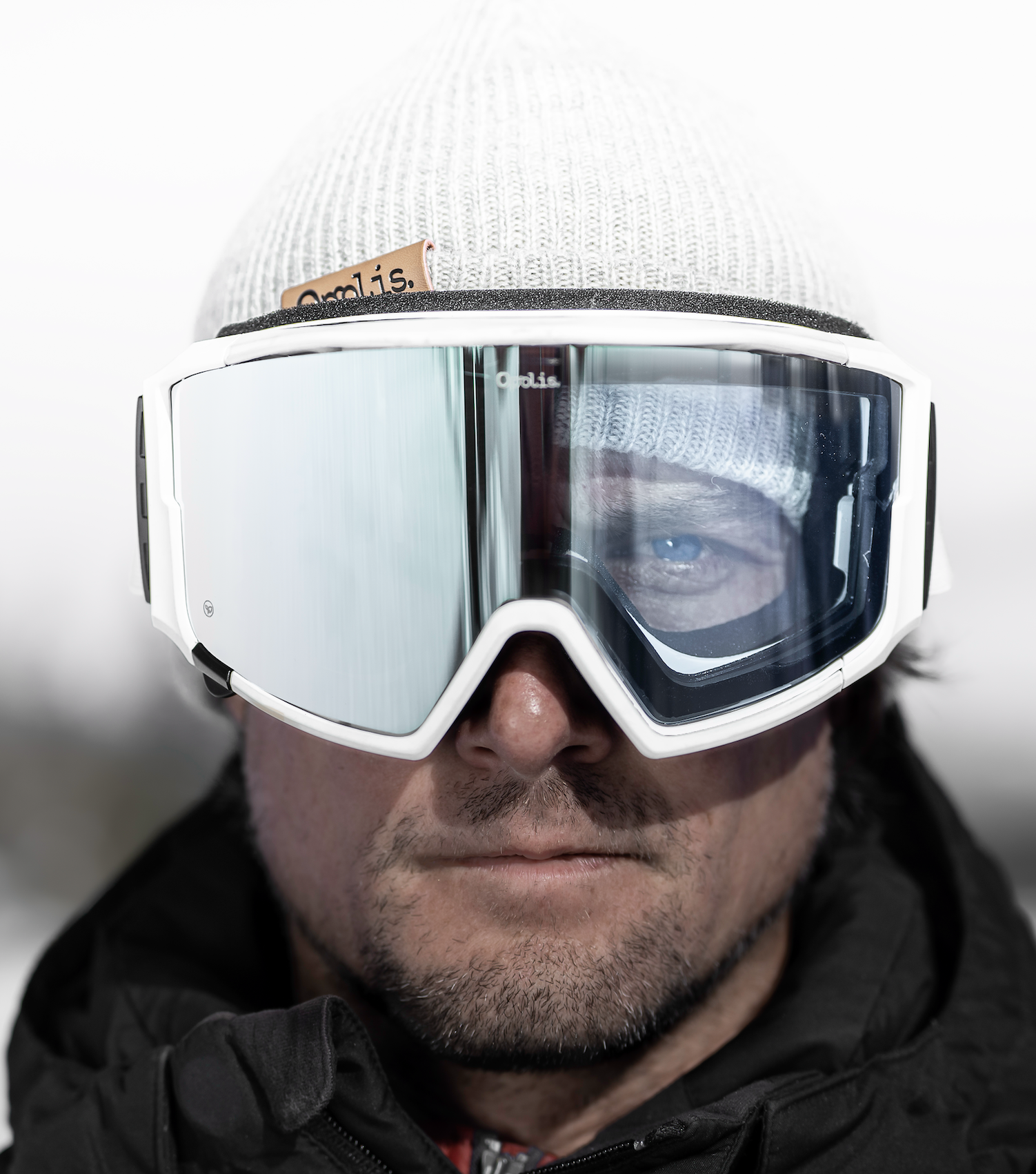
Opolis Ski Googles | cole franklin
What does it take to turn the most maligned material on Earth into something people actually want to wear?
For James Merrill, founder of Opolis and StokedPlastics, the answer started in a place few sustainability entrepreneurs begin. For more than a decade, he worked as a U.S. government contractor specializing in counter-terrorism, living across the Middle East, Asia, and Africa. His job was to identify communities most vulnerable to radicalization and recruitment. And over time, he noticed a pattern that kept repeating.
Merrill began seeing extremist groups “targeting communities and landfills and areas in which the local economies just didn’t exist.” In the places where families had the fewest options, he said recruiters could “dangle that carrot of cash,” offering money or long-term financial support in exchange for joining.
That connection collapsed two crises into one for him. “Not only is plastic ruining nature and getting into our bodies,” Merrill said, “but now it’s putting peaceful people at risk for violence, for heinous acts.” He describes that moment as the epiphany that pushed him from concern into action.
Even before leaving government work, Merrill started putting his own resources behind environmental advocacy. “I started working with organizations or NGOs that were focused on environmental advocacy,” he said, using hazard pay and per diems to sponsor cleanups and education programs. The goal was practical and immediate: put money into “these good people’s pockets,” and build pathways that made saying yes to environmental action easier than saying yes to coercion.
He did it everywhere he was posted. He started in Pakistan, Indonesia, Kenya, then Nigeria, then the Philippines. The effort scaled fast, especially around plastic bottles. Merrill said they collected so much that “we had to get a warehouse in Jakarta to put all the water bottles that were collected,” and what began as side work “snowballed into this thing.”
Eventually he made the leap. “It got to a point where I was like, okay, I need to focus on this,” he said. “So I left the U.S. government to really pursue this journey.” Merrill moved to Indonesia and went deep on the system behind the material. “I learned about plastic supply chains. I learned about plastic chemistry. I learned everything that I could,” he said, with the aim of building a model that could extract plastic through vulnerable communities, support them financially, and repurpose that waste into products people would actually want.
Eight years later, that model has become two tightly connected ventures. StokePlastic™ is the material innovation. Opolis is the consumer brand that proves the material can perform in the real world.
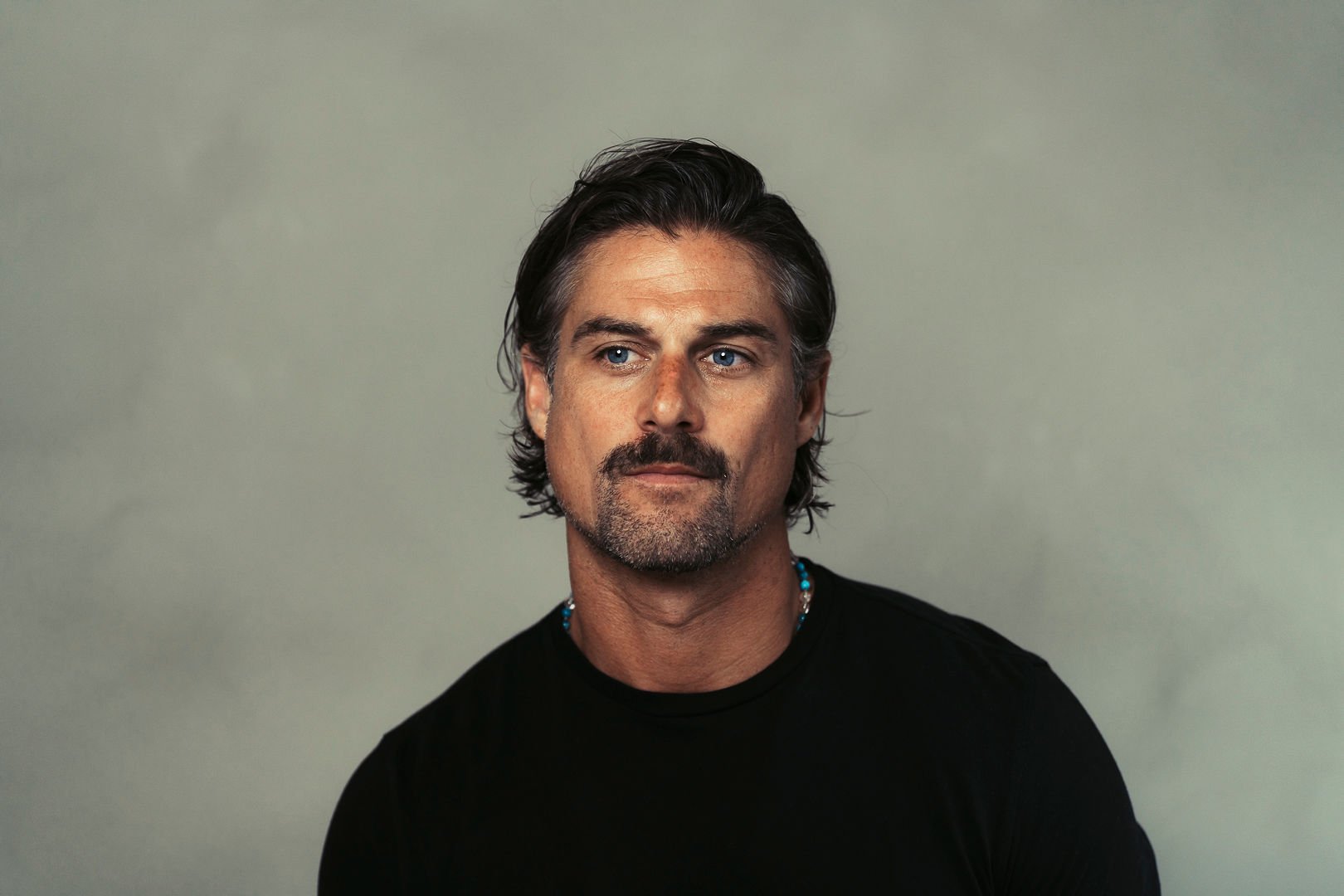
James Merill, Founder of StokedPlastics and Opolis | cole franklin
Why he called it StokedPlastics
Merrill chose the name because he wanted to reverse the emotional charge people carry around plastic. “The connotation with plastic is so negative,” he said. So he borrowed language from surf and outdoor culture, “this idea of stoked,” and attached it to what he believes plastic could become if it is sourced responsibly and redesigned with intention. The goal was “redefining what plastic actually could mean for us, these folks and the planet itself.”
The real breakthrough came when the team developed what Merrill called “the compound or the extender, the glue” that allows them to take “a water bottle out of the ocean,” rebuild it, and sell it back into products. But building the material was only half the fight. Getting brands to adopt it was the harder part.
“It was really difficult for us to get this into companies, into brands, and to actually adopt this product,” Merrill said. So they made a strategic pivot. “If we’re struggling to get it made by other people, let’s make it ourselves and put it into a brand that proves it out.”
That brand became Opolis.
Why Opolis exists at all
Opolis started as a skunkworks proof of concept. Merrill described making “really” compelling sunglasses and ski and snowboard goggles, designed not just to tell a sustainability story, but to show customers that recycled ocean-bound plastic could become something desirable.
When Opolis launched at Outdoor Retailer, Merrill said it led to introductions to buyers at REI, L.L. Bean, and Paragon Sports. “All of a sudden, we had a business,” he said. Today, Opolis is sold at REI, L.L. Bean, Paragon Sports, and the Yellowstone Club. The company also works with smaller brands including FARO Board Bags, Surfside Supply, Flytanium and United by Blue.
The traction matters because Opolis is not the endpoint. It is the evidence. Merrill sees it as the way StokePlastic™ earns trust and proves demand, even when the company is “running two startups at the same time,” which he admits is “kind of a nightmare.” It has also helped amplify what he believes is the bigger prize: scaling sustainable material innovation into the mainstream.
A Gore-Tex ambition for recycled plastic
Merrill’s goal is not just to build another responsible product line. He wants StokedPlastics to become an ingredient brand that signals verified sourcing and performance in the way Gore Tex does.
“We want StokedPlastics to kind of be like the Gore Tex of sustainable plastic,” he said. In practice, that means a finished product might carry a tag or emblem that tells customers the sourcing is legitimate, “verified,” and connected back to the communities doing the extraction work.
It is a bold ambition, and it depends on something that most sustainability businesses underestimate: supply chain scale.
Where the plastic comes from
StokedPlastics’ earliest supply chain was Indonesia. Merrill said they worked with the R.O.L.E Foundation, based around Bali, which he described as critical in building awareness around extraction, recycling, and upcycling.
But the needs changed. “We need so much plastic that working with local NGOs is no longer kind of feasible for us,” he said. To scale, the company moved into partnerships with larger collection networks.
Merrill said they now have exclusive partnerships with #Tide, “a global collection partner based out of Switzerland” with supply chains across Asia, and Ocean Material as another partner. Those partners, he said, help ensure extraction income stays tied to communities through salaries and local economic flow. As a result, much of their material now comes from the Philippines, Indonesia, and Thailand.
The most honest lesson from building a consumer brand
If StokedPlastics is the system, Opolis is the classroom.
Merrill said he originally wanted Opolis to lead with sustainability and education, helping people understand why the product mattered and what it allowed them to be part of. He admits he misjudged how much that story would move product in the U.S.
“What I’ve learned is that if it’s not cool, if it’s not trending and if it’s not performant, people really don’t care about the sustainability story,” he said. He described the realization as an “ego death,” and it forced a reset.
The sustainability story still matters, he said, but it often lands third or fourth behind aesthetics and performance. He also believes consumers are exhausted by climate messaging that is only catastrophe. “The gloom and doom climate thing, people are kind of burnt out,” he said. So Opolis tries to lead with optimism and identity, making the product feel desirable first, then revealing the impact.
In Merrill’s view, the win is when participation becomes effortless. People get a high-performing product, and “by the way,” he said, it also removes bottles from the ocean. Customers become part of what he calls “the Opolis movement” without needing to opt into a lecture.
A surprising growth lane through customization
Merrill is still learning direct-to-consumer realities in real time. But one of the most promising shifts for Opolis has come through customization and collaborations.
He pointed to work with the Yellowstone Club, where Opolis created a collaborative goggle build, essentially white-labeling goggles and adding the partner’s branding. That has opened traction with other brands and resorts, in part because, as Merrill put it, Opolis offers “lower MOQs than a Smith or Oakley,” and moves faster with fewer approvals. The turnaround, he said, is “pretty quick.”
It is a reminder that sustainability doesn’t scale only through values. It scales through operational advantage.
The funding picture and what’s next
To scale, Merrill is raising capital. He said the company is in “a rolling seed round” targeting about $2 million on a $7 million pre-money SAFE. To date, he said they have raised over $700,000 through SAFE and over $200,000 in grants, including non-dilutive funding through the state of Maine.
Merrill is candid about the current climate. It has been a “tumultuous market” for climate tech, he said, with attention pulled toward “space and AI.” Still, the ambition remains large. Beyond outdoor products, the company is exploring injection-molded categories, including building materials and toys, as it seeks to scale within a $191 billion total addressable market.
The deeper bet
Opolis is attempting something deceptively hard: make sustainability feel like desire, not sacrifice. Make it perform. Make it look good. Make it affordable enough to spread. And build a supply chain that doesn’t extract value from vulnerable communities, but returns it.
Merrill knows the work requires constant evolution. “We’re pivoting all the time,” he said, and those pivots require humility, resilience, and a willingness to let go of the story you wish the market believed, in order to build the story the world is actually ready to buy.
If he succeeds, plastic won’t just be something people want to eliminate. It will become something they can transform, verify, and trust again.
And that’s how an ocean bottle stops being a symbol of damage and starts becoming a material for possibility.
At Conspiracy of Love, we help changemakers tell their most powerful stories — stories that inspire action, build movements, and create lasting impact.
Find out more about our Values-Driven Storytelling and GPS to Purpose workshops, and how we can help you scale your impact.