Kits For A Cause | www.michaelreyes.com
What does it say about a city when someone can freeze to death in a bus shelter and the only thing missing is a sleeping bag?
For Jody Steinhauer, that question became impossible to ignore. It sharpened a truth she had been circling for years: so much suffering is not caused by a lack of care, but by a lack of systems that move the right essentials to the right people at the right time. Steinhauer is the founder of Bargains Group and the creator of Kits For A Cause, a social enterprise that helps companies fund and pack kits based on what charities and frontline organizations need in real time.
A values reckoning that started in fashion
Her path into this work did not begin in the social sector. It began in fashion, and a values reckoning.
Steinhauer studied fashion, business, and marketing and worked in high fashion in Canada and the United States, including a stint at Guess Jeans. But early on, she felt an internal misalignment.
“I realized really early on that my core values as a human were not aligned with the fashion industry,” she said.
Building Bargains Group and learning the language of logistics
So she pivoted into wholesale distribution and founded Bargains Group. In the early days, she would buy surplus product, bundle it strategically, and resell it to discount stores coast to coast. It was “pre-Walmart, pre-Amazon,” she said.
After getting seriously ill during her first pregnancy and “almost died,” she sought more stability than deal-by-deal retail and began supplying institutional customers with basics like underwear and socks. Even there, she kept returning to dignity.
“Why don’t we give them nicer underwear at a lower price, and make them feel good,” she said.
The $10,000 lesson that changed her direction

Jody Steinhauer, Founder of Bargains Group and Kits For A Cause
The turning point came not through strategy, but through volunteering.
One cold day in Toronto, Steinhauer was volunteering at a youth homeless shelter when social workers asked her to watch the clothing room. They didn’t return for three hours. When they finally came back, they had a car full of Kmart bags. Steinhauer recognized the name immediately. Kmart was a client of hers, and she assumed the bags were donations.
They weren’t.
“They gave us nothing. We just spent $10,000,” the social workers told her.
Steinhauer asked them to unload the car. She laid the items out and estimated the wholesale value at about $2,500. What hit her was not only the inefficiency, but the waste of precious time and money inside organizations that already run on scarcity.
“Next time you need this stuff, don’t ever go to a retailer,” she told them. “Call me. I’ll be able to do it in a five-minute phone call.”
“That’s how I got really hooked into helping the less fortunate,” she said. “I really realized, what was my why.”
A street-level education in what nonprofits actually need
She immersed herself in understanding the landscape. “I got my PhD on the street,” she said, learning the nuance of homelessness, harm reduction, and the gaps that open when people fall through the cracks.
She also learned quickly that the nonprofit sector operates differently than retail. Organizations often do not have storage. They cannot take huge bulk cases. Their budgets are unpredictable and frequently “hand to mouth.”
So she changed how her company worked.
“We re-engineered our entire inside of our company,” she said.
Kits For A Cause
Project Winter Survival and the sleeping bag that wasn’t there
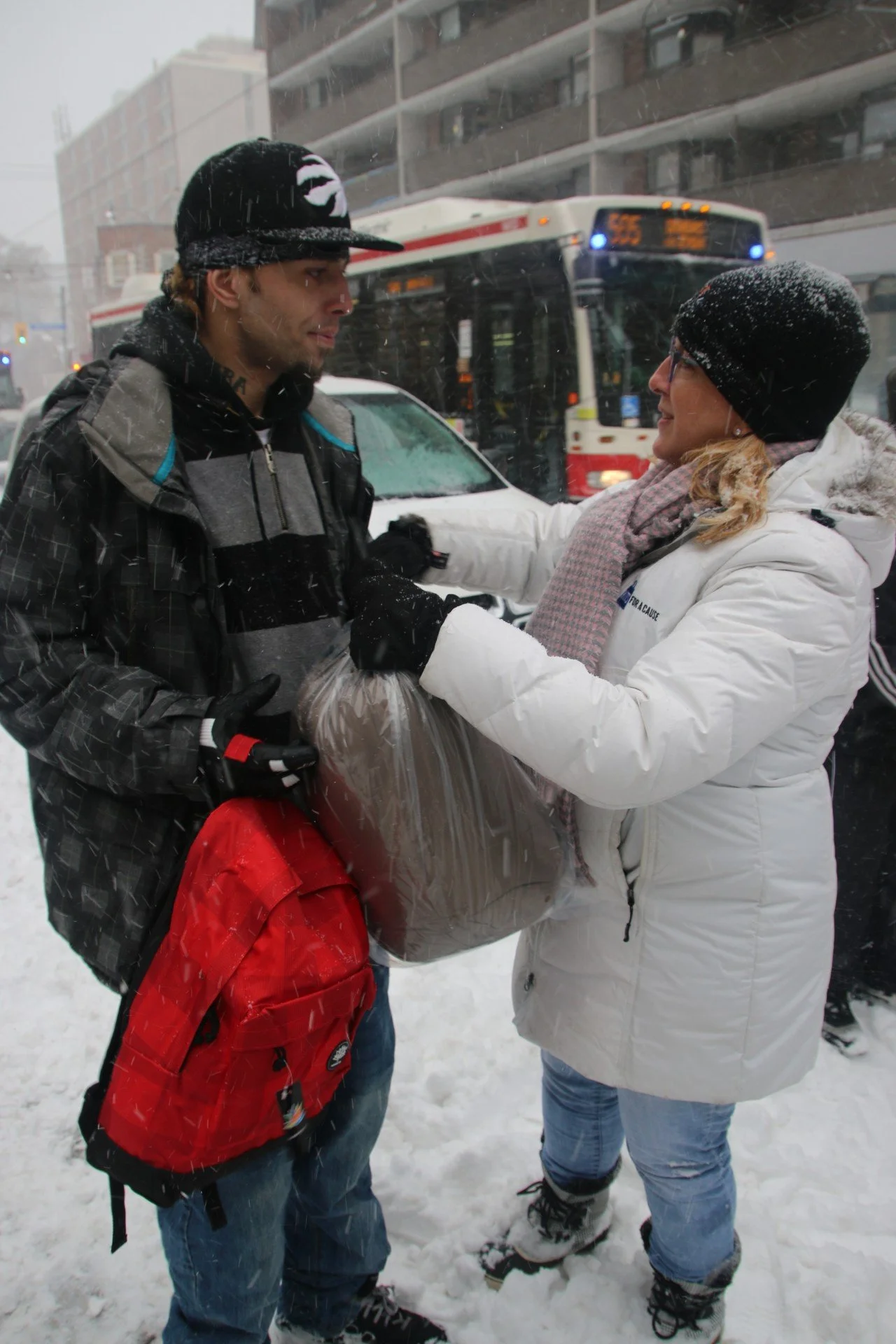
Then the crisis moved closer. Someone froze to death in a bus shelter in downtown Toronto. It made front-page news. When she asked why, the answer was devastatingly simple.
“If he had a sleeping bag, he’d be alive,” she was told.
She decided to act in the language she knew best: logistics and execution. She called about 20 business leaders she trusted and asked if they could give a couple of hours and a couple of hundred dollars to help ensure nobody else died that winter. They said yes.
Steinhauer surveyed ten shelters downtown, asked what they needed for the next three months, and quantified it. She brought the supplies into her office on a Saturday. But she also wanted the people who showed up to understand what they were stepping into without turning it into a lecture. She brought in a social worker, a harm reduction worker, someone with lived experience who was living on the streets, and someone who had been successful in getting off the streets.
“It was raw, and it was deep, and there was hugs and tears,” she said.
Then they packed the kits, loaded vehicles, and delivered them to shelters. The entire event lasted one hour and 37 minutes. The reaction from the executives who participated stuck with her.
“That was the most powerful volunteer experience I have ever had in my life,” they told her, she recalled.
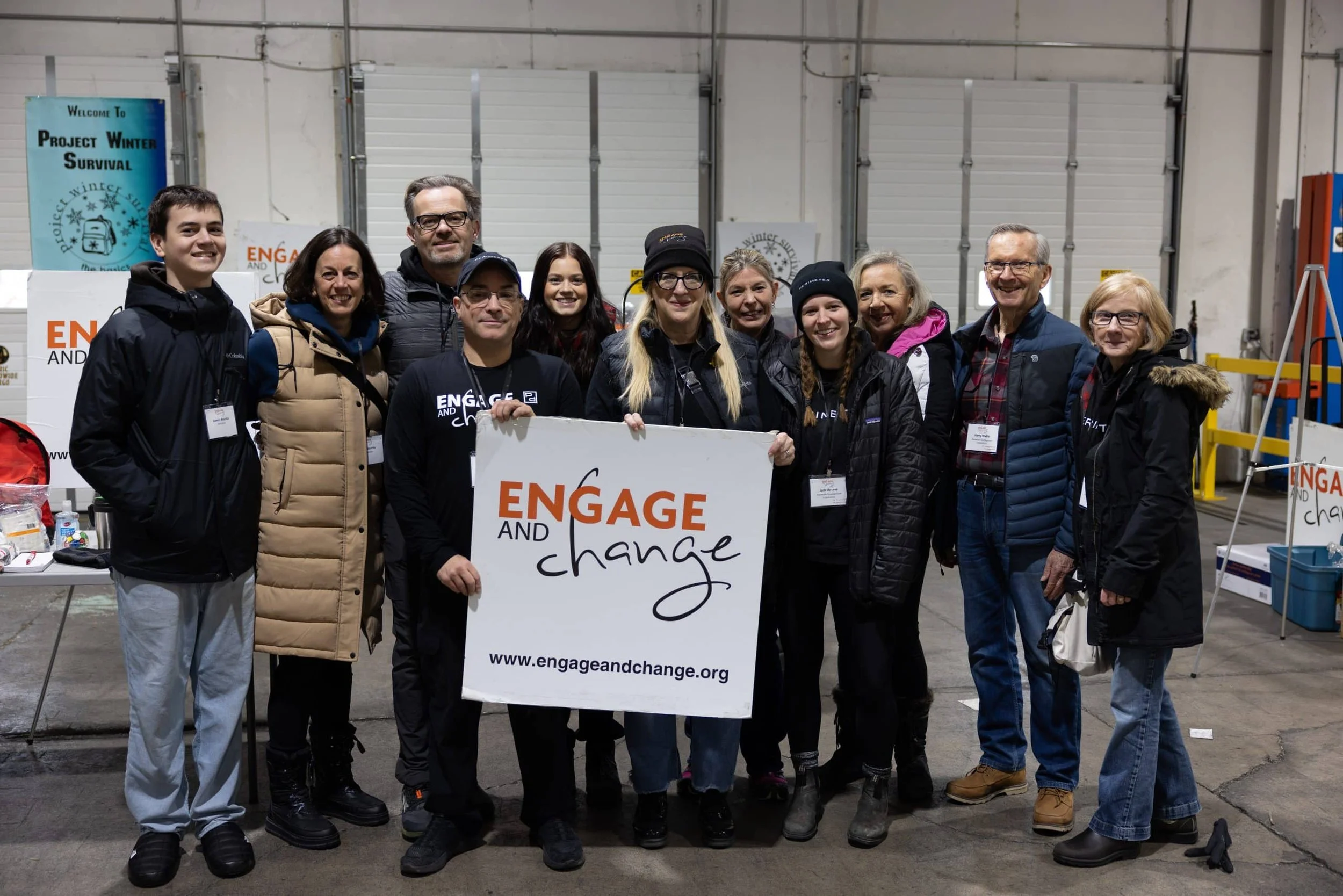
That initiative became Project Winter Survival and later a registered charity called EngageAndChange.org. Steinhauer says it has now been running for 27 years. Last year, she said 161 charities received Project Winter Survival kits.
“From the point we drop those kits into their cars and they get them out into the streets and the encampments, generally speaking, nobody dies for the rest of the winter,” she said.
Project Winter Survival is dedicated to providing the homeless and less fortunate with Survival Kits which in turn provide warmth and essential supplies needed for survival on the streets during the winter season. | Engage and Change
When companies started asking for help at scale
For Steinhauer, that is what impact looks like when it is designed to be practical. It is not a one-time gesture. It is prevention.
Over time, she watched corporate interest in doing good evolve. As companies began investing in employee engagement and community programs, many wanted to help quickly and visibly, but they didn’t always know how to translate intention into execution. Nonprofits, meanwhile, often didn’t have the infrastructure to host large volunteer groups or manage unpredictable donations.
Steinhauer began getting calls. She tracked more than 500 in 83 days and then stopped counting. Again and again she heard a version of the same message.
“Tell us where the greatest need is,” she said they told her. “We trust you.”
Why Kits For A Cause exists
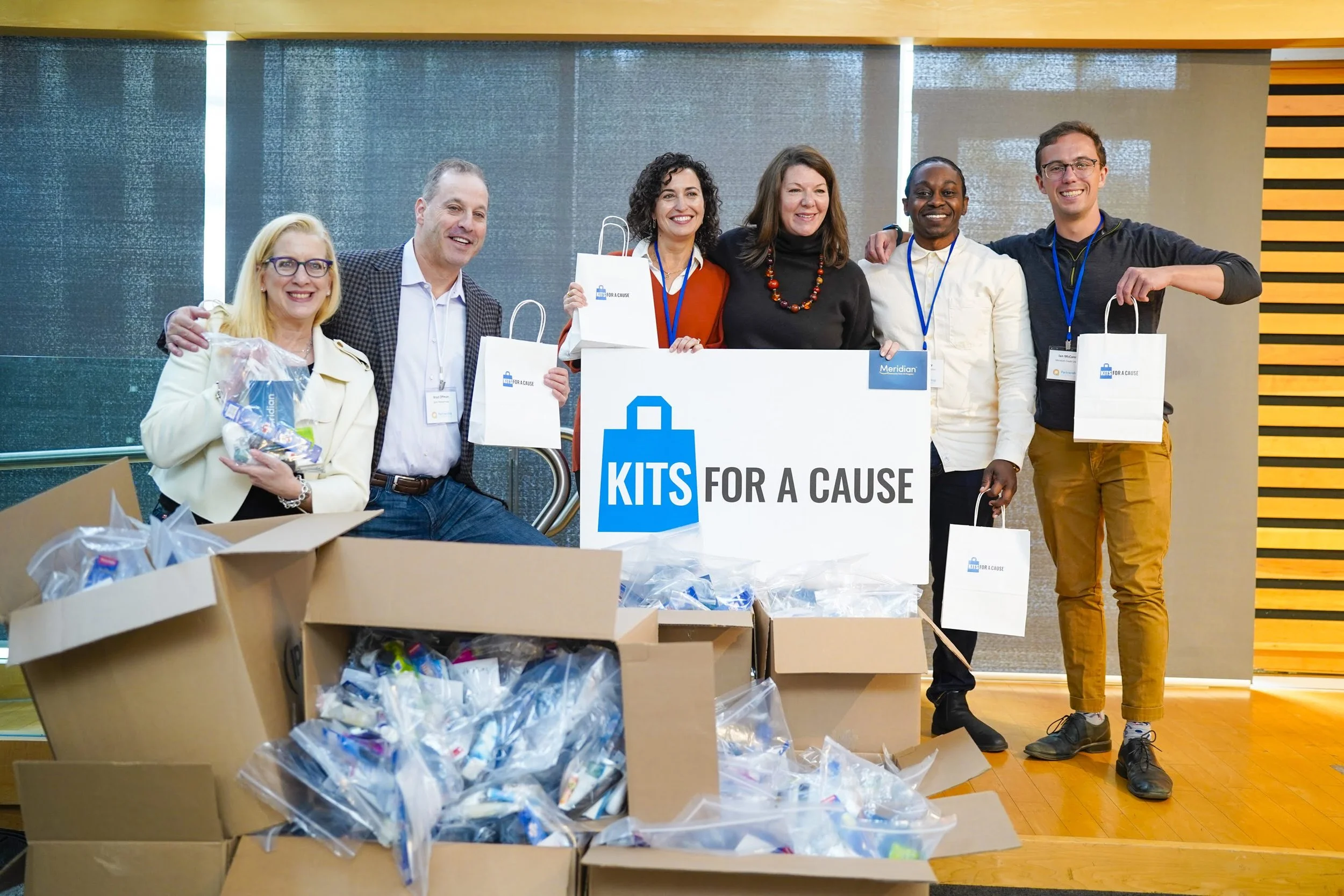
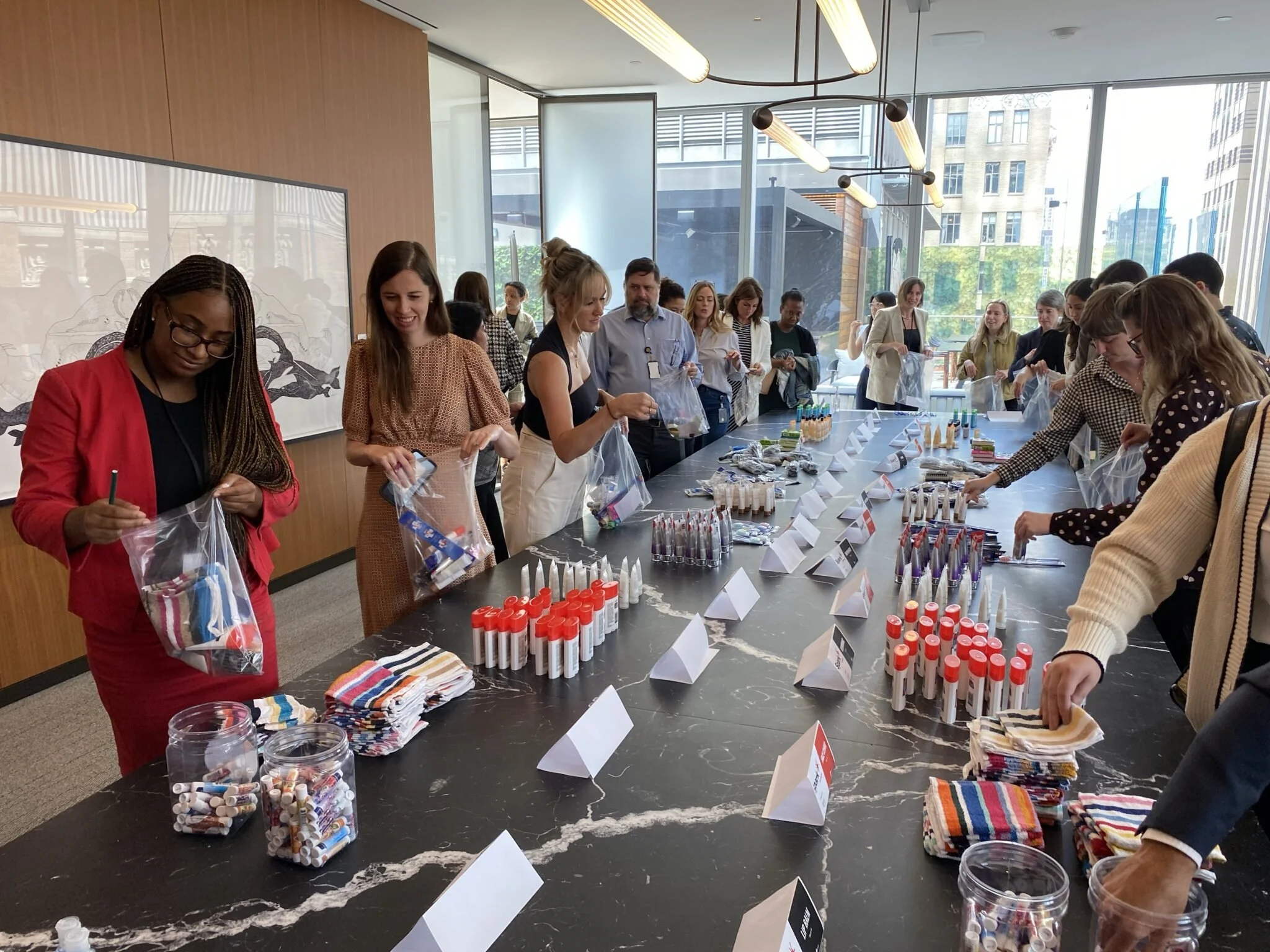
That trust became the foundation for Kits For A Cause. The social enterprise was built to match companies with nonprofit needs, design kits around what is needed in real time, and run kit packing events that deliver essentials quickly and consistently.
“100% of the budget goes towards the stuff,” she said.
It also addresses a reality Steinhauer has seen for years.
“Majority of stuff that’s donated to charities is the wrong stuff at the wrong time,” she said.
So instead of guessing, the model starts with listening. What do people need right now. How many. For how long. Then the kit is built around that reality, not around whatever happens to be available.
Proof this model can scale
Steinhauer points to partners who have turned this into a repeatable program. She described Meridian Credit Union as an example of a company investing in micro engagement grants across locations, giving employees the ability to choose local charities within the organization’s focus areas, then tracking results through volunteer hours, kits, and outcomes.
She also shared how Amazon expanded its work with her team. After piloting events in different cities across North America, she said the company asked her to scale back-to-school support across Canada.
“They asked us to do the entire country for back to school,” she said.
She described 35 events in 35 communities, matched with Boys and Girls Clubs Canada, resulting in “over 15,000 kids” going back to school with supplies.
The social enterprise was built to match companies with nonprofit needs, design kits around what is needed in real time, and run kit packing events that deliver essentials quickly and consistently. | Kits For A Cause
A practical, audacious hope for the future
Her ambition for the future is direct and operational, not abstract.
“My BHAG (Big Hairy Audacious Goal) is that every company and every charity in North America, I would love for any charity’s needs, especially those who look after the less fortunate, to be 100% financed through kits,” she said.
Her reasoning is simple. If essentials are reliably covered, scarce philanthropic dollars can go to the harder work that keeps organizations alive.
“All the other funding that charities need to thrive and survive can go to staffing and programs and infrastructure, not the stuff they desperately need for their clients,” she said.
Empathy isn’t only a feeling. It’s a system
Steinhauer’s story is a reminder that empathy is not only a feeling. It is a system. It is the decision to build something that makes caring easier to act on, and harder to forget.
And it begins with a question that still should not have to be asked. What does it say about a city when a sleeping bag is the difference between life and death?
For leaders who want to turn that question into action, the invitation is simple: bring your team together, pack what local charities need in real time, and help make sure the essentials are there before winter arrives. Learn more here.
At Conspiracy of Love, we help changemakers tell their most powerful stories — stories that inspire action, build movements, and create lasting impact.
Find out more about our Values-Driven Storytelling and GPS to Purpose workshops, and how we can help you scale your impact.