How Dr. Tom Chau Is Giving Nonverbal Kids New Ways To Communicate
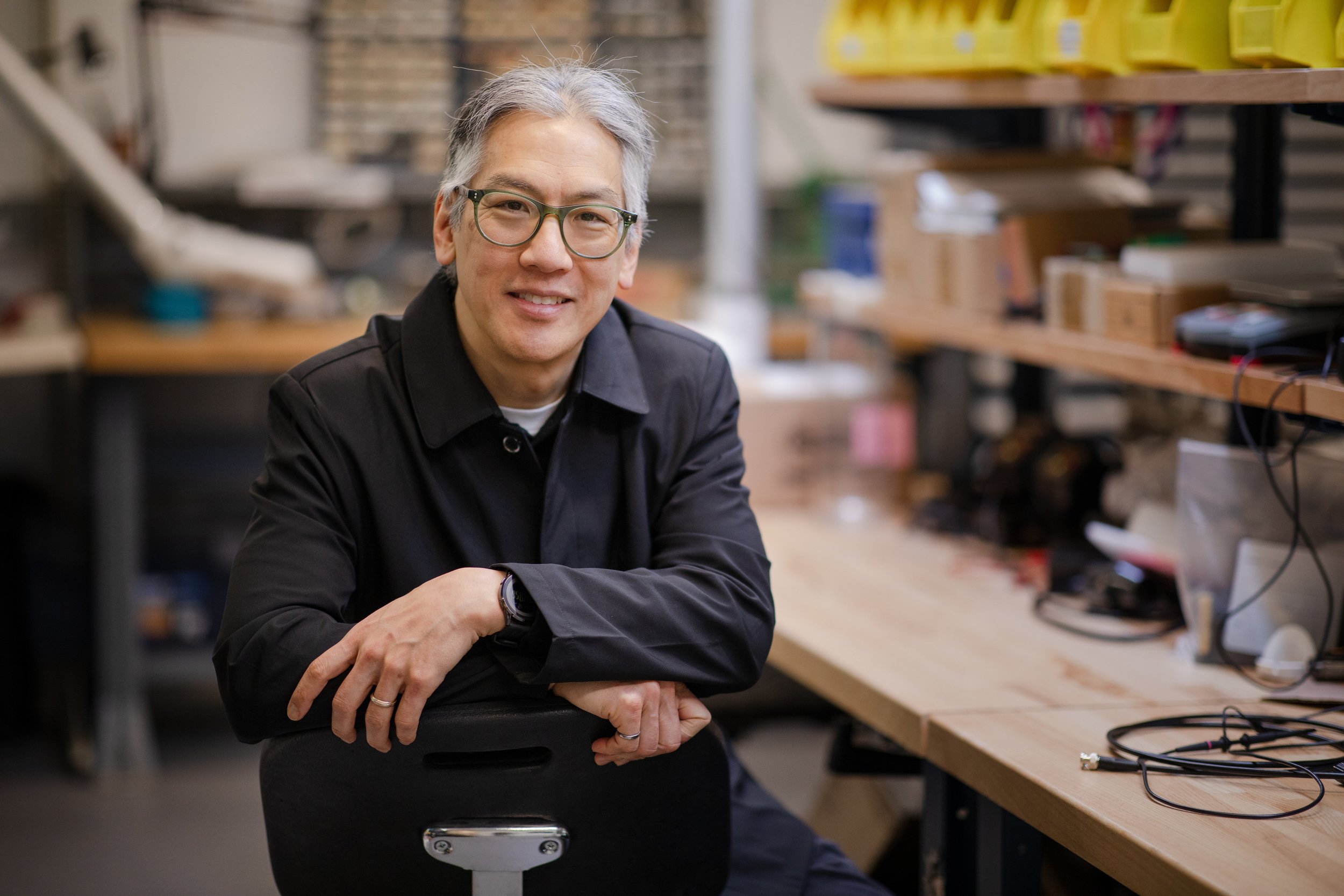
Tom Chau has spent over two decades pioneering assistive technologies to enable children with limited speech and movement to engage with the world around them. | Tim Fraser, KITE Studio
Dr. Tom Chau has spent more than 25 years proving something the world still forgets too easily.
A child can be fully present, fully aware, full of humor and opinions — and still be treated as invisible, simply because they can’t speak.
That’s why Chau’s life’s work has centered on one powerful idea: communication is not a “nice to have.” It is a form of dignity. It is agency. It is the difference between being cared for and being able to direct your own life.
Chau is a distinguished senior scientist at the Bloorview Research Institute at Holland Bloorview Kids Rehabilitation Hospital in Toronto, one of Canada’s top 40 research hospitals affiliated with the University of Toronto. He has been appointed an Officer of the Order of Canada and was inducted into the Canadian Disability Hall of Fame this year, recognizing his impact in opening new pathways to communication and participation for children with disabilities.
With his PRISM Lab, Chau has helped pioneer assistive technologies that give children and youth living with disabilities more control over how they express themselves and engage with the world. Those innovations include Hummingbird, an assistive device and the first of its kind in Canada, designed to help children with limited communication and physical disabilities communicate through the power of their own humming. His team has also advanced brain-computer interface technology that enables children to race cars, paint, or move their wheelchair on a platform just with their thoughts.
Holland Bloorview has brought those breakthroughs into daily life through its clinical brain-computer interface program, the first of its kind in the world, using non-invasive technology to create opportunities for clients to take part in recreational activities.
That momentum is now being amplified by Together We Dare, the hospital’s largest fundraising campaign for childhood disability and the largest pediatric disability fundraising campaign in Canadian history. The goal is to raise $100 million to establish the Centre for Excellence in Childhood Disability.
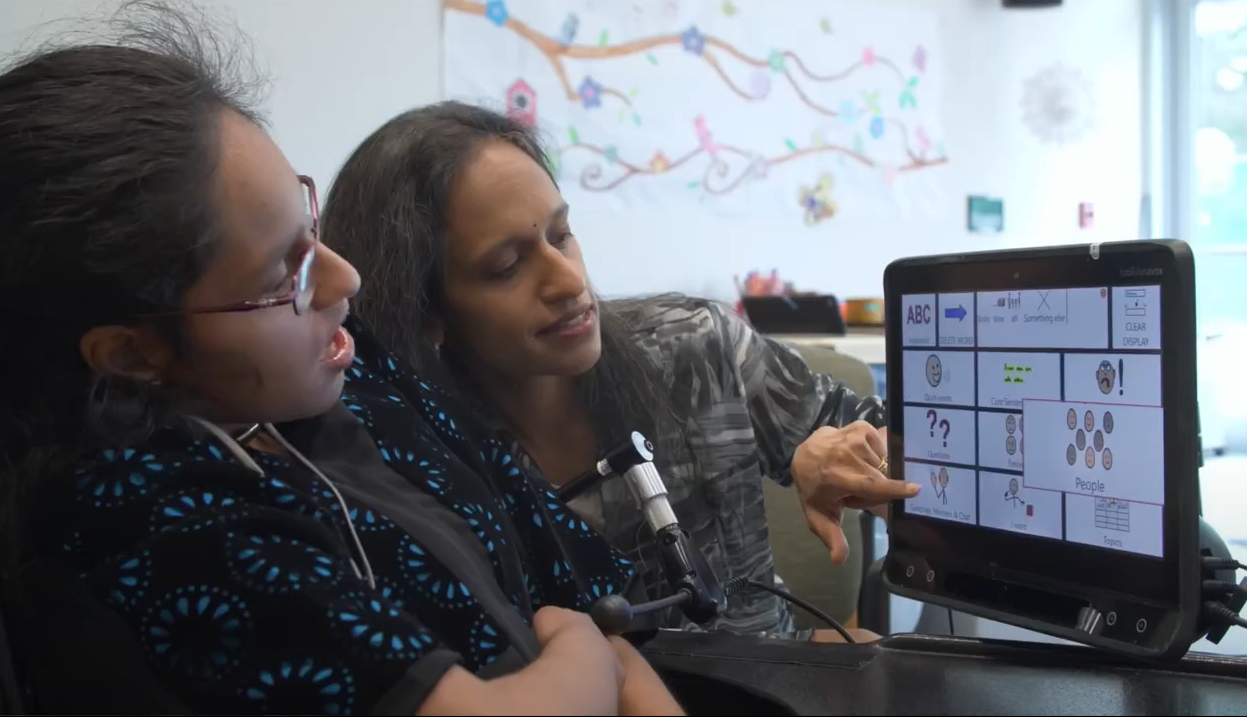
A non-speaking teen uses the Hummingbird to communicate through an electronic communication device activated by the power of her own humming. | Holland Bloorview Kids Rehabilitation Hospital
From IBM to a different bottom line
Chau did not begin his career in healthcare. He worked at IBM in enterprise resource planning. “I’m a biomedical engineer,” he said, helping companies “improve their efficiency, boost sales and distribution and manufacturing.”
Then came a night he still remembers clearly. Holding his newborn son through a cold, sleepless stretch, he looked out at fresh snowfall and saw moonlight across the baby’s face.
“It just dawned on me what a miracle it is to hold a baby,” he said. “And at that time I decided I was going to give up my job at IBM and do something that’s going to be more meaningful in terms of the lives of children.”
He quit that spring. “I’ve never looked back since.”
“I learned a ton there, and it’s really valuable work,” Chau said. “But I just couldn’t rationalize for myself pushing the bottom line for big blue for the rest of my career.”
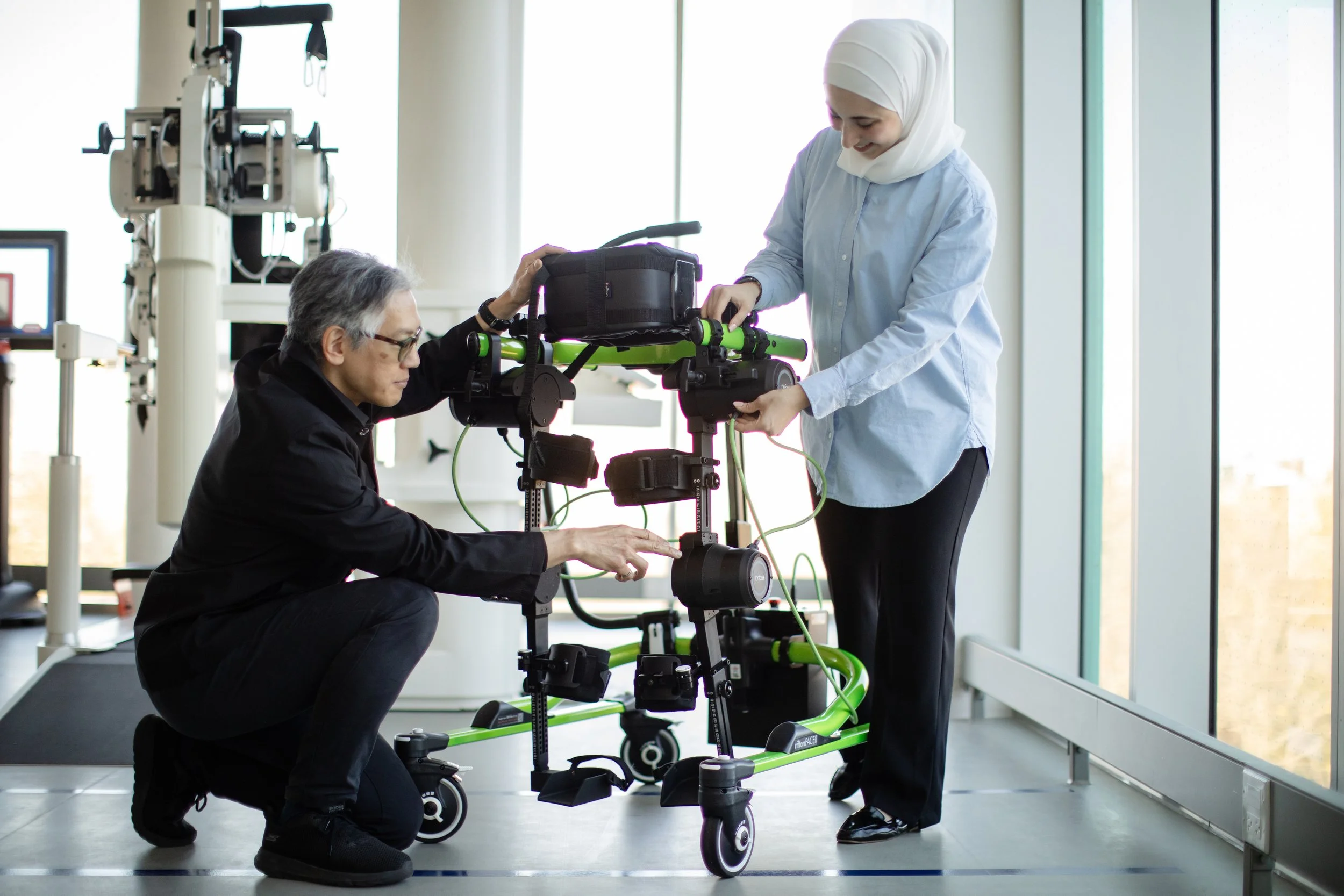
Tom Chau configures the Trexo Exoskeleton, a wearable skeletal system powered by robotics that enables children with mobility issues move in new ways. | Tim Fraser, KITE Studio
The meeting he couldn’t walk out of
One of the earliest meetings Chau had was with four fathers of children with disabilities. They orchestrated the meeting, placed him in the chair farthest from the door, and shared what it felt like to watch their kids move through school and healthcare without a reliable way to communicate.
Then they asked, “What are you going to do about it?”
Chau was “this young scientist trying to establish my research program.” The fathers raised funds for a satellite lab in a school for kids with special needs, and Chau agreed to staff it.
“It was the most marvelous experiment,” he said. “We were right in the environment where the kids were every single day.”
For him, it made the stakes unmistakable. “This lack of communication was really a human rights issue,” he said, “that many people were just unaware of.”
Why “yes” and “no” matter
A mother of a nonverbal adolescent with cerebral palsy once told him “it’s a violation of human rights to keep her son locked in the jail of a nonfunctioning body.”
Chau connects that frustration to a simple test of autonomy. “If you don’t have the means of directing your own care, even just saying yes and no to a treatment that’s being offered to you, there really is no quality of life,” he said.
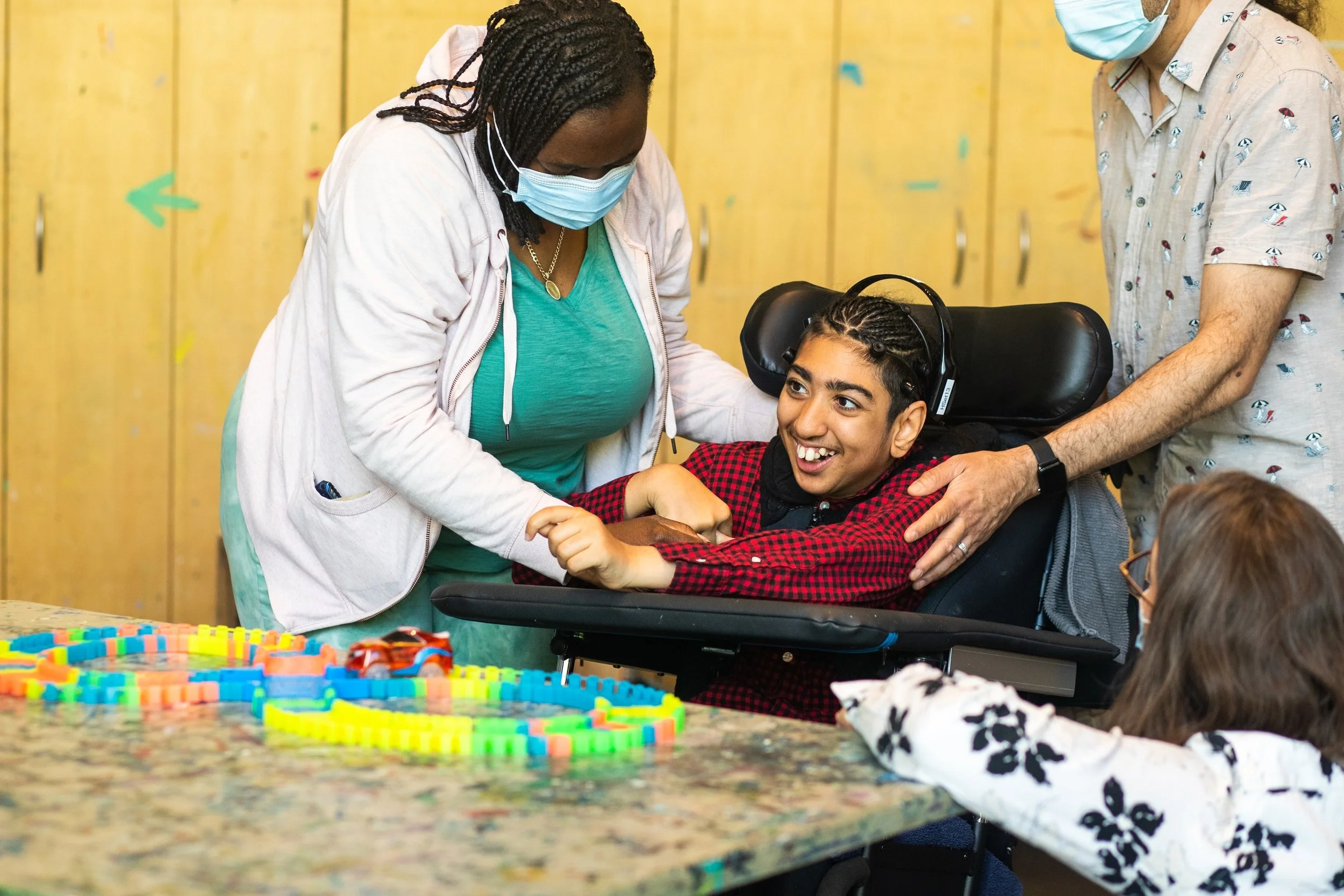
At Holland Bloorview’s clinical pediatric BCI program – the first of its kind worldwide — a young patient uses brain computer interface technology to drive a toy race car around a track. | Sam Polzin, Holland Bloorview Kids Rehabilitation Hospital
A first word story
One early case involved a Grade 10 student with faint vocalizations. His “yes” was a soft sound and his “no” was silence. By afternoon, even the “yes” often disappeared.
Chau’s team designed a small sensor that sits over the vocal folds, detecting vibration as intent. “It turns out the vocal fold vibrations are really distinct from all kinds of other noises,” he said. Connected to an on-screen keyboard, the student could select letters by activating his vocal folds, even when it wasn’t audible.
The first word he typed was “Doom 3.”
“The first word he ever says in his life is the name of a video game,” Chau said.
Then he typed “R-H-O-D-A,” a misspelling of his educational assistant’s name. “The room went silent,” Chau recalled. “His peers just realized, holy smokes, he’s actually typing someone’s name.”
“He realized, ‘Wow, I’ve got a new lease on life here. People are paying attention to me,’” Chau said.
Technology that adapts to the child
Chau’s approach starts with a principle. “The child is okay as they are,” he said. “And the onus is on technology to adapt to the child rather than to have the child adapt to technology.”
In brain-computer interface work, children can generate signals through mental imagery. “They think of specific tasks or specific categories of objects,” he said, “and that produces a machine discernible brain signal.”
Personalization is essential. “All our solutions have to be personalized to the child,” Chau said.
Why the campaign matters
“The philanthropic support from the community is absolutely critical,” Chau said. “We often leapt before we had a check.”
That’s where Together We Dare becomes a multiplier, helping more breakthroughs move into practice and reach more children. Thanks to a historic Slaight Family Foundation investment in disability across Canada, a portion of their gift, $2 million, will help spread and scale brain-computer interface technology across Ontario to up to 20 children’s treatment centres.
To learn more about the campaign, visit www.togetherwedare.ca.
At Conspiracy of Love, we help changemakers tell their most powerful stories — stories that inspire action, build movements, and create lasting impact.
Find out more about our Values-Driven Storytelling and GPS to Purpose workshops, and how we can help you scale your impact.