Inside Pop Culture Collaborative’s Mission To Rewrite America’s Narrative Oceans
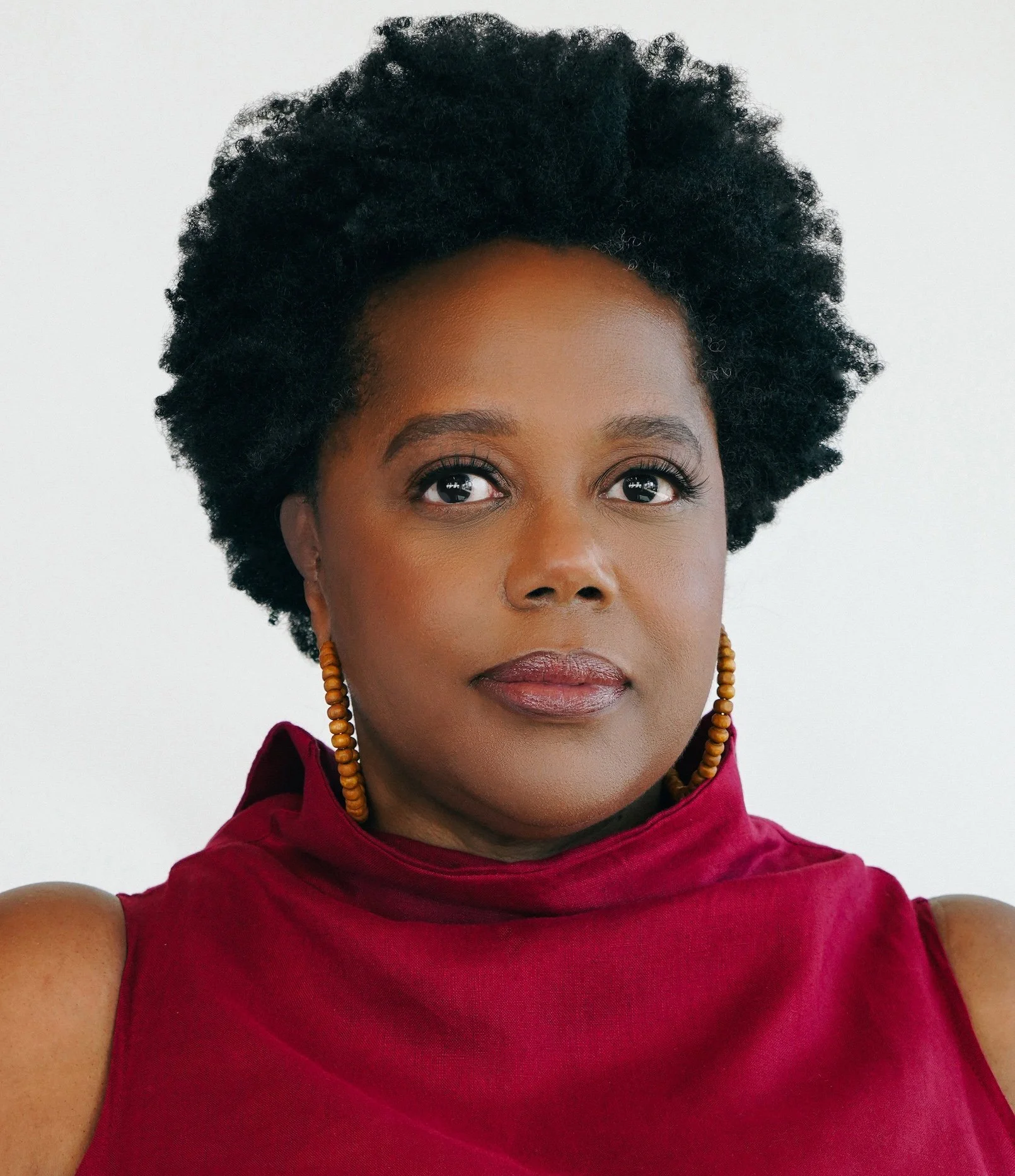
Bridgit Evans, CEO of the Pop Culture Collaborative | Pop Culture Collaborative
Every year, a handful of stories seem to move faster than the people who made them intended. A song becomes a movement. A show reshapes how millions of people think about their own history. Nobody plans that exact reaction, but somebody has to build the conditions that let it spread that far.
Bridgit Antoinette Evans builds those conditions. As CEO, she leads the Pop Culture Collaborative, a philanthropic fund that has raised $75 million, and is now raising $100 million more, to invest in artists, organizers, and storytellers working at the intersection of social justice and culture. The Collaborative's founding donors include Ford Foundation, Unbound Philanthropy, and Nathan Cummings Foundation. "We like to say that we fund the cultural conditions that make social change possible," Evans says. The aim, in her words, is a society where "everybody feels that they can belong and that they have the support to belong."
Her theory of change is easy to state and easy to overlook: policy wins alone don't hold. People's beliefs, identities, and sense of who belongs have to shift too, or structural change has nothing underneath it. Rather than funding a single film or campaign, the Collaborative invests in the infrastructure beneath culture itself, the networks of creators, the fandoms, the leadership pipelines that decide whether a moment of cultural energy fades or actually reshapes how people see one another.
For most of its history, the Collaborative has said almost nothing about itself. "Most of what you've heard about what we do is the incredible work of our field partners that we're resourcing. That's not by coincidence," Evans says. Now that's changing. "It's actually really important for more people to understand that the narratives and stories that are shaping how we think about ourselves and the world are not just organic things that live in the air around us. They're created by us, for better or for worse."
The Ocean, Not the Wave
Evans has a phrase for this idea: the narrative ocean. It describes the total environment of stories a person moves through every day without noticing, the way a fish doesn't notice water. "Nobody is wholesale changed or transformed by a single story. Every day when we wake up and we're moving through the world, there are a myriad of stories that are all around us, like water to a fish," she says.
The metaphor changes what counts as strategy. Fund one film, hope it moves the needle, and the assignment's been misunderstood, according to Evans. Real change means shifting the composition of the whole ocean. She points to the Black is Beautiful movement as proof this isn't a new idea. Civil rights organizing didn't succeed on policy alone, she argues. "It wasn't by one story, it was by creating this entire immersive ocean of culture that completely redefined Blackness and gave us a visual picture of what America might look like if Black people were really liberated. The movement and the cultural strategy had to move together."
Evans is careful to distinguish this from something more controlling. She isn't describing a machine that dictates belief. She's describing the opposite: giving people enough awareness of how the water got built that they can question it, swim against it, or remake it. Understanding the ocean, she says, "gives you the agency to be critical about the stories that you're being told" and "allows you to cultivate your instinct to be a truth seeker."
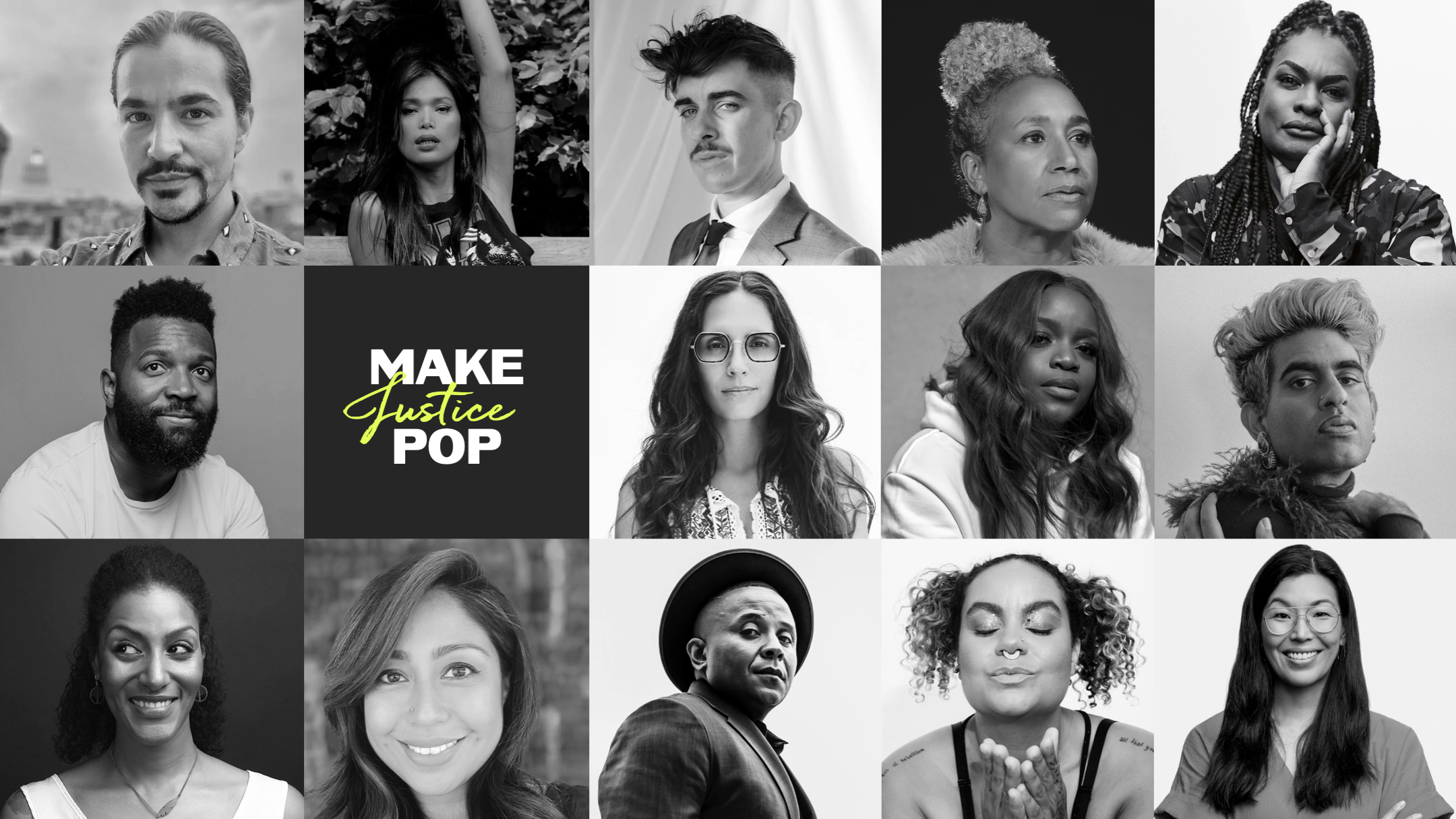
The Pop Culture Collaborative is North America’s leading narrative change funder—resourcing, connecting, and amplifying the leaders, creators, and strategists working to transform our narrative oceans through pop culture. | The Pop Culture Collaborative
Funding the Builders, Not the Broadcast
That belief shapes where the money goes. The Collaborative doesn't hand a single check to a single creator and call it strategy. "We're not funding one creator to do the thing. We have to constantly be thinking about how a group of creators are connected to each other, because it's all of their voices working together that actually begins to change the composition of the ocean," Evans says. The unit she's funding is the network, and the goal is opening doors for people historically shut out of financing, distribution, and creative control over their own stories.
Four Instincts for a Pluralist Society
The Collaborative’s grantees span social justice movements, cultural strategy, and entertainment, working on issues from racial justice to immigrant rights to climate migration. What unites them, Evans says, is a shared commitment to four traits: the courage to stand with people under attack, the curiosity to seek connection across difference, a truth-seeking instinct, and a commitment to what she calls ‘deep democracy’. "These four things are the defining traits that everyone in our community is kind of moving towards, but everybody's doing that through the lens of the different issues that they're working on."
Evans is candid that movement-building skipped a step for too long. "There was a long time in the social change space where we began to leave out the step in the change process where people change in order to become a different community that can get something different done together." Her fix, in five words: "Culture changes because people change."
Three Bets on What's Next
The fund's Moonshots program puts that thinking to the test. One bet is on fandom, studying how a community built around a single album or show can become something more durable, a lasting space where people keep working through identity and history long after the hype fades. Another is on digital creators, building the infrastructure to turn individual online influence into a genuine industry, rather than a scattered collection of one-person operations.
The third bet targets a blind spot in how culture gets measured at all. Evans notes that in many BIPOC communities, the deepest cultural work happens after the content airs, in the conversation, the remixing, the reinterpretation that current tools don't track. "That part of our cultural contribution and cultural power isn't really measured," she says. Fixing that changes what gets greenlit and funded in the first place.
She points to two recent moments as evidence the approach holds up outside the fund's own walls. When Jimmy Kimmel was pulled off air last year, fans organized quickly enough to help bring him back. During awards season, artists across genres used their platforms to speak up for immigrant communities. Neither was spontaneous, Evans says. Both were built.
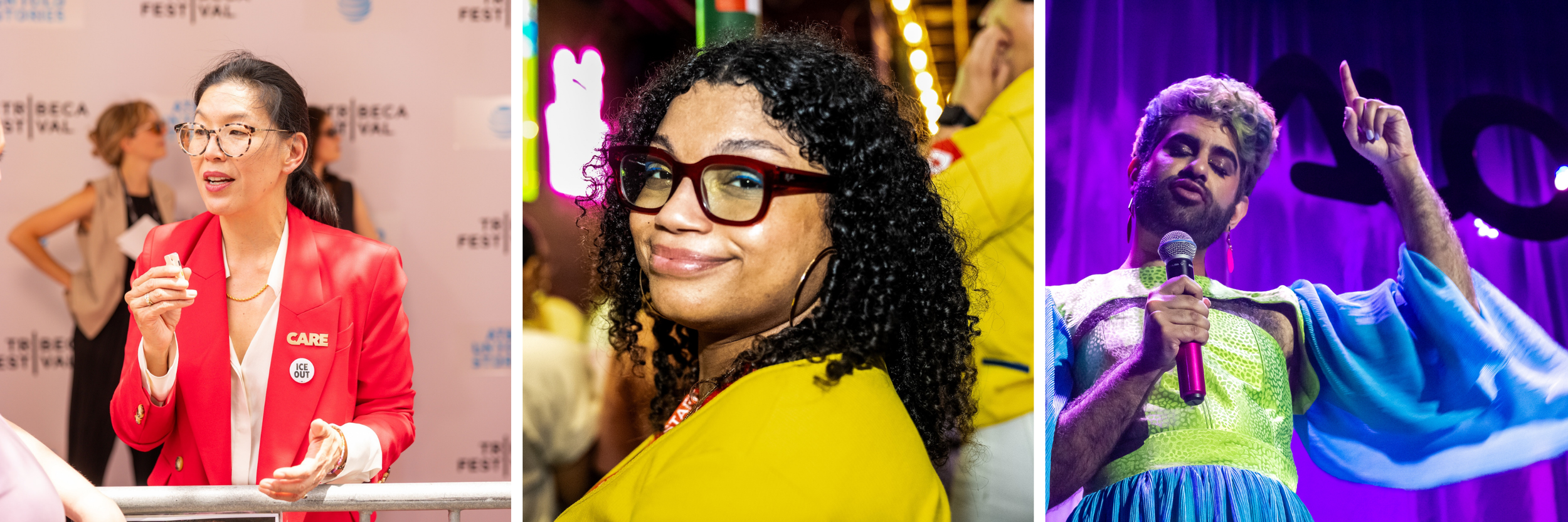
From left to right: Ai-jen Poo of Caring Across Generations; Nelini Stamp of Working Families Power; and Alok, comedian and Pluralist Visionaries grantee | Photo credits, left to right: Photo by Aiolos Zervas; Photo by Ginny Suss; Photo by Alok
The People Doing the Work
Evans names three grantees whose work she is especially supportive of. Ai-jen Poo of Caring Across Generations, whom she calls "best in class" for treating culture as core strategy from the start, not an afterthought. Nelini Stamp of Working Families Power, the organizer behind the Kimmel mobilization. And Alok Vaid-Menon, a comedian and Pluralist Visionaries grantee using a growing platform to put trans-liberatory ideas at the center of the conversation. "It is so clear that trans-liberatory culture is going to be a driving force" of a more just society, Evans says.
The three share a discipline more than a spotlight: each treats culture as something built on purpose, not waited for. With its next $100 million raise underway, and a new strategy called the Era of More expected later this year, Evans has no shortage of ocean left to shape.
At Conspiracy of Love, we help changemakers tell their most powerful stories — stories that inspire action, build movements, and create lasting impact.
Find out more about our Values-Driven Storytelling and GPS to Purpose workshops, and how we can help you scale your impact.