How Tony’s Chocolonely Is Reinventing Chocolate As A Force For Good
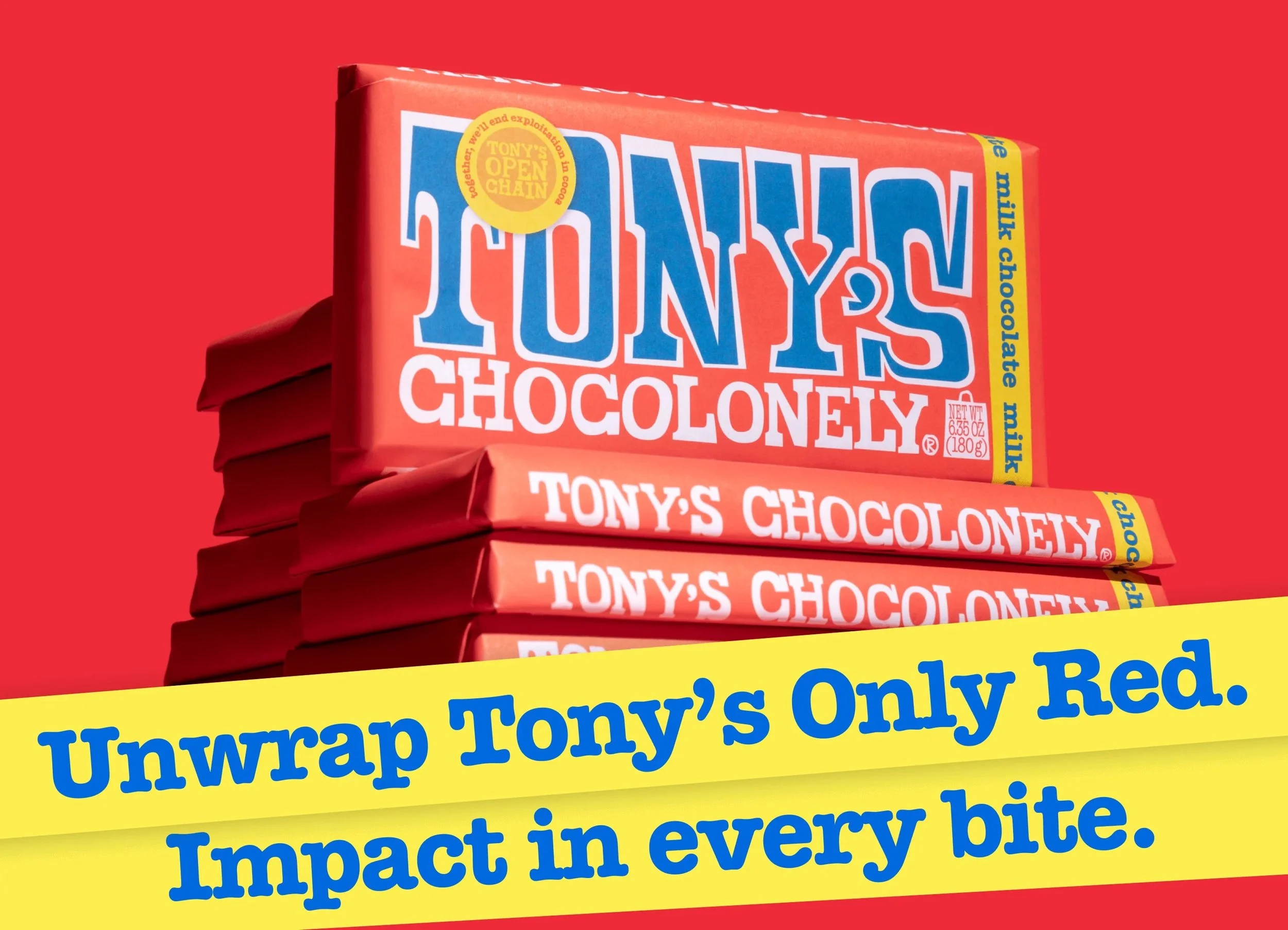
Tony's Open Chain is an industry initiative launched by Tony's Chocolonely in 2019 to end exploitation in cocoa.
Walk into a grocery store almost anywhere in the US or the UK today, and it's hard to miss the bright, unevenly divided wrapper sitting among rows of uniform candy bars. The packaging alone breaks every rule of the category. That's the point. Before a shopper reads a single word about child labor or living incomes, the bar has already done something rare in a crowded aisle: it has made them curious.
That curiosity is not an accident. It's a strategy, and it has turned a chocolate brand built on a moral argument into one of the fastest-growing players in a notoriously conservative industry.
Built From a Wound, Not a Wish List
Douglas Lamont, CEO of Tony's Chocolonely, doesn't talk about his job the way most chocolate executives do. He talks about child labor in West Africa's cocoa fields the way you'd talk about a fire that's still burning. His company wasn't built as a responsible add-on to a normal chocolate business. It was built to make that exploitation stop making financial sense.
The story behind that isn't a boardroom pitch. Two decades ago, a Dutch journalist named Teun van de Keuken was investigating slavery in the cocoa industry and realized the big manufacturers had promised to fix it and hadn't. So he made his own bar instead, 5,000 of them, wrapped in loud red paper, just to prove a slave-free supply chain was possible. It sold out almost immediately. Twenty years later, that experiment is a global brand doing hundreds of millions in revenue, and the wrapper still looks unevenly broken on purpose, a small reminder of the inequality the whole company exists to fix.
"We deliberately talk about ourselves as an impact company, not a purpose-led company, because we think purpose is something you write on the wall," Lamont said. "Impact is something that you actually have done. It's proving that it has impact, not just that it's your intention."
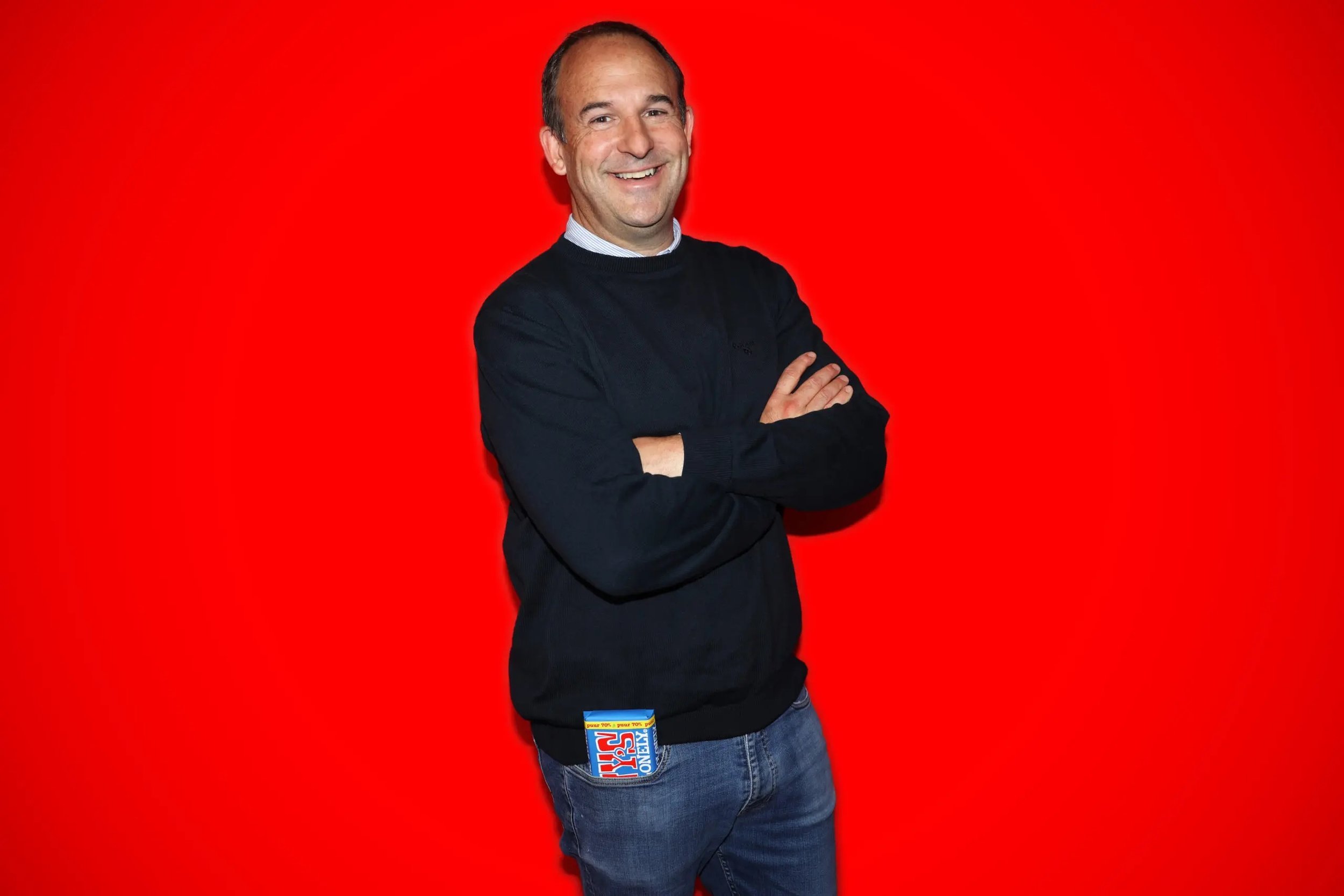
Douglas Lamont, CEO at Tony's Chocolonely | Tony's Chocolonely
Taste Wins the Argument First
None of that matters if the chocolate itself doesn't hit. Lamont is blunt about this. "However good your branding is, or however good your ethics or sustainability or mission are, without a great product, people won't repeat," he said. Get the product right, wrap it in something that doesn't look like anything else on the shelf, and give people a story worth repeating to a friend or posting online, and growth takes care of itself.
The math tells the same story. US sales have climbed from around $20 million a few years ago to over $100 million now, on a marketing budget Lamont pegs at under 3% of revenue. The whole company is doing roughly $300 million globally. It got there the slow way, building shelf space for years before Whole Foods came calling, and years more before Target did, a deal Lamont credits with convincing everyone else to pay attention.
Recruiting the Enemy
Tony's launched by calling an entire industry out by name. Now it's inviting that same industry to buy cocoa through its own pipeline, called Tony's Open Chain, handing competitors the traceable, better-paying sourcing model Tony's spent a decade building for itself.
"We no longer want to be the mosquito flying around the room, annoying people," Lamont said. "We want to be at the table having the discussions about how the industry changes from here."
It's not a kumbaya moment. It's leverage. Private label buyers know cocoa is flagged red on their risk reports, but fixing it from scratch is expensive and slow. Tony's offers a shortcut already built, tested, and ranked at the top of the industry scorecard. "We provide a kind of one-stop solution for brands and retailers that want to commit to that," he said.
Two Forces Doing the Work Advocacy Couldn't
For years, the moral case alone wasn't moving the big players fast enough. Two things changed that. First, regulation: an EU deforestation law set to take full effect in January will force major buyers to trace every bean back to a specific farm, killing the old excuse that this was too complicated to do. Second, money: the cocoa price crisis of the last few years, which sent costs soaring, has finance chiefs asking a question they used to dodge. "Maybe if we had invested in the farmers a little more, yields would have been down in a bad climate year, but they wouldn't have been down 30%," Lamont said.
The proof is in Tony's own numbers. Child labor rates in its cooperatives sit under 4%, against an industry average Lamont puts near 40%, alongside a far larger share of farmers earning a genuine living income. "I think we've proven the moral argument," he said. "I think the crisis hopefully can help us win the economic argument."
That case is pulling in company after company. Ben & Jerry's signed on early in the US. European names like Huel and Aldi have followed into the American market. Now two more are joining: supplement brand AG1 and Greyston Bakery.
"As a company with a mission to empower health, we hold ourselves to a high standard across everything we do, including how we source ingredients," said Ties Soeters, Chief Procurement Officer at AG1. "Joining Tony's Open Chain is a natural extension of that commitment and another step toward ensuring every ingredient in AG1 meets the same standard of rigour and integrity we apply to everything else."
Greyston Bakery's president, Kevin McGahren, sees the partnership as something closer to kinship than logistics. "Both organizations are grounded in the belief that everyone deserves a fair chance at a sustainable livelihood, and that economic self-sufficiency is key to human dignity," he said. "Joining Tony's Open Chain marks an exciting step, standing alongside partners who share our values and demonstrating how business can help drive systemic change and advance the common good."
What This Actually Teaches
Lamont's real insight isn't that doing good and making money can coexist. It's that they're the same equation, solved together or not at all. He admits Tony's could squeeze out fatter margins right now if it wanted to, and admits, just as plainly, that he's choosing not to. "At that point, I go, okay, I've proved that it's not just the right thing to do, it's the smart thing to do," he said.
That's a harder test than most boardroom mission talk ever faces. It's not whether the values sound good in a pitch deck. It's whether they survive contact with a spreadsheet.
Where This Goes
Lamont expects more US brands to join Tony's Open Chain in the coming months, adding weight to a bet that's been building for years: companies can fight over shelf space and still cooperate on the farm. If that keeps working, the real win won't show up in Tony's sales figures. It'll show up in how many competitors quietly start copying the map.
At Conspiracy of Love, we help changemakers tell their most powerful stories — stories that inspire action, build movements, and create lasting impact.
Find out more about our Values-Driven Storytelling and GPS to Purpose workshops, and how we can help you scale your impact.