How Pano and Sonia Kastner Are Using AI To Stop Wildfires Across America
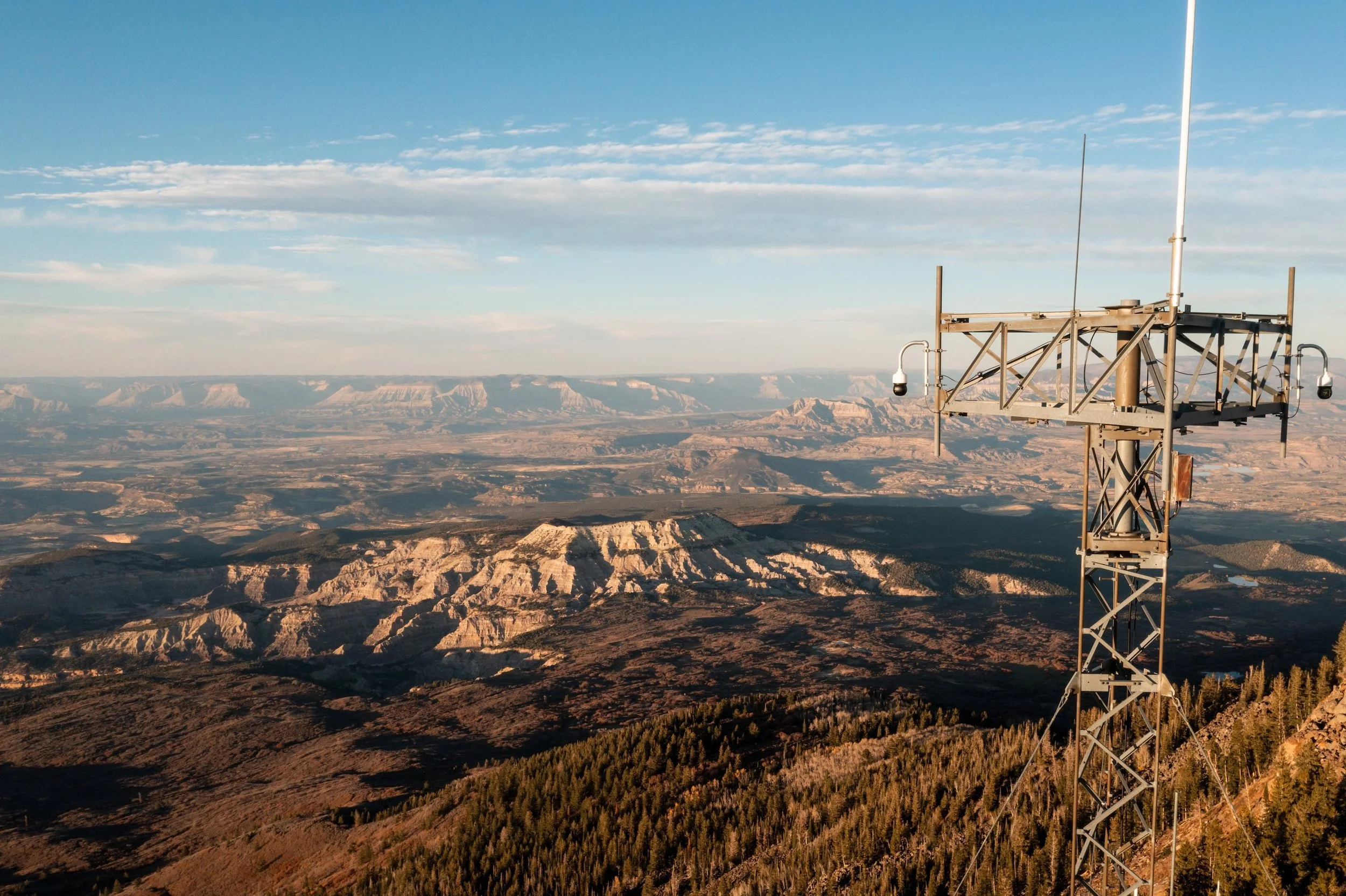
Pano Station 1, Xcel Energy | Pano.AI
Picture a camera spinning slowly above a ridgeline in Colorado, scanning for smoke the way a radiologist scans an X-ray for a shadow that shouldn't be there. Somewhere behind it, a human reviewer is watching the same feed, ready to confirm what the machine thinks it sees before anyone picks up a phone. That quiet partnership between the algorithm and the human eye is now standing between hundreds of communities and the next catastrophic fire.
That camera is one of thousands that Pano AI has placed across 17 states. The woman who built the company didn't come from the fire service. Sonia Kastner arrived through batteries, solar panels, and smart thermostats, including a stint at Nest where she helped build one of the first AI-powered cameras. By 2018, the disaster predictions she'd read in IPCC reports a decade earlier were arriving on schedule. She went looking for a company building products to help people adapt to a climate already in motion, and found almost nothing worth joining. "Am I seeing something other people are not seeing?" she remembers wondering.
The answer, it turned out, was yes. And it came with a co-founder.
Arvind Satyam had grown up in Sydney, studied engineering and finance at UNSW, and spent over a decade at Cisco helping cities like Barcelona and Copenhagen wire up with smart infrastructure. When he came back from Davos in early 2020, fresh from conversations with Australian fire officials during the country's catastrophic Black Summer, he found Kastner already circling the same problem. The two of them had been watching the same fires — Black Summer in Australia, the Tubbs fire, the Camp fire in their adopted home of Northern California. Neither had ever worked in wildfire.
Both suspected that was actually the point. He could sell into government; she could build and deploy hardware in brutal terrain. "I sell into government all day long, I got that covered," he told her. "I know how to build really hard," she answered. "I have two products, and I know how to deploy them and maintain them." As Kastner put it, "maybe the reason it hasn't been done is that there hasn't been a team with this combination of skills to do this, and we can break the seal."
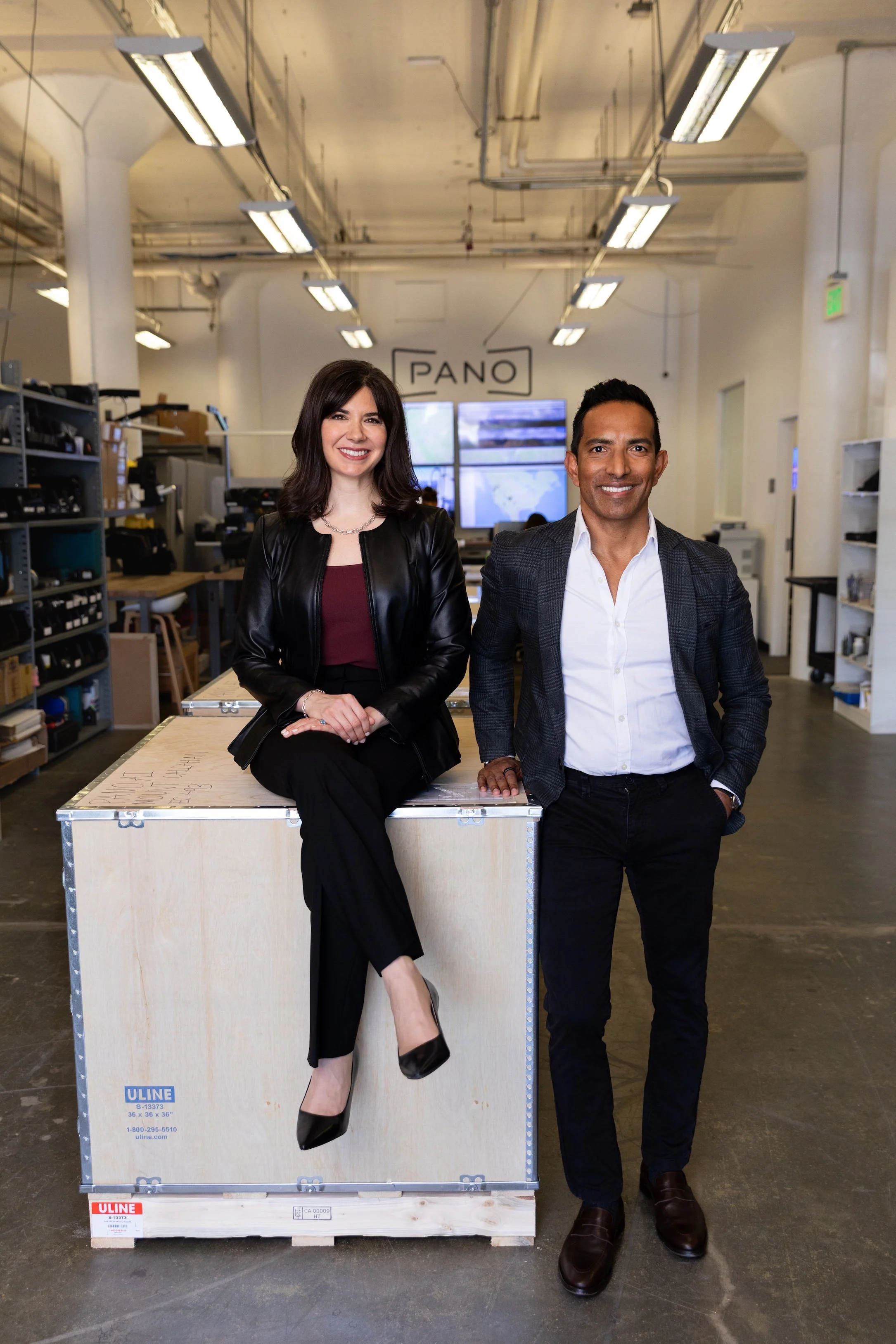
Sonia Kastner and Arvind Satyam, Co-founders of Pano AI | Pano AI
The gap the market left open
Pano's cameras now sit on 50 million acres across 17 states, rotating every sixty seconds to give fire crews a live, ground-level view of exactly how a fire is moving — not just a dot on a satellite map, but actual visual intelligence about fire behavior, precise enough to tell an incident commander whether a new ignition needs ten fire engines or one. In Colorado alone, 150 stations cover a fifth of the state at $50,000 per station per year. Kastner does the arithmetic without apology: "One catastrophic fire prevented pays for Pano." Depending on the region's risk profile, she says the return ranges from 3X in a lower-risk state to 70X somewhere more exposed.
What that math doesn't solve is the fire that outruns everything. When last winter's Los Angeles fires tore through entire neighborhoods on 100-mile-per-hour winds, the prevailing explanation in the press was almost fatalistic: nothing could have stopped them. Kastner read those articles and got angry. "Imagine if this was a weapon from a foreign country," she said. "China has developed a weapon that blows embers 100 miles per hour. Oh, there's nothing that can be done. Let's just go surrender to China. That's BS. The military would just develop a counterweapon that prevented that." Her point isn't that every fire is stoppable today. It's that treating catastrophic loss as a permanent condition is a failure of imagination, not a law of physics. New tools are already emerging — including non-toxic retardants that can be sprayed on a house before a fire arrives and washed off afterward — for exactly the fires that early detection alone can't contain.
Adoption is the frontier, not invention
Since Pano proved a venture-backed business could work in wildfire tech, roughly 500 startups have raised capital in what people now call fire tech and disaster tech. Funds like Convective Capital — the first VC fund dedicated to fire tech — have expanded their mandate to disaster tech more broadly. The bottleneck isn't invention anymore. It's who's buying.
Utilities and state governments have become real customers. Pano has five state contracts, one worth seven figures, and Kastner and Satyam accepted a Fast Company Innovation Award this spring. The remaining gap is on publicly owned land — vast stretches of fire-prone territory where the right buyer hasn't yet stepped in. In Douglas County, Colorado, utilities funded eight Pano stations, but coverage stops at the public land boundary. The Eaton fire started on the county side of a park that was also half public land, and could just as easily have ignited on the other side. As Kastner sees it, "the obstacle to stopping these fires is not innovation. The obstacle is adoption by government agencies of technology, and that will create the pipeline of innovation."
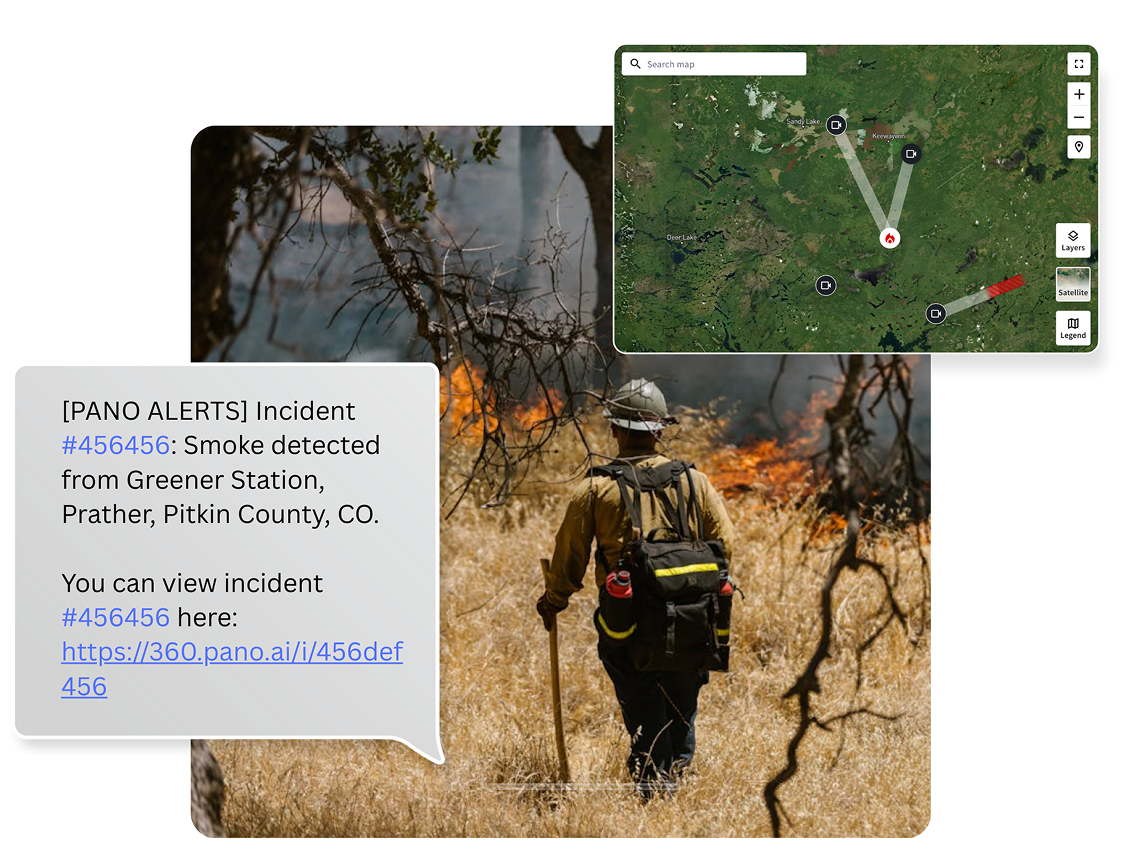
Pano for Fire Professionals | Pano AI
Why this only works now
Camera-based fire detection has been tried before and failed. A company deployed cameras in Marin County over a decade ago using traditional computer vision — rule-based systems that flagged movement and color the way a factory camera inspects a conveyor belt. It mistook wind-shaken trees for smoke constantly, buried crews in false alarms, and got ripped out. Academic groups later put cameras on mountaintops but crowdsourced the watching, sending community volunteers to log in and look for smoke.
Kastner's bet was that deep learning — the same technology maturing inside self-driving cars — would finally tell the difference. It did. But Pano added one more safeguard the earlier failures had made non-negotiable: a human reviewer checks every single AI detection before it reaches a fire agency. Six years in, she says that combination of machine speed and human judgment still outperforms either one alone.
What comes next
The most striking part of Kastner’s vision isn’t what Pano has already built. It's what she sees coming alongside it. Several efforts are now proposing networks of low-earth-orbit satellites with a global revisit rate of roughly twenty minutes — complementary to Pano's ground-level cameras rather than a replacement for them. The nonprofit Earth Fire Alliance, backed by the Moore Foundation and Google, is working with satellite builder Muon Space on one such constellation, at an estimated cost of half a billion to a billion dollars. Kastner sees the two technologies as a system: cameras at the wildland-urban interface where every minute matters, satellites mapping the remote wilderness where the edge runs out. The cameras catch it small. The satellites map what escapes. Together, they cover a geography no single system can.
We have the technology to stop wildfires. We just need the will to enact it to keep our communities safe.
At Conspiracy of Love, we help changemakers tell their most powerful stories — stories that inspire action, build movements, and create lasting impact.
Find out more about our Values-Driven Storytelling and GPS to Purpose workshops, and how we can help you scale your impact.