How Think-Film’s Danielle Turkov Is Turning Movie Campaigns Into Real-World Impact
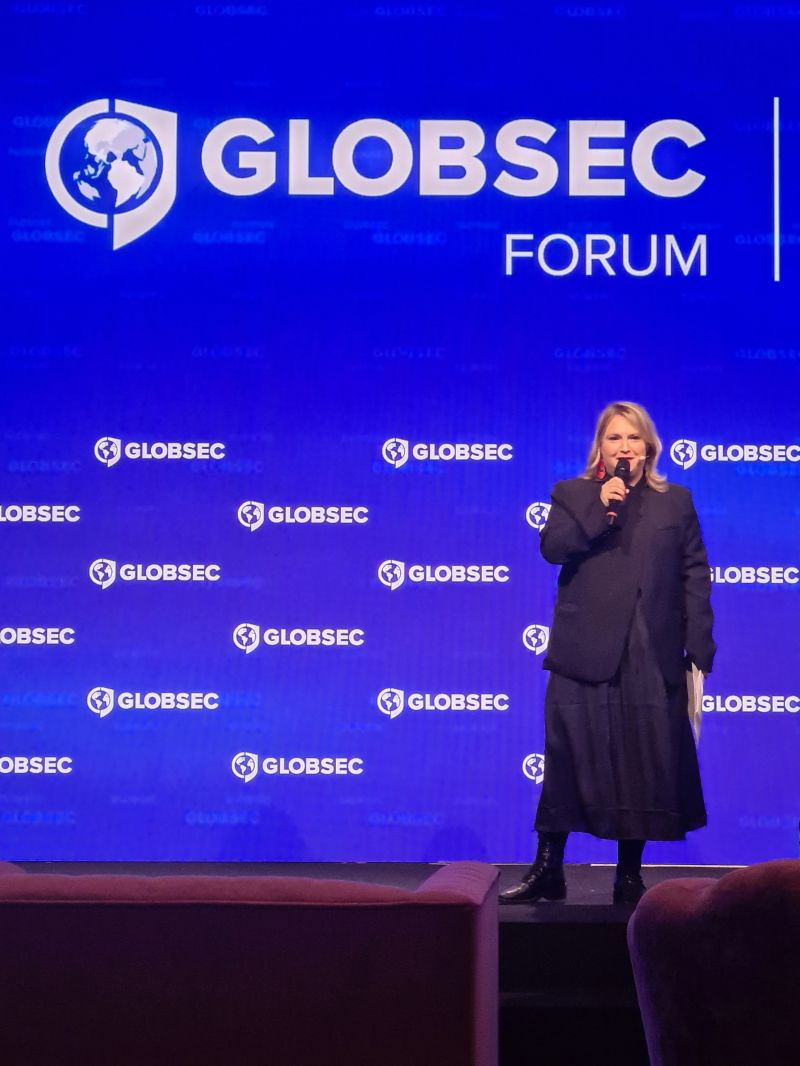
Danielle Turkov during GLOBSEC Forum in 2026 | Think-Film Impact Productions
"Dark Waters," the 2019 legal drama starring Mark Ruffalo, dramatized one lawyer’s decades-long fight against DuPont over a toxic industrial chemical called PFOA. When Danielle Turkov’s Think-Film built a real-world campaign around the film's release, called "Forever Chemicals No More," the goal was to push that same fight off the screen and into public awareness of PFAS, the class of long-lasting synthetic chemicals now found in water supplies and consumer products worldwide. When distributor E1 Entertainment later surveyed audiences, the numbers came back with an unusual finding: that campaign had driven 35% of the film's box office.
For Turkov, the figure confirmed something she had long suspected but had never seen a distributor put in writing. "I've known this, I've felt it, I knew we provided value, but nobody would ever dare share the stats," she said. What struck her most was the gap between the value her campaign generated and what impact producers are typically paid for that work. The moment changed how she ran her company. A campaign built around a film's social message wasn't a nice extra. It could sell tickets.
From a Council Estate to the European Parliament
Turkov's path there started far from Hollywood. Raised on a council estate in the south of England, the daughter of an Irish Catholic mother and a Soviet Jewish immigrant father, she was accepted at 16 into one of London's most prestigious theatre schools. Her mother pushed back on the idea that talent was enough on its own. "People like us, they don't have a voice," Turkov recalled her mother telling her, in a phrase that has stayed with her since. Storytelling, her mother said, was a gift meant to change systems, not just entertain people.
That belief carried her through some unlikely detours: fundraising trips to Kenya where she bought cattle for families instead of running standard volunteer programs, a stint teaching English in Barcelona, and eventually an internship in the cabinet of the president of the European Parliament in Brussels. There, she staged live performances she called "visual policy briefs," bringing the people behind policy statistics directly into the rooms where decisions were made. "How can you fight for something that you don't know a person, have never seen them or met them or understand the situation?" she said.
When a friend asked for help getting a documentary noticed by Emmy voters, Turkov realized that awards campaigns worked a lot like the lobbying she’d learned in Brussels: both are about building support for something among a small, influential audience. Three months later, the film was screening at the White House. "The power of story to reach these influencers, policymakers, thinkers, because they are enamored by film and stories," she said, became the idea behind Think-Film.
What Think-Film Actually Does
A decade later, Turkov describes Think-Film's work as producing two kinds of results at once. One is what she calls issue revenue: measurable, real-world change on the subject a film raises, like a new law or policy. The other is commercial revenue: box office, resale value, and audience turnout for the film itself. "We do issue revenue, which is real, meaningful, tangible change in society, and we do commercial revenue," she said. Where the company once functioned as a marketing add-on brought in near a film's release, it now gets involved from the start, often earning producer or executive producer credit.
The proof is specific. On the National Geographic documentary "The Territory," about the Uru-eu-wau-wau people fighting deforestation in Brazil, Turkov’s team read through a pending European Union deforestation law line by line and found that indigenous communities had no formal seat at the table in trade negotiations over their own land. Think-Film pushed for an amendment through a member of the European Parliament. It passed. "The Uru-eu-wau-wau community today, and any other indigenous community in the world negotiating with Europe on their land, have to be at the table and make a decision with the stakeholders about what happens to that land," Turkov said. It's one of ten laws, by her count, that her campaigns have helped change over ten years.
Selling Tickets Without Picking a Side
Not every campaign centers on legislation. For Joshua Oppenheimer's climate-themed musical "The End," Turkov built a campaign called "end the end," aimed at pulling in audiences who might otherwise dismiss the film as another piece of climate messaging aimed at people who already agree. "You're not trying to talk to the community that believes you," she said. "You're trying to talk to the community that doesn't." The campaign helped push the film into the UK's top five theatrical releases and brought lead actor Michael Shannon to Davos, the annual gathering of business and political leaders in Switzerland, where oil executives heard a different pitch than they expected. "We're going to show that the most powerful people who've generated the most income in the world through a natural resource could use their brainpower to do something else," she said.
The Business Case for Meaning
Turkov argues the industry has been slow to formalize what she does, even as audiences, especially younger ones, increasingly reward authenticity in marketing. Her team has also gotten more disciplined about measurement, tracking earned media, social impressions, and resale value much the way a consulting firm tracks a client's return on an investment. She points to the Oscar-nominated "Black Box Diaries," a documentary about a sexual assault case in Japan, where a campaign built around institutional corruption coincided with the country electing its first woman party leader.
The throughline is a refusal to separate the moral case from the commercial one. On the documentary "Navalny," about the imprisoned Russian opposition leader Alexei Navalny, a campaign centered on what Turkov called "the right to an opposition" led to a major European screening the same day the European Union announced a new package of sanctions against Russia. "The work that impact does creates press, creates influence," she said. "And what that will do is create demand."
Building Toward Something Bigger
Turkov's newest focus is artificial intelligence, a subject she has tracked since working on the film "iHuman" seven years ago, when she pushed for human-centered AI language in an EU directive. Her current campaign, tied to a documentary on AI's societal effects, is building toward a broader corporate accountability pledge. "I think AI is the impact issue across all issues, from happiness to loneliness to climate," she said.
Her larger ask of the industry is structural. Impact producers, she argues, belong in the room from a script's earliest stages, not brought in after a film wraps. "We should be part of the guilds," she said. "We should be given the integrity we deserve."
At Conspiracy of Love, we help changemakers tell their most powerful stories — stories that inspire action, build movements, and create lasting impact.
Find out more about our Values-Driven Storytelling and GPS to Purpose workshops, and how we can help you scale your impact.