How Public Good Helps Brands Turn Moments Into Movements

Melissa Anderson, Co-Founder and President of Public Good | AJ Kane
Every June, brand logos turn rainbow. Every October, pink ribbons show up on everything from yogurt cups to gas pumps. Every February, a flurry of posts about racial justice, perfectly timed to Black History Month. Then, like clockwork, it all disappears the moment the calendar flips.
Melissa Anderson has watched that cycle for a decade, and she thinks it's exactly backwards.
Anderson is president of Public Good, and the company's entire premise rests on a single, almost absurd observation: companies spend millions funding clean water access, paid journalism internships, youth sports equity, and cancer research, and then tell almost nobody. "The good that a brand does and the values that they have, whether it's their community work or what they stand for, is their best kept secret," Anderson said.
Public Good exists to break that silence, but not by shouting louder. Co-founder Dan Ratner was director of technology for the Obama 2012 campaign, one of a generation of political technologists who, after getting a president elected, went looking for other ways to move people using the same tools. Anderson joined soon after, and together they built something they insist is an engagement platform, not an advertising one, a distinction she treats as the whole point.
"It doesn't make sense to advertise the good stuff that you're doing, but it certainly makes sense to communicate and engage people in the good things that you're doing," she said.
From Awareness to Movement
Here's what that looks like in practice. A reader is deep in a Prevention Magazine article on women's cardiovascular health, half-scrolling, mostly on autopilot. Then something interrupts the scroll: not a banner ad, but a question. What do you think is the number one killer of women? Car accidents? Alcoholism? The reader clicks, curious, and lands on a real answer paired with an offer, sponsored by CVS Health: come in for a free heart screening. Public Good calls this an action unit, and the format shifts deliberately, sometimes a video, sometimes a slideshow, sometimes just the question, because different audiences respond differently depending on the topic and the platform.
"How can a brand stand for something and align their work with their values, but how can they bring people in to join them,? And then essentially it becomes a movement," Anderson said.
The company also uses technology to move brands away from what Anderson calls manufactured moments, the single day a year set aside for a cause before the conversation disappears again. She pointed to the backlash brands have faced over pulling back on Pride Month messaging once June ends as a cautionary example. Public Good's alternative is to surface relevant content year-round, what the team calls moments of motivation, so a brand's commitment to clean water doesn't only surface on Earth Day.
Take Liquid I.V., one of Anderson's favorite examples. Millions of people know the brand from the grocery aisle. Almost none know it has funded clean water access work since the day it opened. "They've been working on clean water access for people around the world since the day they opened their doors," Anderson said. Public Good drops action units into stories about global water scarcity, so the brand's actual mission shows up exactly where a reader already cares about the problem, not in a 30-second spot they'll forget by the next commercial break.
Proof Across Categories
The client list reads like a cross-section of American commerce: Target, Mattel, General Motors, Lyft, the NAACP. With General Motors, that meant surfacing a paid internship program for Black journalists, work Anderson called "something that’s not often talked about, but is really, really important." With Mattel, it meant confronting an uncomfortable number. Researchers had found the exact age at which girls start to believe they’re less capable than boys, and it wasn’t seven or nine, the ages most people guessed. "At what age do girls start to think they're less capable than boys? And the answer was five, which surprised a lot of people," Anderson said. (Curious, she put a version of the study's question to her own daughter: could she grow up to be a CEO? "It depends on who the investors are, mom," her daughter said, without missing a beat.) The Barbie campaign was built around closing that gap before it opens.
Sports has become one of the fastest-growing categories. U.S. Women's Soccer partnered with Public Good not to sell more tickets, but to widen its audience toward families who wanted their daughters to see what was possible. The NHL, facing its own demographic reckoning, ran a campaign around its Hockey Is for Everyone program, which funds equipment access in underserved communities.
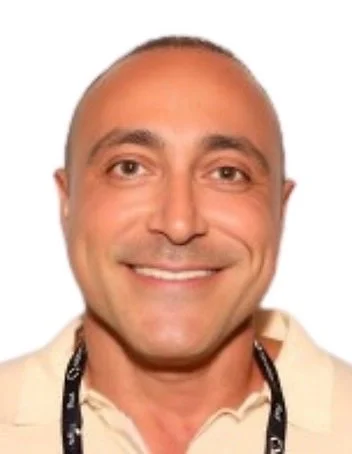
Danny Bibi, CEO of Ad.com
The results are measurable. A typical Public Good campaign produces an 11 percent brand lift, compared with Kantar's industry benchmark of three to four percent. A campaign with L'Oreal, where readers wrote personal thank-you notes to healthcare workers, was one proof point: interacting with a brand's values carries further than a message about them ever could. For nonprofit partners like the NAACP, which had struggled with a perception that "their best days were behind them," the campaigns were designed to demonstrate current relevance and lift donation intent.
The model has also proven itself to Public Good's own industry. The company is now part of Ad.com's portfolio, and the acquisition was framed as a bet on exactly this kind of values-based marketing. "Ad.com was proud to bring Public Good into its family of companies because it gives our advertisers the ability to meaningfully build brand love and loyalty through their values and mission, a truly differentiated offering in today's market," said Danny Bibi, CEO of Ad.com.
Consistency Over Volume
What Anderson has built over a decade at Public Good is less a marketing tool than an argument about consistency. Brands that treat their values as occasional messaging, deployed on the convenient calendar day and retired the next morning, don't earn trust. Brands that show up quietly and repeatedly, in context, do.
"Brand love and loyalty is a long-term game," Anderson said. "And when you go quiet for periods of time, it really doesn't help build your brand authenticity."
Her advice to brands still weighing whether to talk about their values publicly is direct: the risk of silence is greater than the risk of speaking. "It does not have to be high risk," she said, particularly as younger consumers increasingly treat a brand's mission as a baseline expectation rather than a bonus.
Values as Infrastructure
As polarization has made some executives more cautious about public stances, Public Good’s bet is that specificity, not volume, is the way through. Instead of asking brands to plant a flag once a year, the company is building the infrastructure for them to show up consistently, in context, all year long. If the data holds at scale, the model points to a future where a brand's values aren't a marketing campaign at all, but simply part of how it shows up in the world, one relevant moment at a time.
At Conspiracy of Love, we help changemakers tell their most powerful stories — stories that inspire action, build movements, and create lasting impact.
Find out more about our Values-Driven Storytelling and GPS to Purpose workshops, and how we can help you scale your impact.