How The Open Food Company Wants To Make The Clean Choice The Easy Choice
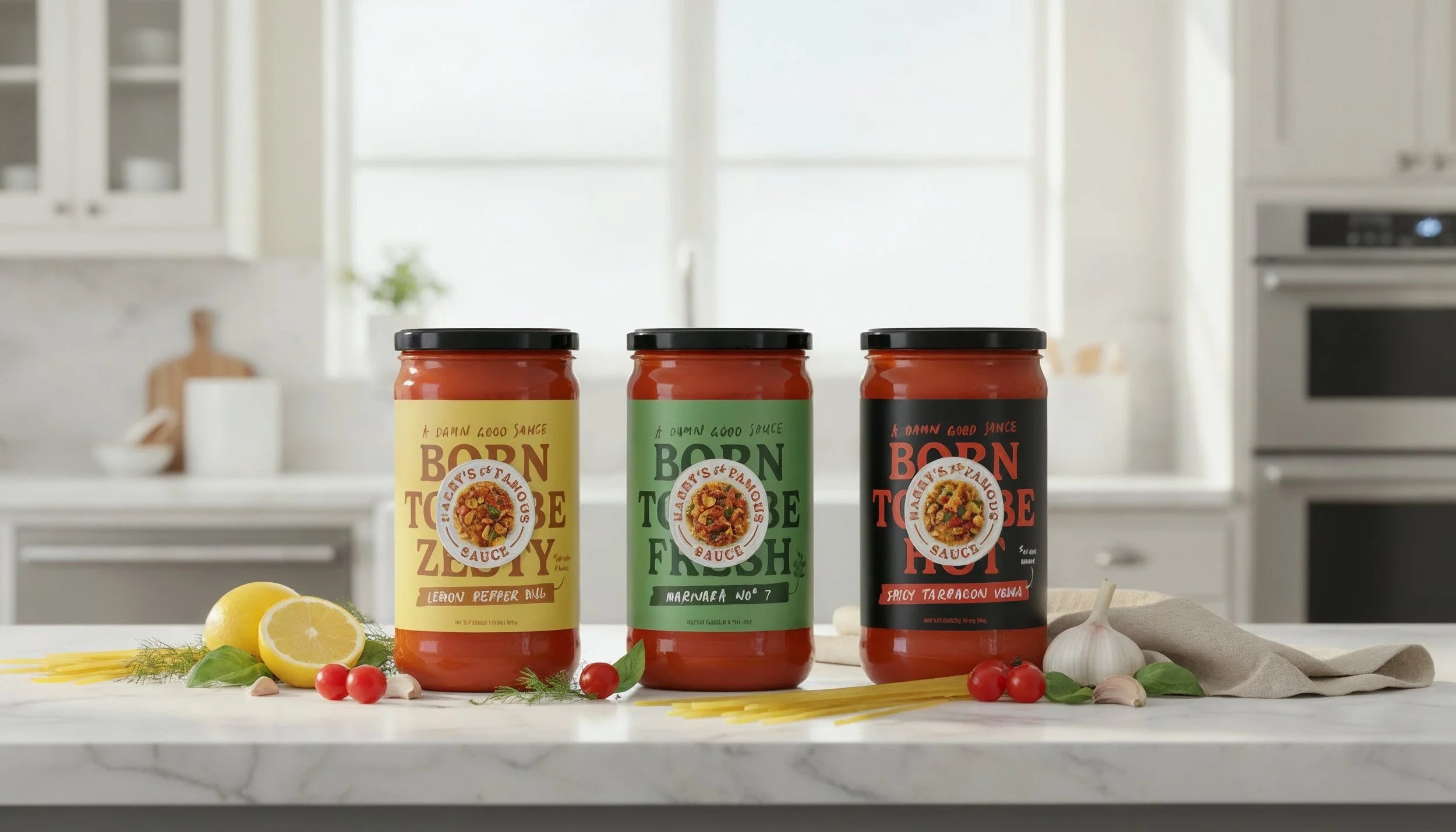
Meet The Open Food Company - the first open‑source packaged food company behind Harry's Famous Sauce | The Open Food Company
At 5 p.m., most people aren’t hunting for culinary inspiration. They’re trying to get something on the table fast, keep everyone fed, and avoid that familiar sense of guilt that comes with “good enough” dinner decisions. Renee Guilbault thinks that moment is where the food industry has quietly failed us. So she built The Open Food Company to fix it, starting with sauces that deliver real vegetables, real flavor, and radical transparency, without preservatives, fillers, or food-industry tricks.
Guilbault is the co-founder and CEO of The Open Food Company, a mission-driven pantry brand she launched with her uncle, Emmy-nominated actor and entrepreneur Harry Hamlin. An acclaimed chef with three decades in the food industry, Guilbault built the company as the first open-source packaged food company, grounded in a simple premise: if you want to know what’s in your food, you shouldn’t have to guess.
Their idea is straightforward. Make restaurant-quality sauces that help home cooks create meals in minutes, and publish the recipes, the manufacturing formulas, and third-party lab testing online. If a consumer wants to recreate the product at home, they can download the recipe for free.
For Guilbault, “in a day and age where there’s just a real lack of trust in food and food products, there’s a lot of skepticism, and rightly so.” That is why, she explained, “putting our recipes up on our website was the only way to say, ‘Look, we have nothing to hide here, and we want to help you.’” For Guilbault, it’s simply how they run the business.
From food’s “dark” side to an open-source pantry brand
Guilbault has spent more than three decades across food procurement, kitchens, and large-scale operations. Early on, she became “absolutely fascinated at just the scope and the enormity of what was possible in food.” But she also saw what she described as “manipulative and dark” parts of the industry.
One example stuck. She recalled working with an additive company on “micro-encapsulated, heat-activated scents,” tiny aroma “bubbles” designed to release fragrance at a certain temperature. “It started to become very apparent to me that there was a lot of manipulation in food,” she observed, “and that we were getting really good at architecting these flavors and experiences that didn’t necessarily deserve to be attached to these products.”
That experience pulled her back toward what she trusted: real ingredients and classical technique.
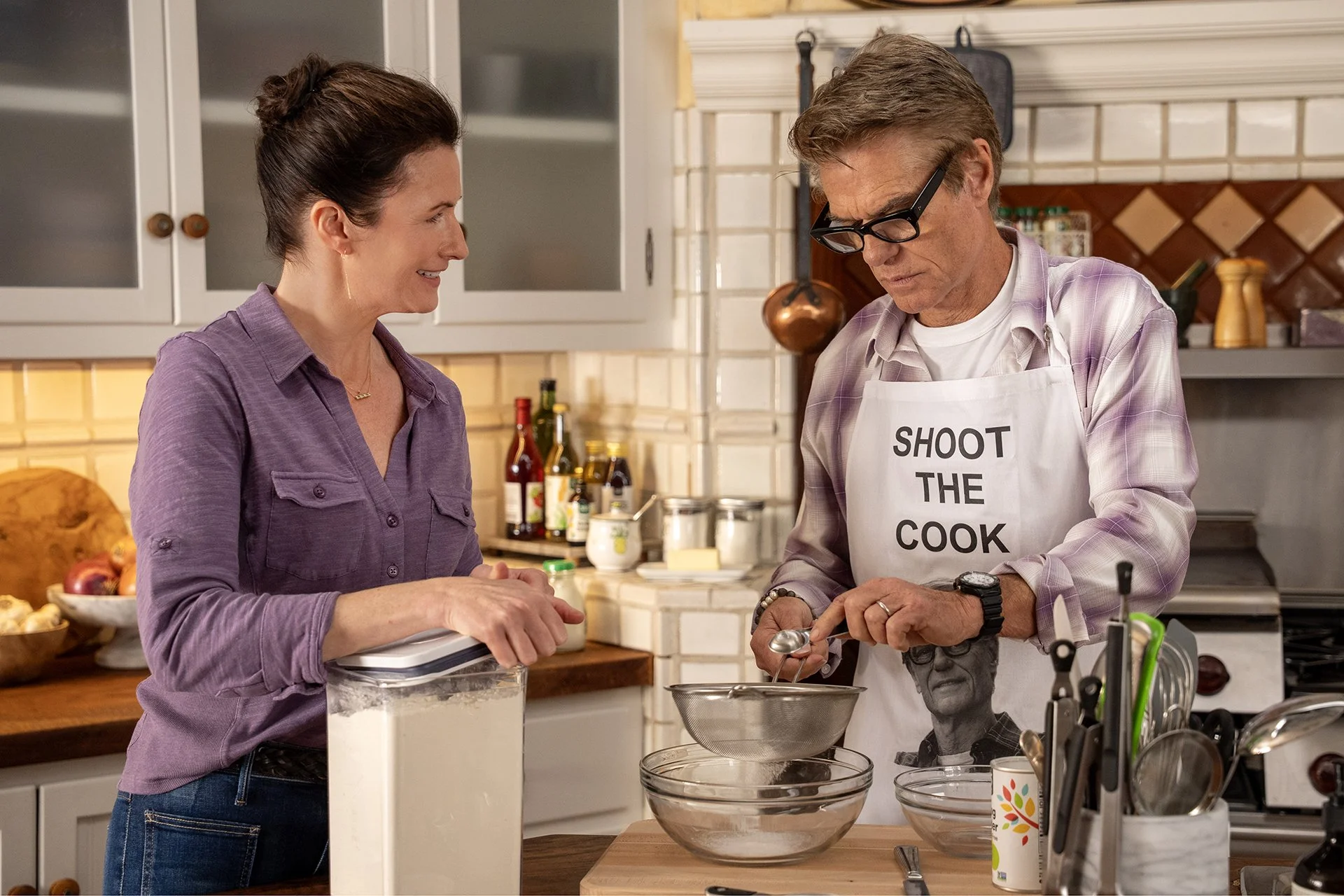
Harry Hamlin and Renee Guilbault in In The Kitchen With Harry Hamlin (Season 2, Episode 3). | Michael Moriatis/IFC/AMC
Flavor first, nutrition forward, no shortcuts
The Open Food Company is built for the exact tension Guilbault sees in everyday life. “The biggest problem people have right now is getting food on the table that they feel good about,” she told me. “And we’re in an environment where almost everybody is outsourcing every single meal of the day.”
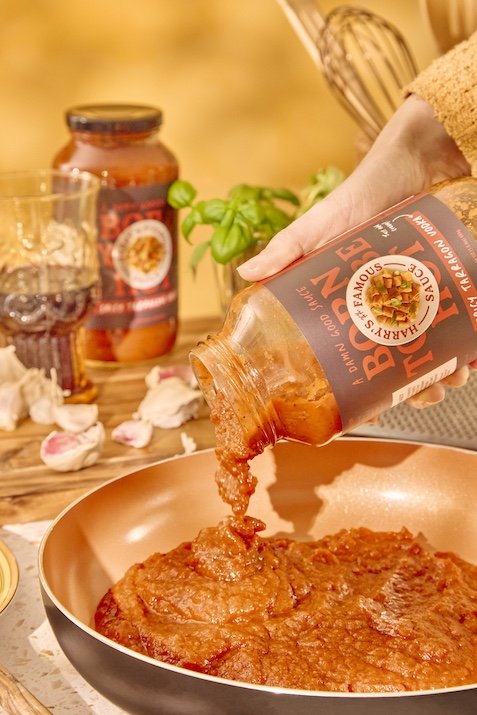
The company uses “real ingredients from farms, never labs,” and avoids “preservatives, fillers, additives” and other processing aids. | The Open Food Company
Her solution is to do the work before the consumer has to. “Who has time to chop seven vegetables at 5 p.m. after a full work and school day?” she asked. “Let’s just do that for you. We’ll do that for you. We’ll put it in the jar.”
The brand describes itself as “nutrition forward,” but Guilbault is clear about the priority. “Most importantly, we are flavor first,” she emphasized. The company uses “real ingredients from farms, never labs,” and avoids “preservatives, fillers, additives” and other processing aids. If that’s required, she made clear, they simply won’t make it. “If we have to use a preservative or an additive or filler or processing [aid], we’re just not going to make it.”
She added that Marinara No. 7 includes “20% of your recommended daily vegetable intake” per serving. The bigger goal, she said, is to help people get dinner done “in minutes,” without feeling like they compromised.
The Harry Hamlin proof point
Harry’s Famous Sauce, Hamlin’s signature bolognese sauce became the brand’s proof of concept and the first product that helped translate their philosophy into a jar. Guilbault described how his process differs from a classic bolognese. “He makes the sauce on the side,” she explained, cooking the meat separately and combining it later. “So what we did was we stopped before the meat started and jarred up the base of the sauce.”
The company has also had to meet consumers where they are. “People aren’t yet accustomed to understanding that you’re supposed to do something with a base sauce,” she acknowledged. So The Open Food Company built a lineup that includes both more versatile foundations and ready-to-use sauces, aiming to create “restaurant quality experiences to transform easy meals at home.”
Radical transparency as a new default
Transparency is not a footnote here, it is the operating system. The Open Food Company posts home-cook recipes, manufacturing formulas, and lab testing online because Guilbault doesn’t believe food should feel like a black box.
“Everything’s pharmaceutical lab grade tested,” she noted. The company posts nutritional, gluten, and ethanol analysis for download because “it should be easy to find that information about food you put in your body or you put in your family’s body.”
Why no preservatives are needed
The sauces are shelf stable, but Guilbault doesn’t rely on additives to get there. “It’s really because of the way that old school canning works,” she explained. High heat kills bacteria, sealing creates a vacuum, and “nothing can grow.”
She also pointed to a key detail people often miss. Tomatoes are naturally acidic enough to deter spoilage bacteria. Combined with the canning process, that is why the products can be safely shelf stable for years without preservatives. And for her, the rule is non-negotiable. “If we have to use a preservative or an additive or filler, we’re just not going to make it.”
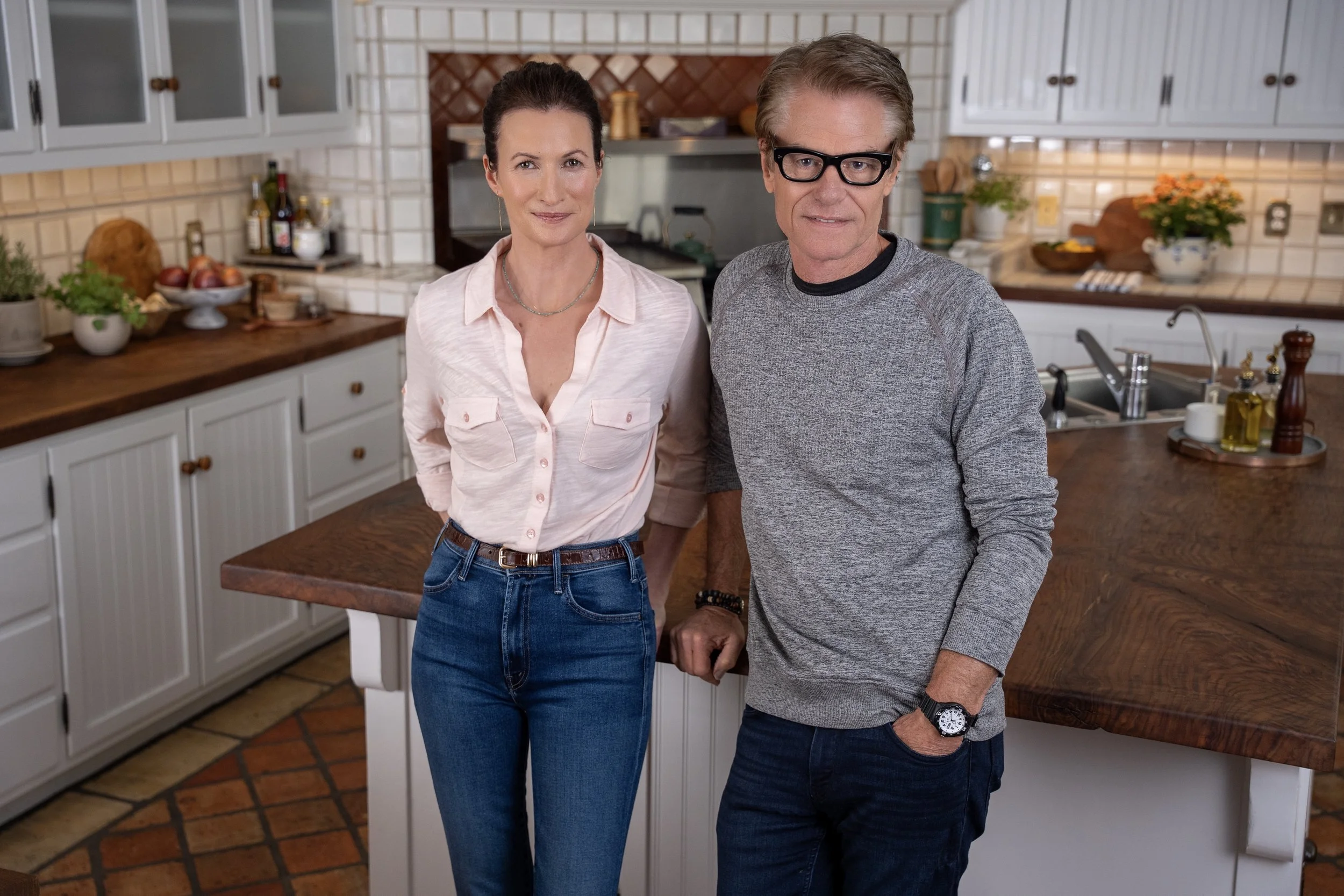
Harry Hamlin and Renee Guilbault in In The Kitchen With Harry Hamlin (Season 2) | Michael Moriatis/IFC/AMC
Social impact baked into the model
The Open Food Company supports four hunger-relief partners: LA Regional Food Bank, Project Angel Food in West Hollywood, The Open Door in Gloucester, Massachusetts, and Food Bank for New York City.
Guilbault reported that they have “raised and donated $87,000 to date,” and donated product at scale. “We’ve donated 25,000 pounds of sauce in 2025 to our charity partners,” she said, including 22,000 pounds to LA Regional Food Bank. Because the business is still growing and “not yet profitable,” she added that they find other ways to support their partners too. “We auction dinners,” she said. “Uncle Harry and I go to people’s houses and cook.”
What comes next
Today, The Open Food Company sells direct-to-consumer and has begun expanding into retail. Guilbault noted that they launched in Joan’s on Third and then into Gelson’s Supermarkets, with additional retailers in the pipeline.
Next comes the growth piece. “We will be actively fundraising in Q1 – looking to raise $3MM to action our 4-year growth plan.” “We are a lean, tight, highly seasoned team.”
Guilbault’s personal benchmark for success is blunt and ambitious. “The proudest day in my life is going to be when we’re the cheapest product on the shelf and the best for you,” she said. “And of course, the one that tastes the best. Real ingredients with culinary techniques really makes magic in a jar.”
At Conspiracy of Love, we help changemakers tell their most powerful stories — stories that inspire action, build movements, and create lasting impact.
Find out more about our Values-Driven Storytelling and GPS to Purpose workshops, and how we can help you scale your impact.