Why Neuro Inclusion Might Be The Missing Link To Better Innovation

Deloitte US report: The neurodiversity advantage: How neuroinclusion can unleash innovation and create competitive edge | Deloitte US
What if the most powerful innovation lever in your company isn’t a new tool or a new org chart - but a new relationship with the diversity of minds that operate within it?
My own journey of getting diagnosed with ADHD at age 51 prompted an understanding of the field - and that question is what made me want to speak with Deborah Golden, Chief Innovation Officer at Deloitte US.
Deloitte has been putting real weight behind this conversation, including a Deloitte Insights report on neuro-inclusion and innovation. Golden has been one of the voices pushing the message that this isn’t a niche topic. It’s a performance topic. It’s a creativity topic. It’s a human topic.
Different minds solve different problems
Golden doesn’t talk about neurodiversity as a human resources initiative. She talks about it as an advantage for solving hard problems. And it raises a simple question. If we’re trying to solve hard problems, why would we want only one kind of mind in the room?
“It’s never been about a quote unquote breakthrough,” she told me. “It is literally about how we bring all types of cognitive thinking to the table in order for us to solve incredibly difficult and complex problems in the world.”
What stayed with me is how much this challenges the quiet norms many workplaces protect. Not who is “easy to work with,” but what we’ve decided counts as “the right way” to think.
For Golden, the unlock comes when different cognitive styles are paired instead of separated. She described the value of creating ‘productive tension’ across thinking styles. “How do we pair lateral divergent thinkers with linear execution operators to create that friction between two cognitive styles, not to slow us down, but to push us forward by not having groupthink?”
That word ‘friction’ matters. Not conflict. Not drama. Just enough tension to keep a team from sleepwalking into the same old answers.
The system shapes the outcome
There’s a common statistic that around 20% of employees may be neurodivergent. Golden is careful with that framing. “Twenty percent is if individuals have identified, because it’s still pretty self-selected,” she noted, adding that the numbers are “underrepresented.”
Her larger point is that people learn and work differently, whether or not they ever choose a label. “Everybody, neurodivergent or neurotypical, have different ways of learning and understanding,” she explained. “This notion and definition of ‘‘normal’ is a fallacy.”
And when workplaces are built around one default, the cost is invisible but real. “You can’t scale any type of cognitive behavior, let alone multiple types of cognitive behavior, by forcing people into a system that wasn’t built for them,” she posited. “Historically, most systems, if not all systems, were built for one type, neurotypical.”
Golden also pushed back on the idea that scale equals rigidity. “Most people think that scale requires rigidity,” she said. “I would argue it requires governance and guardrails, not rigidity.”
That shift shows up in day-to-day expectations. “If we can move from strict process adherence to outcome-based management, that will allow neurodivergent individuals specifically to arrive at a solution perhaps via a very different route, but you’re still achieving the outcome,” she emphasized.
And it shows up in the little things that drain creative energy. “If the system requires complex reporting that drains a creative thinker, we should automate it,” she advised. “We need to teach the system so that it serves talent rather than forcing talent to serve the system.”
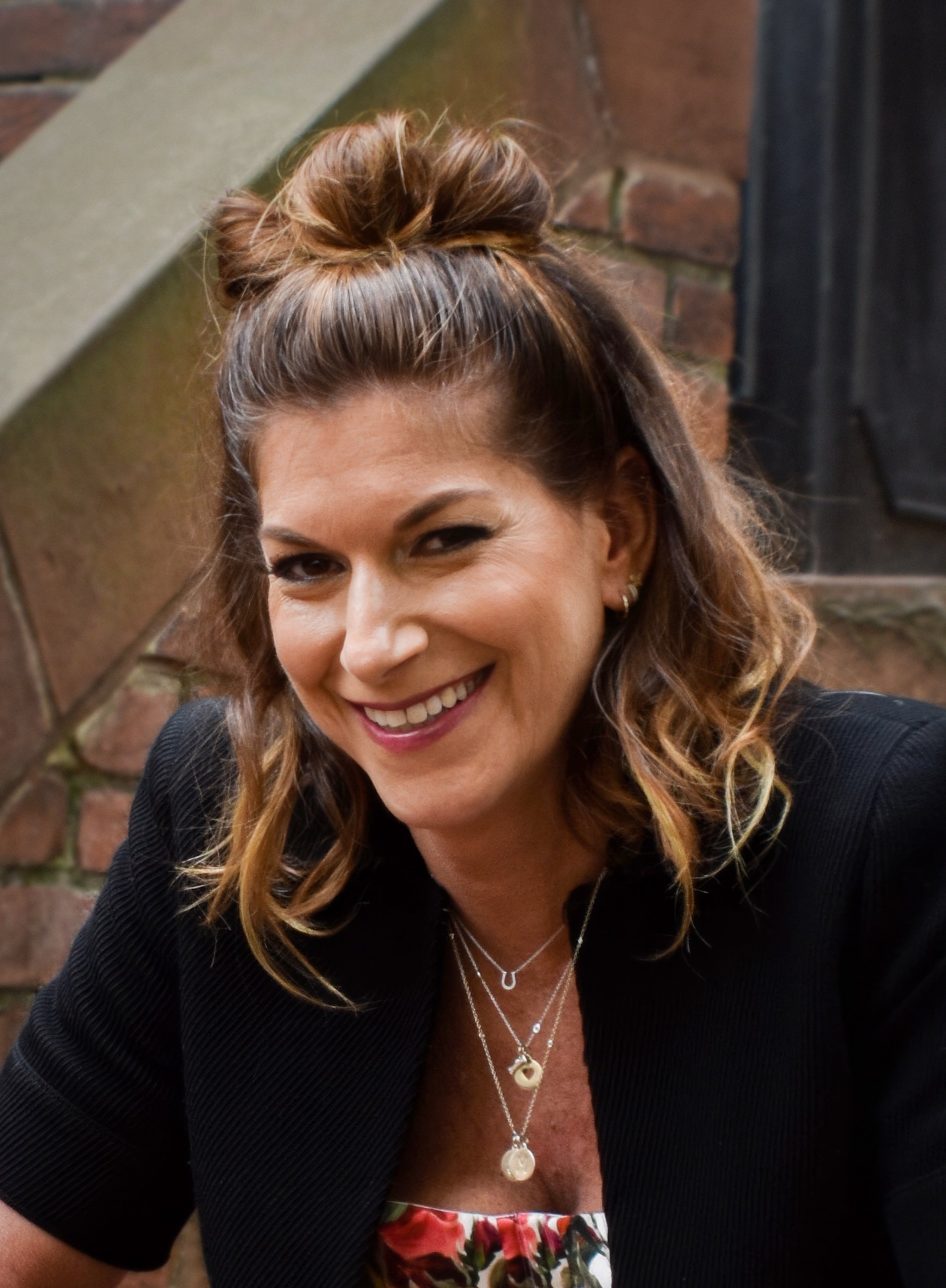
Deborah Golden, Chief Innovation Officer, Deloitte US | Deloitte US
Design for more people and everyone benefits
Golden often returns to design, because it reveals what inclusion looks like when it’s baked in, not bolted on.
She pointed to the world-famous Gallaudet University for the deaf and hard of hearing, and referred to simple architectural choices that change how people move and communicate. Hallways are wider, in part for wheelchair access, and also so deaf or hearing-impaired individuals can keep line of sight while communicating. “That’s a great design feature,” she observed. “Everyone would benefit.”
The principle is straightforward. “If you’re only designing for one archetype, everybody else isn’t going to get that benefit,” she cautioned.
Not a program, a better way to work
One of Golden’s strongest convictions is that neuro-inclusion can’t live as a standalone initiative.
“Neurodiversity and the misunderstanding of thinking it’s a program, it’s not a program,” she said. “It fundamentally is an operating model update.”
She also challenged the language of ‘accommodation’. “It’s not about how we have this as an accommodation, because to me, that implies you’re doing someone a favor,” she added. “It’s about how we do everyone a favor by removing this friction.”
Her framing lands because it’s practical. “When you fix the environment, the deficit often evaporates for all,” she explained. And it changes where responsibility sits. “The shift for me happens when leadership accepts that the system must share that burden.”
AI as a leveler for different kinds of thinking
Golden also sees AI as an accelerant, if it’s used with intention.
“I have sort of renamed AI as augmented intelligence, not artificial intelligence,” she said, because “the combination of human cognitive diversity and AI will outpace any solo endeavor.”
She described AI as “the most significant leveler we’ve ever seen.” In her view, it can reduce the translation burden many people carry. “It allows a nonlinear thinker to translate complex ideas into linear strategy almost instantly,” she explained. “It removes the tax of execution function tasks, freeing up pure cognitive processing power for innovation.”
At the same time, she was clear about the guardrails. This only works “if it’s intentionally designed and doesn’t erode that human connection and trust.”
And she highlighted how different AI is from prior tech shifts. “AI is purposely unpredictable, but it’s an always-on learning model,” she said. “It has to be taught how to learn.” That’s where cognitive diversity becomes even more valuable. “You want the most amount of diverse thinking so that it can learn with that in its passion and in its power.”
The leadership shift
Golden’s view of the future is less about commanding and more about weaving.
“The future isn’t about commanding intelligence,” she said. “It’s about orchestrating different intelligences.” For her, the job of a leader is to bring neurotypical, neurodivergent, and the artificial into “a cohesive whole.”
She left a final equation that deserves more airtime. “Integration is greater than identification,” she said. “The ultimate goal is seamless integration where labels matter less than the impact that they can generate as being together.”
Because when the solution is brilliant, you don’t have to ask who is who. You just notice that it’s brilliant, and that it got there by making room for more than one kind of mind.
At Conspiracy of Love, we help changemakers tell their most powerful stories — stories that inspire action, build movements, and create lasting impact.
Find out more about our Values-Driven Storytelling and GPS to Purpose workshops, and how we can help you scale your impact.