Hope, Technology And The Future Of The Ocean: A Conversation With Sylvia Earle
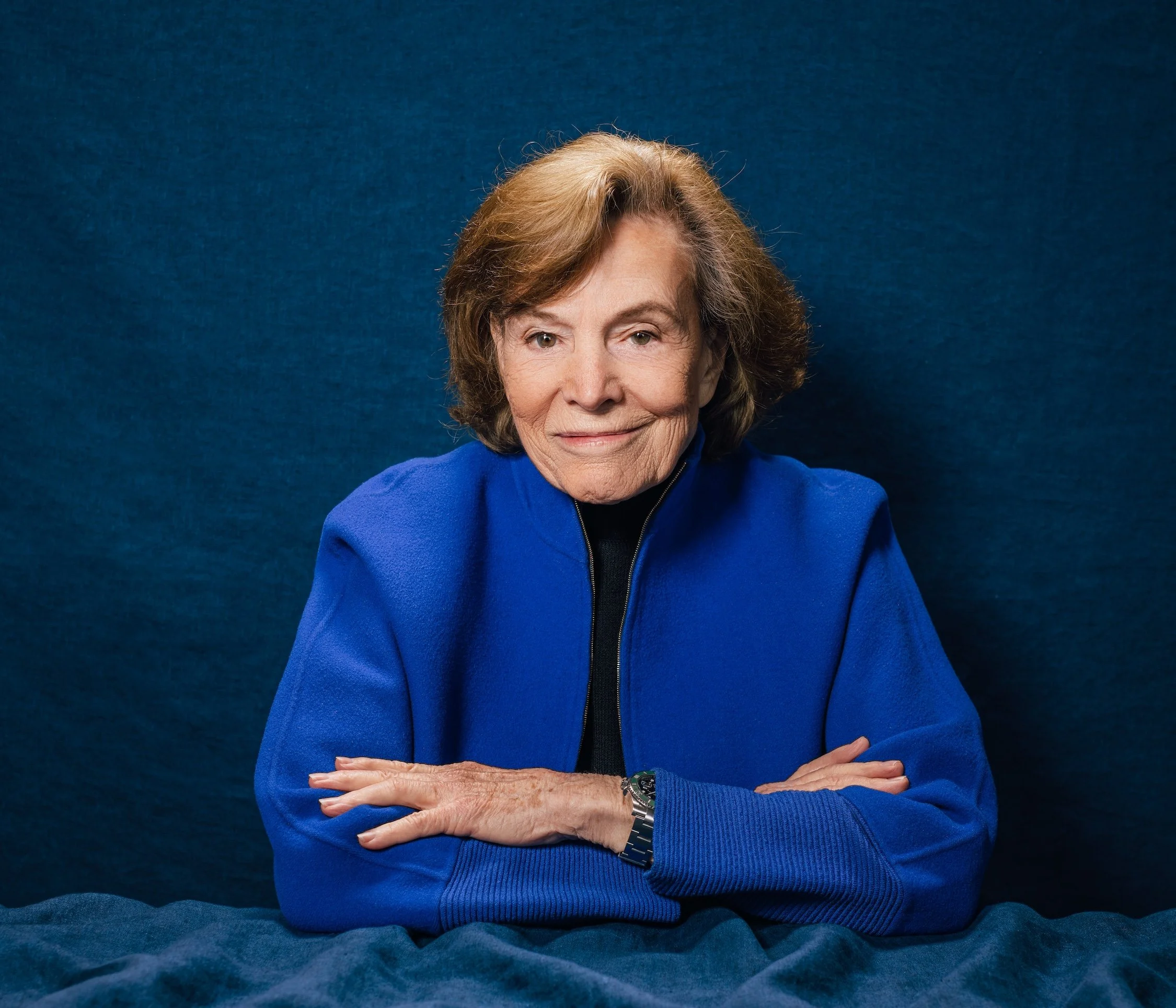
Meet The Open Food Company - the first open‑source packaged food company behind Harry's Famous Sauce | The Open Food Company
Few living scientists have witnessed as much planetary change as the legendary Sylvia Earle, who recently turned 90.
A former Chief Scientist of NOAA, leader of the first all-female aquanaut team in the 1970 Tektite II underwater habitat mission, National Geographic Explorer at Large, and founder of Mission Blue, Earle has logged more than 7,000 hours underwater across seven decades. She has led more than 100 expeditions and helped establish a global network of “Hope Spots”—critical marine areas identified for protection.
When I sat down with her, our conversation moved quickly from culture to technology to the moral framework underpinning the environmental crisis.
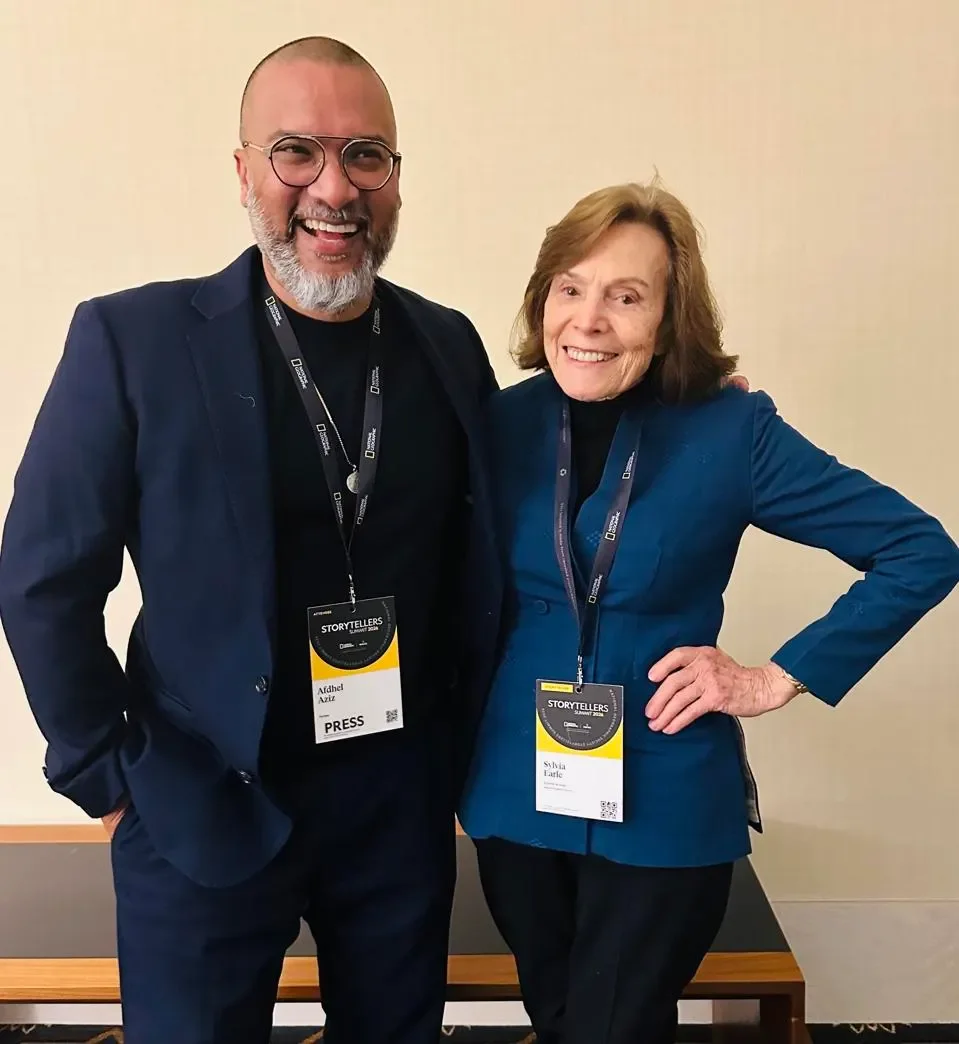
Afdhel Aziz and Dr. Sylvia Earle at the 2026 National Geographic Storytellers Summit | Afdhel Aziz
“You Can’t Care for What You Don’t Know”
Earle believes one of the greatest barriers to conservation is disconnection.
“You can’t care for what you don’t know,” she told me. “And the magnitude of our ignorance about our reliance on nature is enormous.”
At the heart of the problem, she argues, is a cultural narrative that separates humans from the natural world. From childhood, many of us are taught that nature exists as a resource—something to be extracted, converted, monetized.
But trace any form of wealth back to its origin and you find the same source: the natural world. Minerals, water, forests, fisheries—every economic system is built on ecological systems.
No other species has extracted at the scale or speed that we have. Nearly half of the planet’s land surface has been converted for agriculture, primarily to feed humans and livestock. Since the mid-20th century, industrial fishing has scaled dramatically with motorized fleets, synthetic nets and global shipping networks.
“We have a different ethical framework for life in the ocean,” Earle said. “On land, we protect lions and elephants. In the sea, we subsidize large-scale industrial killing of wildlife and call it seafood.”
Technology: Amplifier of Intent
Earle is clear-eyed about technology. The same advances that enabled industrial extraction also enabled unprecedented exploration.
The first descent to the deepest part of the ocean occurred in 1960. More than 50 years passed before another crewed mission returned. Today, submersibles, rebreathers, remote vehicles and advanced imaging systems allow scientists to reach full ocean depth and study ecosystems previously inaccessible.
“We’ve learned more about the nature of the Earth and the universe in recent decades than in all prior human history,” she said. “Technology gives us knowledge. The question is what we do with it.”
In her view, technology is not inherently destructive. It is an amplifier of intent. It can be used to wage war or to understand life-support systems. It can enable mass extraction—or conservation.
The issue is not capability. It is motivation.

Sylvia Earle in Deepworker sub | Tim Taylor
Storytelling as Infrastructure
Earle is blunt about the limits of science without communication.
“What good is it if you make a big discovery and don’t share it widely?” she asked. “If you only communicate in language your fellow scientists understand, it doesn’t become part of public understanding.”
The communication gap between science and society, she argues, is part of why we are in trouble. Increasingly, she sees progress: scientists learning to translate complex data into language accessible to a 10-year-old—or to policymakers.
This matters. Culture shifts before policy does.
Earle points to whales as an example. Within a generation, public perception flipped. Whalers once celebrated as heroes are now widely condemned. As people began to understand whales as intelligent, social beings—not commodities—protection followed.
“If we can change our attitude about whales,” she said, “we can change our attitude about other life in the ocean.”
The Hope Gap
We discussed research from the Yale Center for Climate Change Communication that identifies a widening “hope gap”—the distance between rising anxiety and belief that collective action can make a difference.
“If you don’t have hope, and you think you can’t do anything, then it’s over,” Earle said. “Hope by itself doesn’t change anything. But if it inspires action, even small actions, multiplied by billions of people, that changes the world.”
Her emphasis is on agency. No two individuals have identical skills or influence. But everyone has capacity.
“Find what makes you, you,” she said. “Whether it’s teaching, building, caring for others, analyzing numbers—apply it in the right direction. And don’t let others discourage you.”
The Real Security Issue
Earle reframes environmental collapse as a security issue.
“We should be concerned about maintaining our life-support system,” she said. “That’s the rest of nature.”
Earth operates as a tightly woven system evolved over hundreds of millions of years. Oceans regulate climate. Forests store carbon. Microbial systems underpin soil fertility. The destruction of these systems is not an abstract environmental issue; it is a direct threat to economic stability, food systems and geopolitical security.
Yet resilience remains.
“Half the coral reefs are gone,” she acknowledged. “But the other half are still in pretty good shape. Nature is resilient. If we give it a break.”
Protection, in her view, must be scaled dramatically. Mission Blue’s Hope Spots initiative is one effort to identify and advocate for safeguarding critical marine ecosystems. But she argues far more is needed—especially reducing industrial fishing subsidies and expanding fully protected marine areas.
Five Reasons for Hope
Earle often echoes fellow conservationist Jane Goodall in outlining reasons for optimism:
The accumulated knowledge of the human mind.
The human spirit—compassion, creativity and moral imagination.
Nature’s resilience.
The next generation’s curiosity and lack of entrenched bias.
The enduring “inner child” in adults—the capacity to remain curious and question assumptions.
Children, she notes, do not begin life seeking domination. They begin with wonder.
The challenge is preserving that curiosity rather than replacing it with indifference or cynicism.
Making the Right Thing Contagious
Our conversation ends with a cultural question: can doing the right thing become socially contagious?
Earle believes it can—but only if understanding comes first. Caring follows knowledge. Action follows caring. Scale follows cultural adoption. In a hyper-connected world, behavior spreads rapidly—whether destructive or constructive. The same dynamics that normalize overconsumption could normalize stewardship.
“We like to breathe,” she said simply. “We like water we can drink. We like food we can eat. That’s common ground.”
In the end, her message is less about guilt and more about responsibility. Humanity has unprecedented power. For the first time in history, we can see—from satellites above and submersibles below—the full scope of the systems that sustain us.
The question is whether we choose to protect them.
“Make the world at least as good as what we inherited,” she said. “Better, if we can.”
At Conspiracy of Love, we help changemakers tell their most powerful stories — stories that inspire action, build movements, and create lasting impact.
Find out more about our Values-Driven Storytelling and GPS to Purpose workshops, and how we can help you scale your impact.