How The Marcus Graham Project Is Turning Two Decades Of Overlooked Talent Into An Economic Force
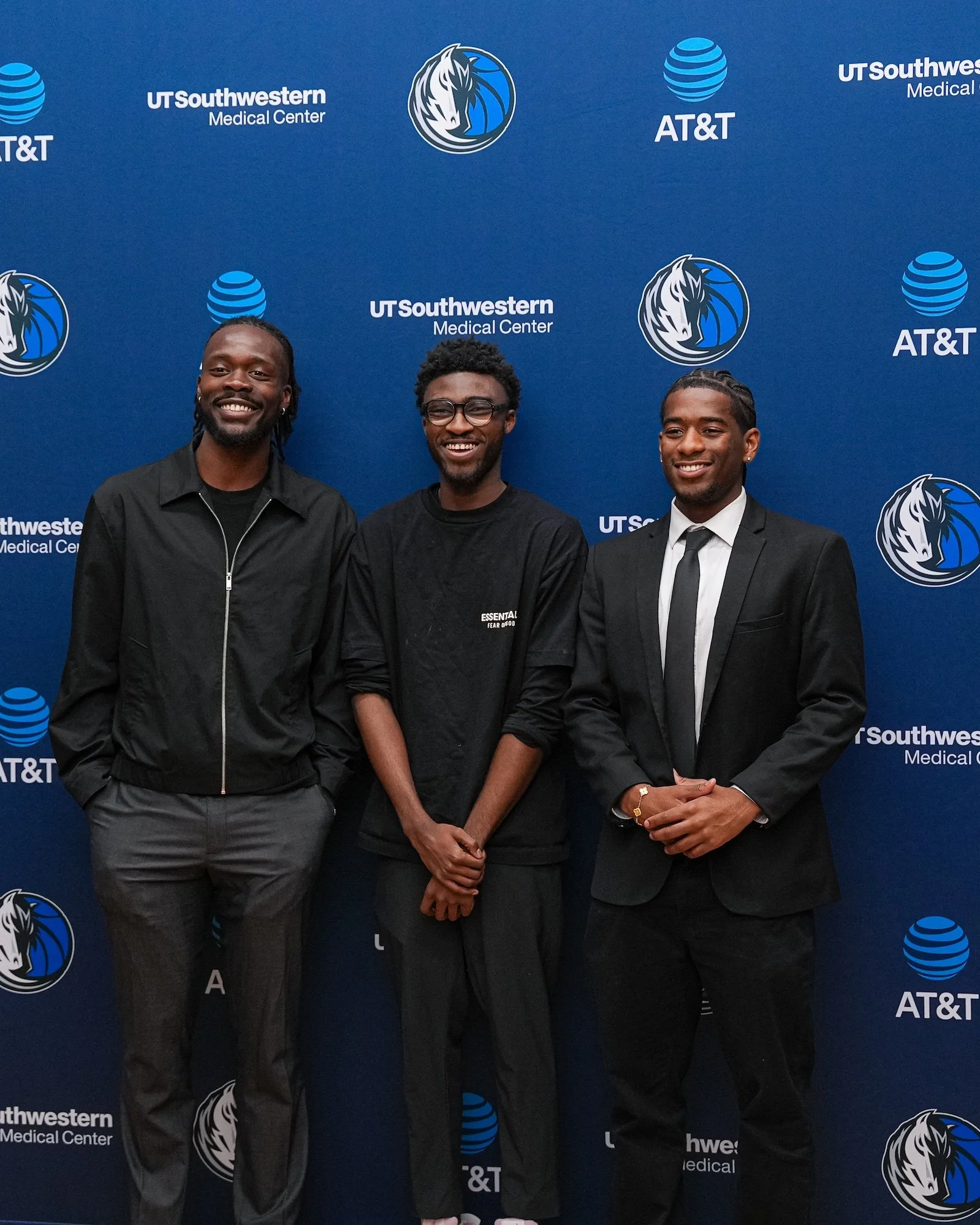
Marcus Graham Project at the Dallas Mavericks practice facility on Friday, January 16, 2026, in Dallas, Texas. (Nicole Malunowicz/Dallas Mavericks) | Dallas Mavericks
Every year, thousands of young Black and brown creatives graduate from American universities with real skills, real ambition, and almost no path into the advertising industry that could use them.
The industry's front door has always been narrow — built on internships that go to people who can afford to work for free, entry-level jobs that go to people who already know someone, and a cultural shorthand that rewards those who grew up inside the room.
Talent, on its own, has never been enough.
Lincoln Stephens saw this clearly when he was 25 years old. He didn't write a think piece about it. He built something.
The Marcus Graham Project — named after Eddie Murphy’s razor-sharp advertising executive in the 1992 film Boomerang — is a nonprofit bootcamp that takes young creatives from underrepresented communities and puts them inside real client work, with real stakes, from day one. No simulations. No theory. Applied learning against actual briefs, mentored by industry professionals. Since its founding in 2007 by Stephens and co-founder Larry Yarrell, MGP has trained more than a thousand alumni across twelve markets, with over 90% of alumni finding employment in the industry. Graduates are now at Nike, Spotify, Omnicom, Disney, and BET.
The numbers matter. But what they represent matters more. Kevin Green walked into MGP straight out of college in 2010 with no industry connections and no obvious path in. The program didn't just give him skills — it gave him a room to be in, real work to do, and a network that opened doors the industry had kept shut. Today he's a chief creative officer at a major agency — the kind of role that statistically almost never goes to someone who started where he did. "I'm proud that he has a family," Stephens says. "We've become family." Kevin Green is not a data point. He is the proof of concept.
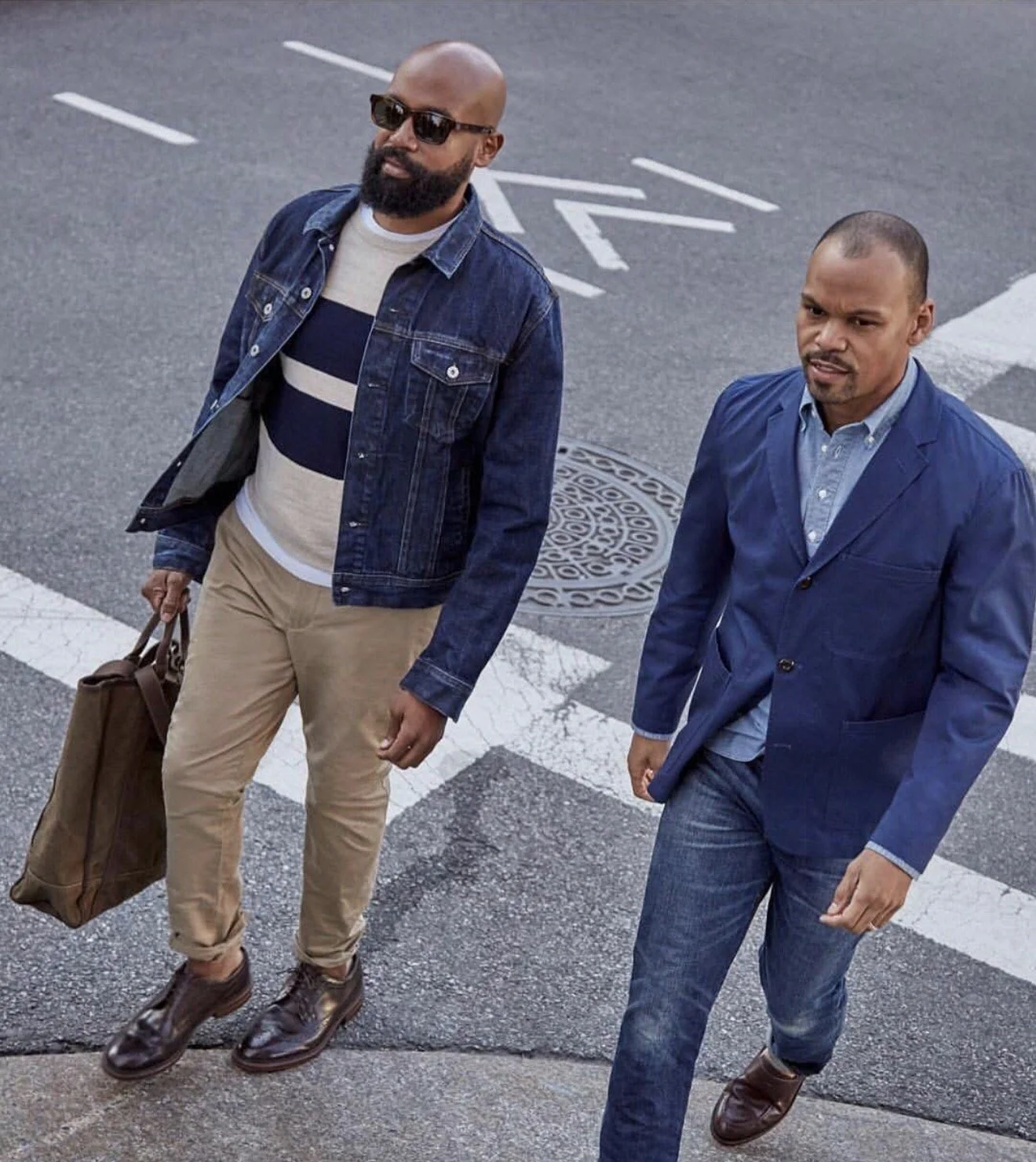
From left to right: Lincoln Stephens, Larry Yarrell, co-founders of the MGP | Marcus Graham Project
When the Wind Changed
Then came 2020's reckoning — the post-George Floyd moment when corporate America briefly turned its attention and its checkbooks toward organizations like MGP. Then came the rollbacks. The economic uncertainty. The AI disruption. A budget that once stood at $1.25 million has fallen to roughly $120,000.
Stephens is matter-of-fact about it. "The world has changed five times over," he says. Most of the pullback wasn't ideological — it was economic. Brands that had partnered with MGP for a decade quietly redirected their spend. Rather than treating the contraction as a verdict, he's treating it as a design brief. The pause has forced a harder question: what does the organization actually need to become?
The Gap Nobody Is Filling
The answer points somewhere the industry hasn't been looking. Omnicom and IPG alone eliminated more than 10,000 jobs in their recent merger, according to the Financial Times and Adweek, while AI simultaneously automates the executional work that once trained junior talent. According to the New York Federal Reserve, new graduate unemployment now sits at 5.7% — its highest level since 2020 — with four in ten recent graduates underemployed. The training ground that built mid-level judgment is disappearing, and nobody is measuring what that costs.
At the same time, more than 194,000 Black-owned employer businesses generate $212 billion in annual revenue, according to the U.S. Census Bureau's Annual Business Survey — the vast majority without access to the marketing talent national brands take for granted. A 2026 survey of the Good Soil Movement's 30,000-member community found that 64% of entrepreneurs want AI tools and automation, and 63% cite marketing as their biggest gap. "I talk to entrepreneurs daily," Stephens says, "and I see the gap and the delta between their utilization of AI — because of either not feeling like they have enough time to stop and train themselves how to deploy it."
What a Million-Dollar Brief Actually Looks Like
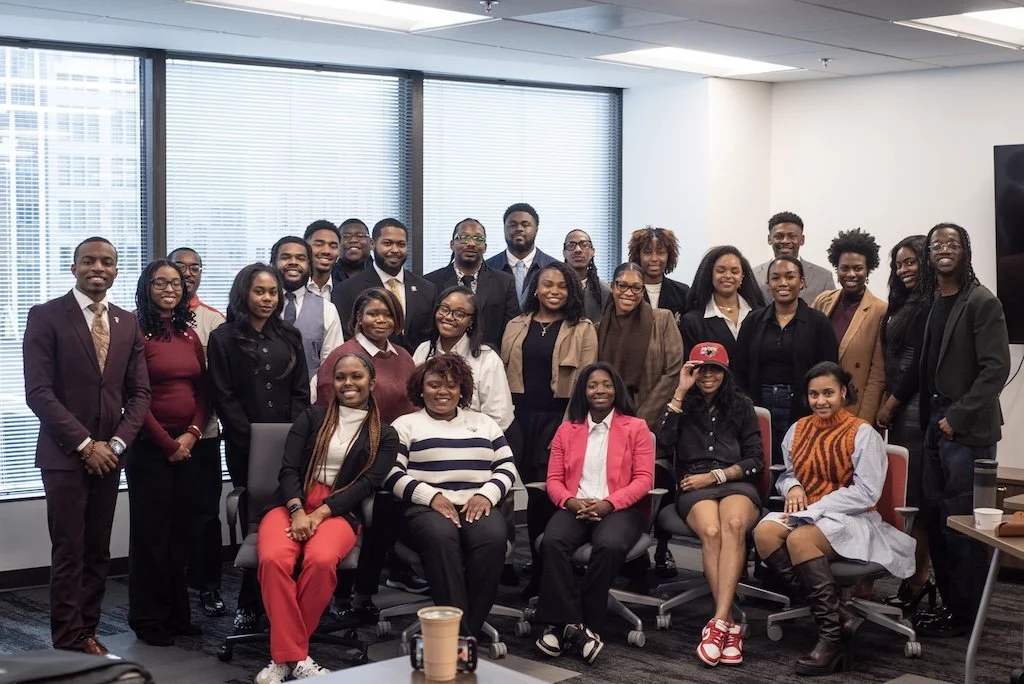
Hawks x Hennessy MGP Workshop | Unique2Chic LLC
In 2020, Moët Hennessy gave an MGP bootcamp cohort in Los Angeles a straightforward assignment: develop a Black History Month campaign. The students came back with a different question. That year was the centennial of the Tulsa massacre — the destruction of Black Wall Street, the most prosperous Black community in American history, burned to the ground in 1921. Why do a campaign when you could build something that lasts?
The result was the Never Stop Never Settle Society, a million-dollar accelerator fund for Black-owned businesses, which has since grown into the Good Soil Movement — co-founded with Bishop T.D. Jakes, an annual forum drawing 2,000 attendees, an app with 30,000 members, and sustained funding from Wells Fargo. The work with Jakes expanded into "Next Chapter," a podcast co-produced with iHeart, staffed entirely through the MGP alumni network. TD Jakes Enterprises is now a Locomotus client, with Stephens himself serving as Chief Brand and Partnerships Officer — proof of the model he is now trying to scale.
That model has a name. Back in 2006, Stephens and Yarrell sketched a vision for a commercial talent company — assembling culturally fluent creative professionals for client briefs, on demand, without traditional agency overhead. The technology wasn't there yet, so they built MGP instead, spending two decades training the talent Locomotus would eventually need. That moment has arrived. Locomotus is live: a platform connecting brands with specialized, vetted marketing teams built for their specific brief. The nonprofit trains the talent; Locomotus deploys it; the revenue sustains the pipeline. It is not a charity model. It is an economic one. "AI doesn't eliminate the need for human judgment," Stephens says. "It actually increases it. You can't download judgment." McKinsey's 2025 State of AI report backs him up — 88% of companies use AI tools, but only 6% capture real enterprise value. The gap is always human.
The Street Where It Comes Full Circle
For twenty years, MGP operated without a permanent home — bootcamps in borrowed conference rooms, cohorts trained in corporate lobbies, talent built in other people's buildings. That changes now. Gamma House will sit at 2509 Martin Luther King Boulevard in South Dallas — a creative hub, community workspace, and training center where entrepreneurs can learn, collaborate, and grow.
The address carries weight that Stephens didn't engineer but can't ignore. His father, Calvin W. Stephens, built a minority business center on that same boulevard nearly fifty years ago, drawing on support from the U.S. Treasury's minority development agency to create a place where Black entrepreneurs could find real help. Gamma House sits across the street from where that center once stood. "We are creating that same thing," Stephens says quietly. He didn't plan to end up on that street. But here he is.
The bet is not complicated, even if executing it is. Culturally fluent, judgment-driven people — trained rigorously, deployed intelligently — will always outperform a system that has none of those things. "People that are gifted with nuance and cultural fluency," Stephens says, "are always going to outperform a robot." Not instead of AI. Alongside it.
The vision from 2006 wasn't premature. It was simply waiting for the world to need it badly enough.

Gamma House - visual concept | Marcus Graham Project
At Conspiracy of Love, we help changemakers tell their most powerful stories — stories that inspire action, build movements, and create lasting impact.
Find out more about our Values-Driven Storytelling and GPS to Purpose workshops, and how we can help you scale your impact.