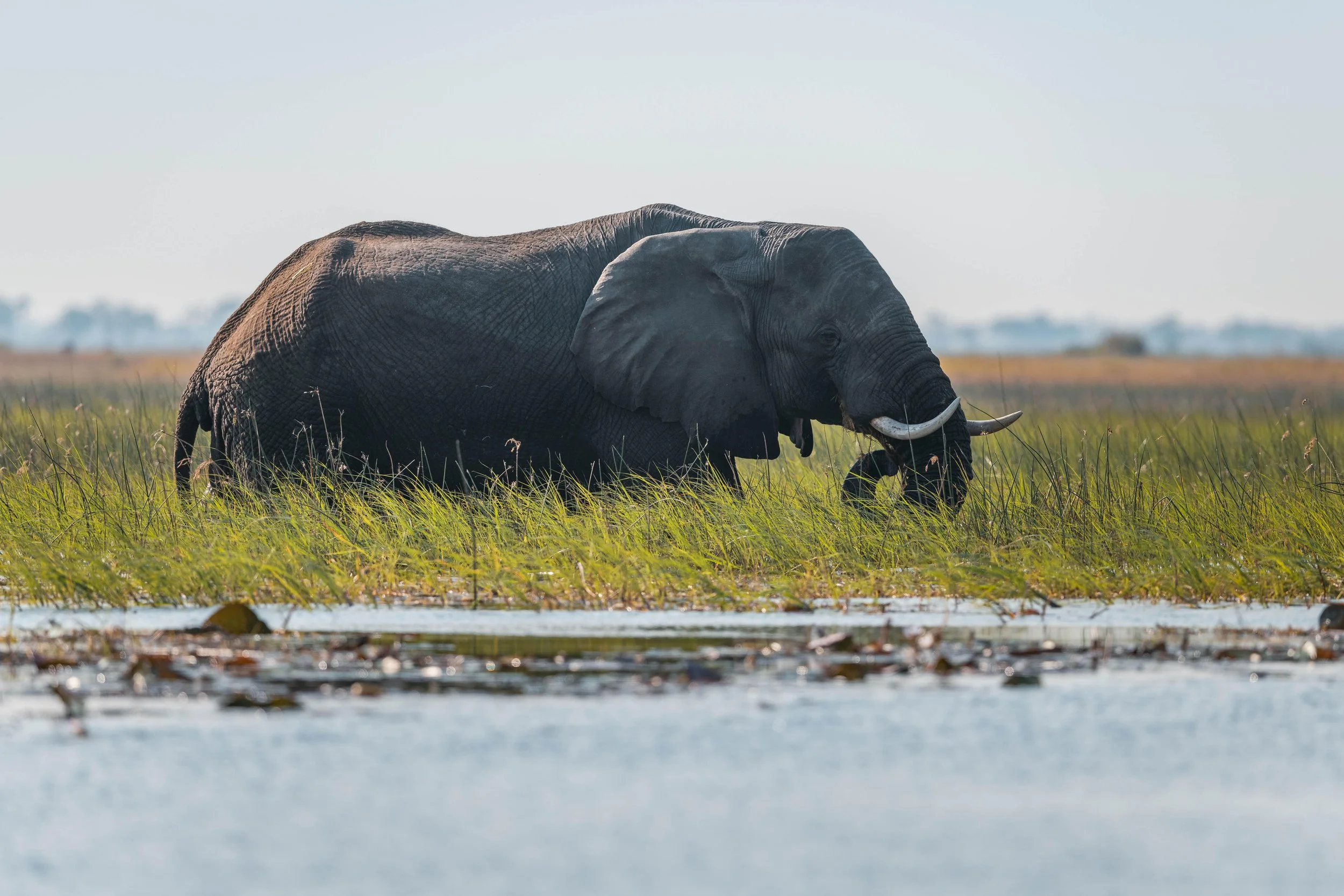
An African elephant moves through the Cuando River. The Okavango Wilderness Project’s 2018 expedition focused on the eastern-most section of their survey area in Angola. | © Kostadin Luchansky/National Geographic
Five of Africa's great river systems are born in the highlands of eastern Angola. The Okavango. The Zambezi. The Congo. The Kwanza. The Cuando. Together they carry water and life across a continent, feeding communities, sustaining ecosystems, underpinning the food security of seven nations. The Okavango Delta — celebrated by every nature documentary, every conservation campaign — simply would not exist without this source.
And yet, until recently, that source had no name on any international conservation map. No recognition. No formal protection. It was, in one of the quiet oversights of modern environmentalism, invisible.
That invisibility is what the Okavango Eternal partnership was built to end.
Launched in 2021, Okavango Eternal is a collaboration between the National Geographic Society and De Beers — two institutions that, on the surface, make an unlikely pair. One is the world's foremost platform for exploration and scientific storytelling. The other is the world's leading diamond company, whose operations sit within the very ecosystem the partnership exists to protect. The collision of those two identities is not incidental. It is the point. "Safeguarding a system as vast and vital as the Okavango Basin cannot be achieved by any one organisation alone," says Sandrine Conseiller, CEO of De Beers Brands. "It requires deep collaboration, mutual trust, and a willingness to listen as much as to lead."
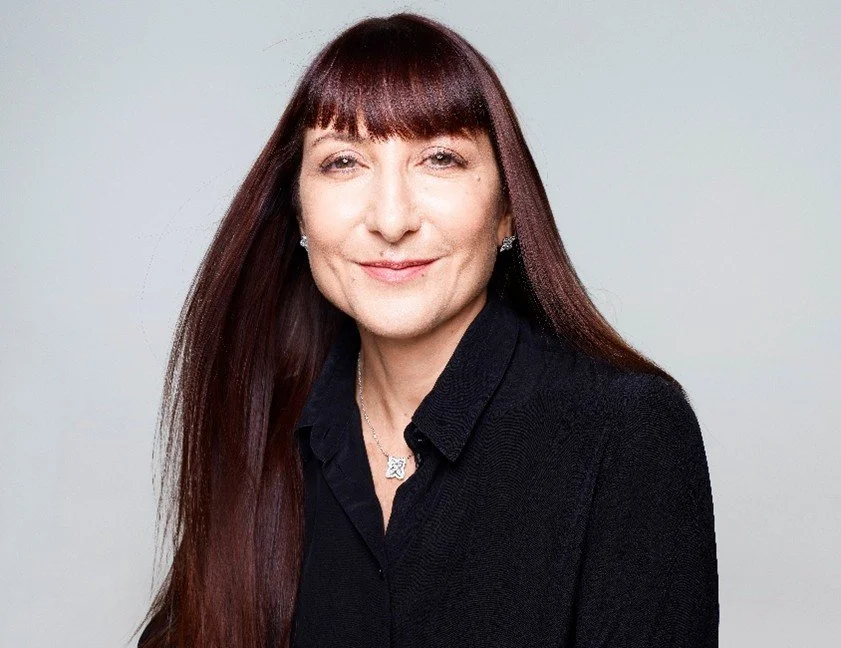
Sandrine Conseiller, CEO, De Beers Brands | De Beers
At the heart of the partnership are National Geographic Explorers — scientists and storytellers selected by the Society to lead field work in some of the world's most critical and underreported places, and to translate that work into knowledge that can change policy, practice, and public understanding. Two of them are working at opposite ends of the same water system, and arriving, from completely different directions, at the same essential truth.
A Gift in Disguise
National Geographic Explorer Kerllen Costa, Angola country director for the National Geographic Okavango Wilderness Project, arrived in southeastern Angola a decade ago with a clear ambition. "Naively, I came pursuing the conventional goal: a national park, a reserve, something with boundaries and a gazette number," he reflects. The Angolan government shut that idea down immediately. They already had a dozen abandoned parks. There was no point in building another.
It was, Costa says, a gift in disguise.
What followed was a fundamental rethinking of what conservation actually is. Walking with the Nganguela communities of the Angolan Highlands, Costa began to absorb something that would reshape the entire arc of his work. These communities held ecological knowledge extraordinary in its depth — fire cycles and seasonal rhythms, animal migrations, the language of rivers changing course — protected through ancestral authority long before any conservation framework existed.
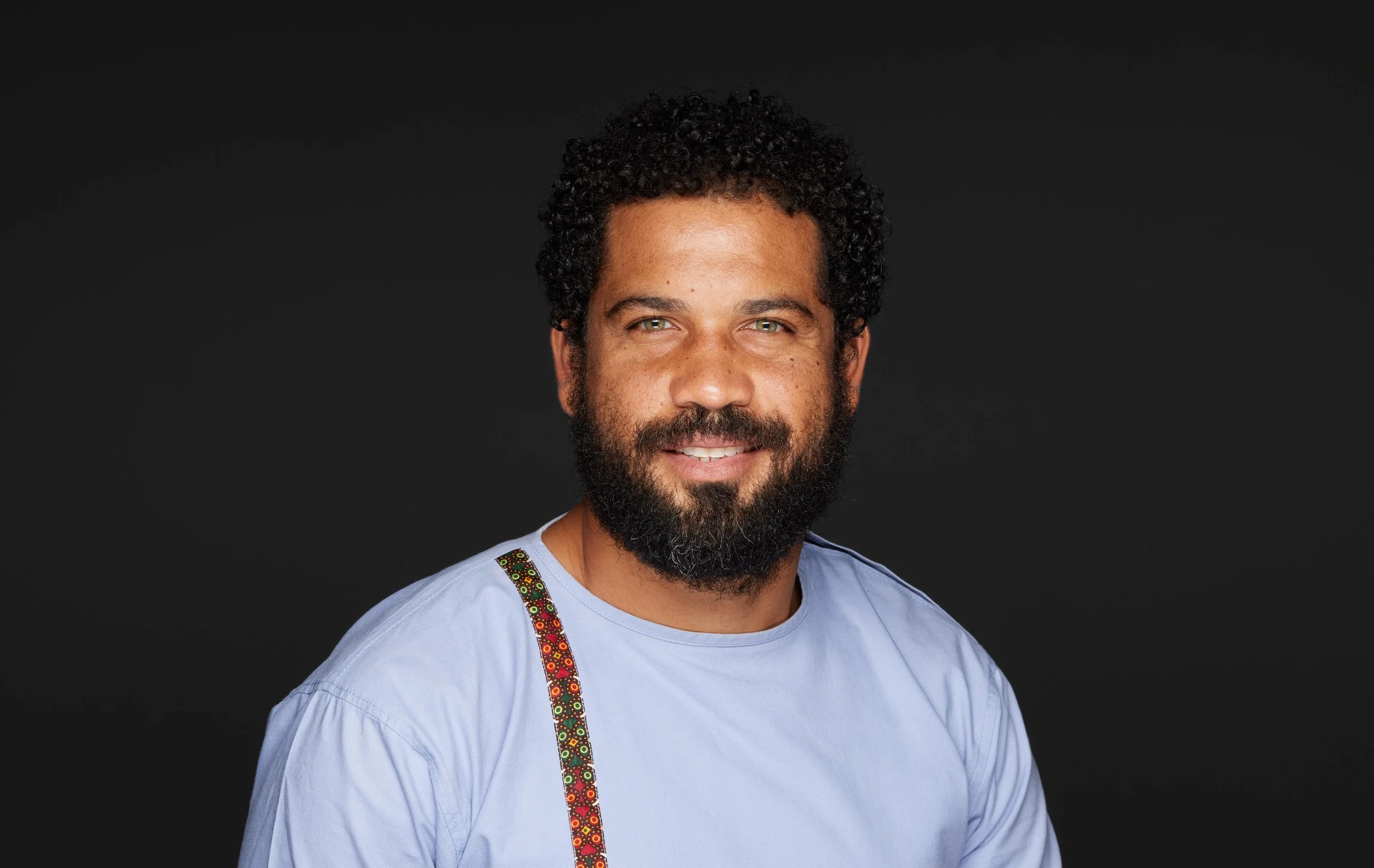
Kerllen Costa, the Country Director for Angola, for the National Geographic Okavango Wilderness Project | Rebecca Hale/National Geographic
"We could see the landscape from above," Costa explains. "But the elders could read it from within. They knew which grasses indicated the depth of peat beneath their feet. They understood the fire calendar — when to burn and when to hold — not as a management technique they had learned, but as a relationship they maintained with the land across generations."
A hunter who had walked those forests for forty years carried in his memory a biological survey more detailed than anything a decade of fieldwork could produce. Traditional ecological knowledge, Costa argues, is not folklore. It is data. Observation accumulated across centuries, tested by survival, refined by consequence.
Out of this came the Ñgala Okola philosophy — "Sacred Power" — which challenges the fortress model of conservation, the assumption that nature must be separated from people to be saved. "Every person in these communities is, by birthright, a watcher of natural heritage," Costa says. "Conservation is not a discipline. It is life."
That philosophy now has institutional form. The Watchers program is its living expression, supported by Okavango Eternal. Former hunters whose knowledge spans every trail, every animal movement, every seasonal shift now form the backbone of an ecological monitoring system protecting fifty thousand square kilometres of source watershed. De Beers' support gave that knowledge a structure, a budget, and a formal role in conservation decision-making. The partnership gave that teaching a place in the world.
In January 2026, that work produced a landmark moment. The Government of Angola designated Lisima Lya Mwono — "the source of life" — as its first Wetland of International Importance, putting the Angolan Highlands on the global conservation map for the first time. "It not only recognizes Angola as the source of the Okavango's waters," Costa says, "but as home to people and communities who are keeping it thriving."
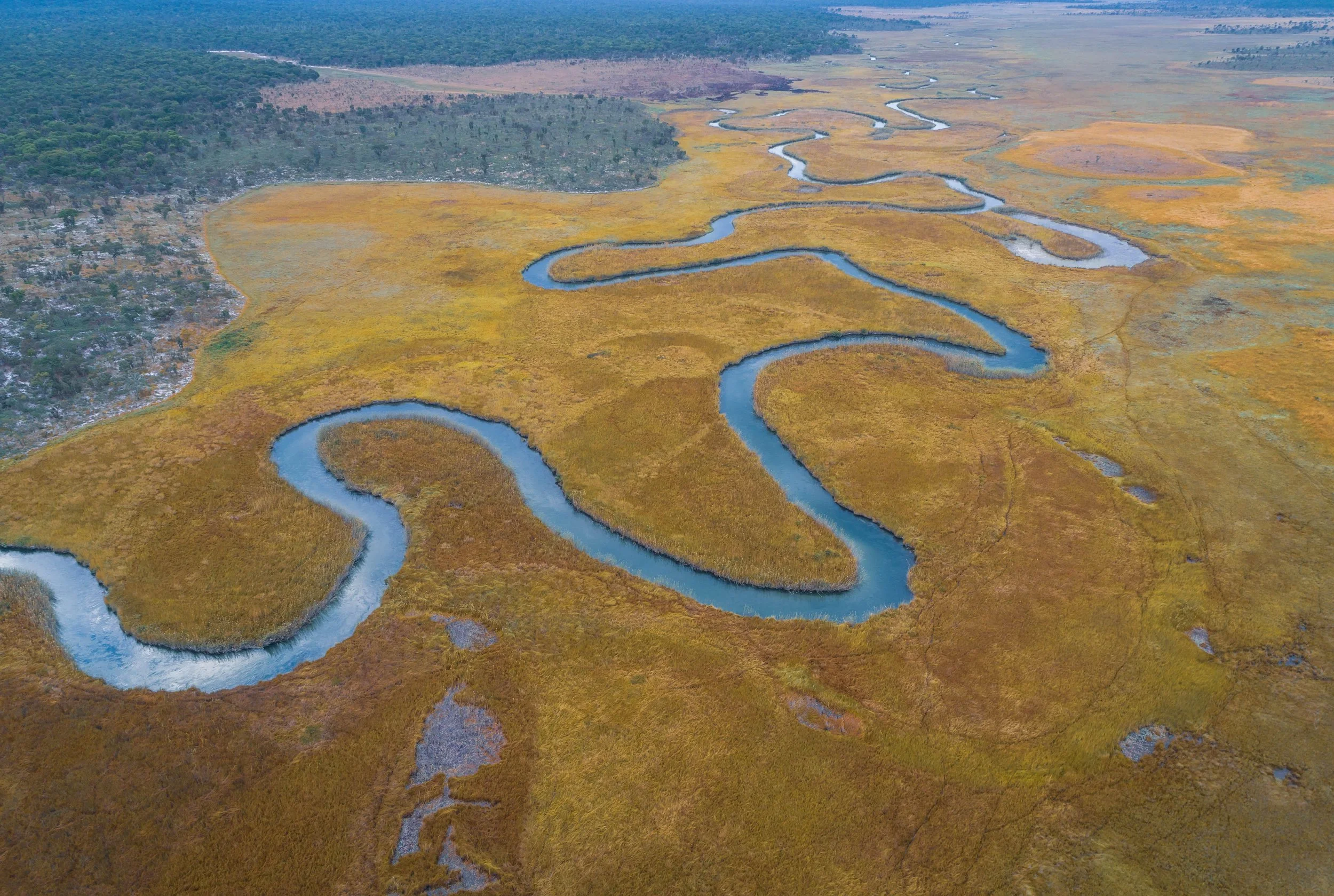
Aerial view of the Cuando River | © Kostadin Luchansky/National Geographic
The Woman Who Reads Water
Five hundred kilometers to the southeast, another National Geographic Explorer, Dr. Goabaone Ramatlapeng arrived at a similar conclusion from a completely different direction.
She grew up in a water-scarce village in southern Botswana, as far from the Okavango Delta's abundance as you can get within the same country. In a nation where nearly 80 percent of the land is Kalahari Desert, scarcity is not an abstraction. "Water was never something we took for granted," she says. "I remember the constant awareness that water could run out, that what we had needed to last."
Those early experiences drew her toward hydrogeochemistry — the study of water's chemical story, what it reveals about where water comes from, how it moves, and how it is changing. When she eventually stood at the Okavango Delta, the contrast was disorienting. Here was abundance. But she also understood something most visitors miss. "This system is fragile," she says. "Its future depends on how well we understand and protect it."
Today, Ramatlapeng is Botswana's first female hydrogeochemist, recently named one of the Ramsar Convention's 2026 Women Changemakers. Her research into water quality across the Okavango River Basin — supported by Okavango Eternal — underpins fisheries, biodiversity, and the water security of communities who depend on the Delta.
Being the first in her field is meaningful. But she does not intend to be the last. The barriers facing women and girls in African science are not about ability. They are structural, and they begin early. "Period poverty in rural areas is often overlooked, yet it has a profound impact. Many girls miss several days of school each month because they lack access to sanitary products or safe, dignified facilities." Over time, repeated absences quietly narrow the pipeline of future women scientists before it even begins. "Inspiration is important," she says, "but it is not enough."
So Ramatlapeng takes her science beyond the lab. At the annual Nkashi Classic — a mokoro dugout canoe race supported by Okavango Eternal — she and her colleagues host science fairs explaining why water chemistry matters. Nkashi Knowledge Centers in Maun and Beetsha bring community members into conservation education. A bright green Nkashi bus carries books, games, and lesson plans to schools across the region. "We're particularly focused on how research and traditional knowledge go hand-in-hand," she says. The water stewards of the future are, quite literally, on the bus.
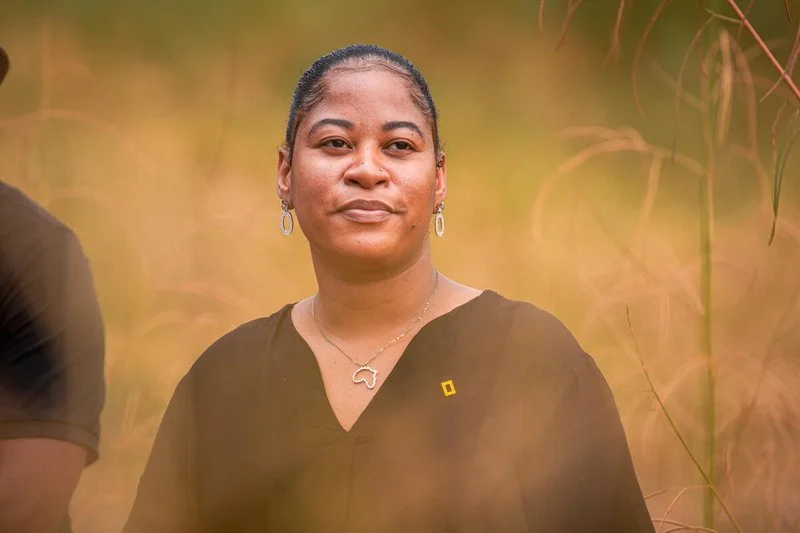
Dr. Goabaone Ramatlapeng
Karabo LeBronpeter Moilwa / National Geographic Okavango Wilderness Project
The Long View
What links Costa and Ramatlapeng — beyond the same river system and the same partnership — is a conviction that the most important conservationists are not the ones who arrive from outside. They are the hunter who has walked the forest for forty years. The girl in the water-scarce village who never stopped asking questions.
Okavango Eternal was designed to take that conviction seriously. For De Beers, it represents a genuine reckoning with what responsible operation in a fragile ecosystem actually requires — not just funding, but long-term presence, community co-creation, and the willingness to let local knowledge lead. "Both National Geographic Society and De Beers bring almost 140 years of complementary strengths across science, conservation, exploration, local partnerships, education, and storytelling," Conseiller says. That combination is what makes this more than a corporate conservation commitment — it is, at its best, a model for what sustained collaboration can produce.
The Ramsar designation is not an endpoint. It is the first piece of a mosaic. Recognition, then protection, then the kind of systemic integration that makes conservation durable. The work ahead is vast.
But the source of life now has a name on the map. And two scientists — backed by a partnership that dared to take the long view — are proving that the most powerful conservation tool available is not a satellite, not a funding line, not a gazette number.
It is knowing how to listen.
At Conspiracy of Love, we help changemakers tell their most powerful stories — stories that inspire action, build movements, and create lasting impact.
Find out more about our Values-Driven Storytelling and GPS to Purpose workshops, and how we can help you scale your impact.