How Simi Nwogugu Is Building A Leadership Pipeline For 10 Million African Girls
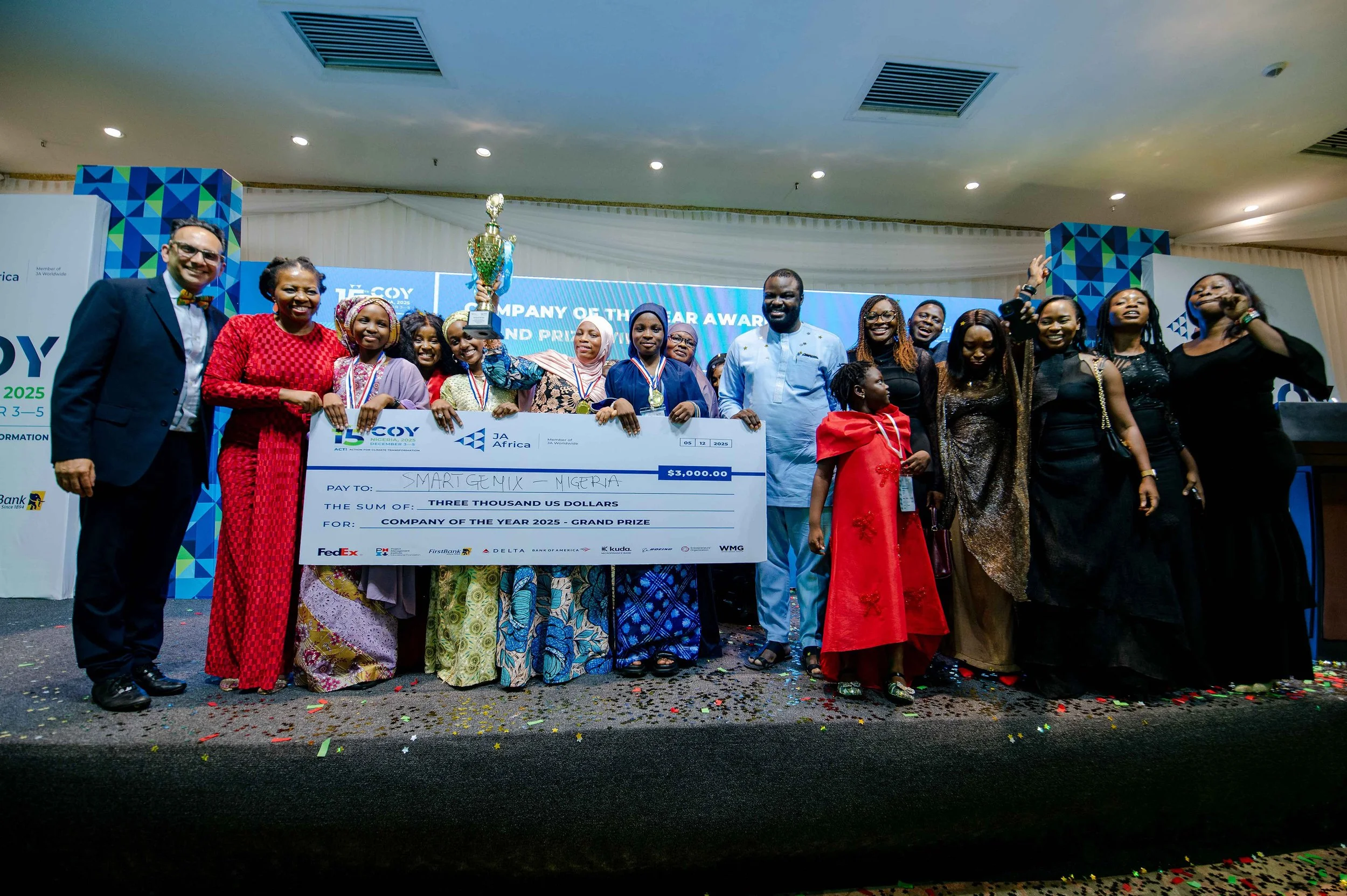
10MAG inductees who won 2025 Africa Company of the Year Competition in Abuja | GCC2024
Simi Nwogugu, President and CEO of Junior Achievement Africa, has spent years watching a quiet shift happen in classrooms, one that rarely makes it into strategy decks. When girls are given real entrepreneurial skills and a reason to lead, they don’t just participate.
They persist.
That observation is now the backbone of the 10 Million African Girls Initiative, the effort Nwogugu is advancing through Junior Achievement Africa. The ambition is straightforward: equip ten million girls with entrepreneurship, leadership and advocacy skills, then keep them connected to mentors, resources and one another long enough for those skills to translate into economic power and community-level leadership. Junior Achievement Africa operates across 23 countries and reaches more than one million young people each year.
The path into the work
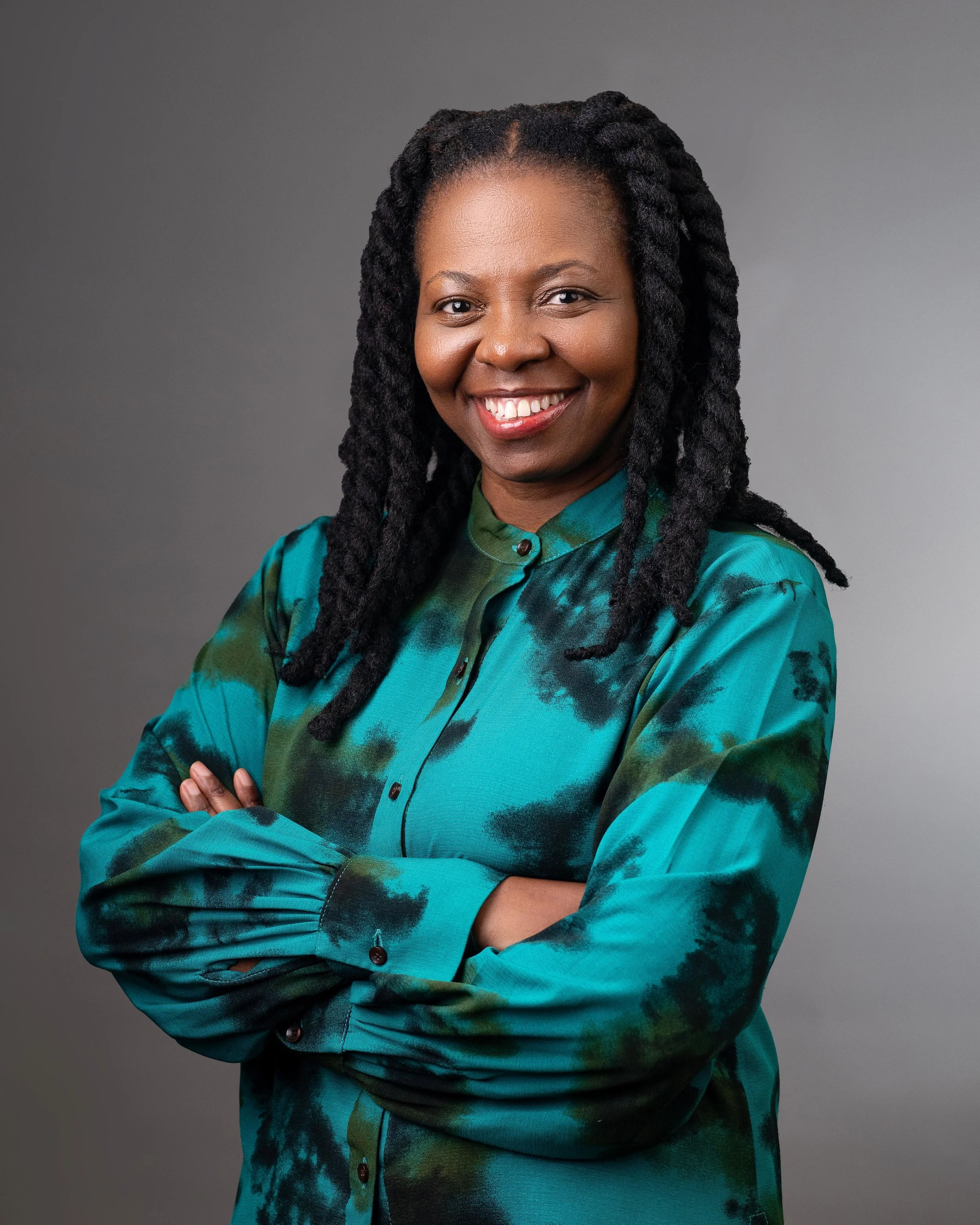
Simi Nwogugu, President and CEO of Junior Achievement Africa
Nwogugu’s entry into this mission began in New York. “I got involved with JA when I was an investment banker at Goldman Sachs in New York,” she said. Volunteering in classrooms changed how she thought about timing and access. “I wish we had had these types of programs when I was younger. I would have known sooner what I wanted to do with my life,” she said.
A conversation about Junior Achievement’s expansion into Africa became a turning point. “I ended up quitting Goldman and moving to Nigeria to set up Junior Achievement, and that was 26 years ago,” she said.
What she saw in the entrepreneurship program
One of Junior Achievement’s core programs teaches high school students to start and run a business that solves a problem in their community. Nwogugu watched who signed up first.
“The boys would be like, ‘Yes, opportunity to make money,’ and they would be the first to sign up,” she said. “The girls were a bit timid at first.”
But what stayed with her was what happened over time, when the work required persistence and leadership. “The companies that really stood the test of time, overcame challenges, and went all the way through to competition at the end of the academic year were those who had girls in leadership,” she said.
“There was something that the program did for the confidence of the girls, the staying power, and the ability to really champion whatever solutions they were doing,” she added.
LEAD Camp and the limits of a program
To build on that change in confidence and leadership, her team created LEAD Camp, a leadership program for girls who had already held roles as officers in their student businesses. The format was practical: bring them together, expose them to women leaders across sectors, and send them back with a social impact project and the expectation that they execute.
Over time, the outcomes became visible. “There have been over 2,000 girls that have been involved in LEAD Camp over the last 25 years,” she said, and she’s watched many become leaders across government, civil society and business.
But the program also revealed a harder reality. At the end of the week, “there would always be at least one or two who didn’t want to go back home because they’re getting abused,” she said. “Sometimes it’s even the father,” she added.
And in many cases, there was no meaningful lever to pull. “There was no police man you can call,” she said, especially when families turned a blind eye or supported what was happening.
This is where her thinking shifted from isolated interventions to community-scale change. “You could get a girl a scholarship to go somewhere and study, but for that one girl, there are many more like her in the community,” she said. “How many people are you going to give scholarships to escape their community?”
What 10MAG is designed to deliver
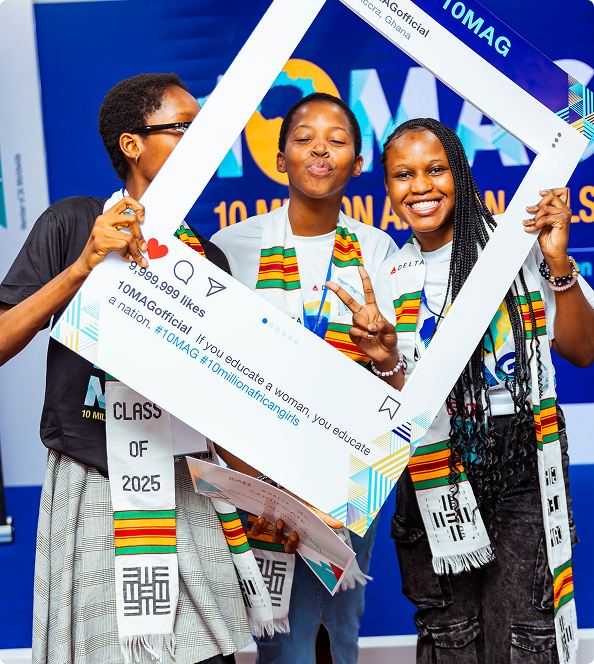
Nwogugu’s plan starts with entrepreneurship training tied to real life, not theory. The goal is to equip girls to look at their own communities and say, “What problem do I want to solve, and I can solve profitably through entrepreneurship,” she said.
But she doesn’t stop at business skills. She wants advocacy training layered on top. “We want to lay out on top advocacy skilling programs so that they know how to speak for themselves and how to advocate for themselves,” she said.
Then comes continuity. She wants girls to stay connected as alumni, encouraging one another and accessing mentorship through school, university, early work and whatever leadership path they choose.
The Young Presidents’ Organization is already committed to support that mentorship and technology layer. “The YPO, Young Presidents Organization, have said that they will partner with us to provide mentors and technology to be able to connect the girls on a tech platform,” she said.
Why the initiative looks beyond the next decade
The “10 million” target is about reach. The longer timeline is about outcomes.
“We will definitely reach 10 million before 2050,” Nwogugu said. “But by 2050, they will be leaders within their communities creating change.” In her framing, the first phase is scale. The second is what it takes to “groom them and incubate their businesses and get them to become leaders who are influencing change.”
Funding and early support
Nwogugu is clear about the math. “To reach 10 million girls, we anticipate $100 per girl,” she said. “So we would love to raise a billion dollars.”
Some support is already in place. “Delta Airlines sponsors the leadership camp and they’ve been very big supporters of the 10 million African girls initiative,” she said. She also referenced a donor commitment she can’t name publicly yet. “They’ve committed $25 million to support the first 60,000 girls,” she said.
A major use case for funding is education beyond secondary school, where many girls’ schooling ends because families cannot pay. Her goal is a scholarship fund that keeps girls in education while mentorship and coaching continue through the platform.
What success looks like in practice
When Nwogugu describes what she’s trying to scale, she points to what girls do when they’re trained to lead and given room to act.
In one moment, she invited the Orode Uduaghan, Commissioner for Humanitarian Affairs, Community Support Services and Girl Child Development in Delta State, to speak to participants, and learned that the commissioner had once been through the Junior Achievement company program and LEAD Camp. For Nwogugu, it captured the loop she wants to repeat: girls who grow into leaders and return to create opportunity for others.
In another case, a student suspended from school still found her way into the program. “She would sneak into the company program sessions,” Nwogugu said. That student later wrote an editorial about the plight of girls in her state, and went on to win a major national literature prize for a book, publicly crediting LEAD Camp for “giving her a voice.”
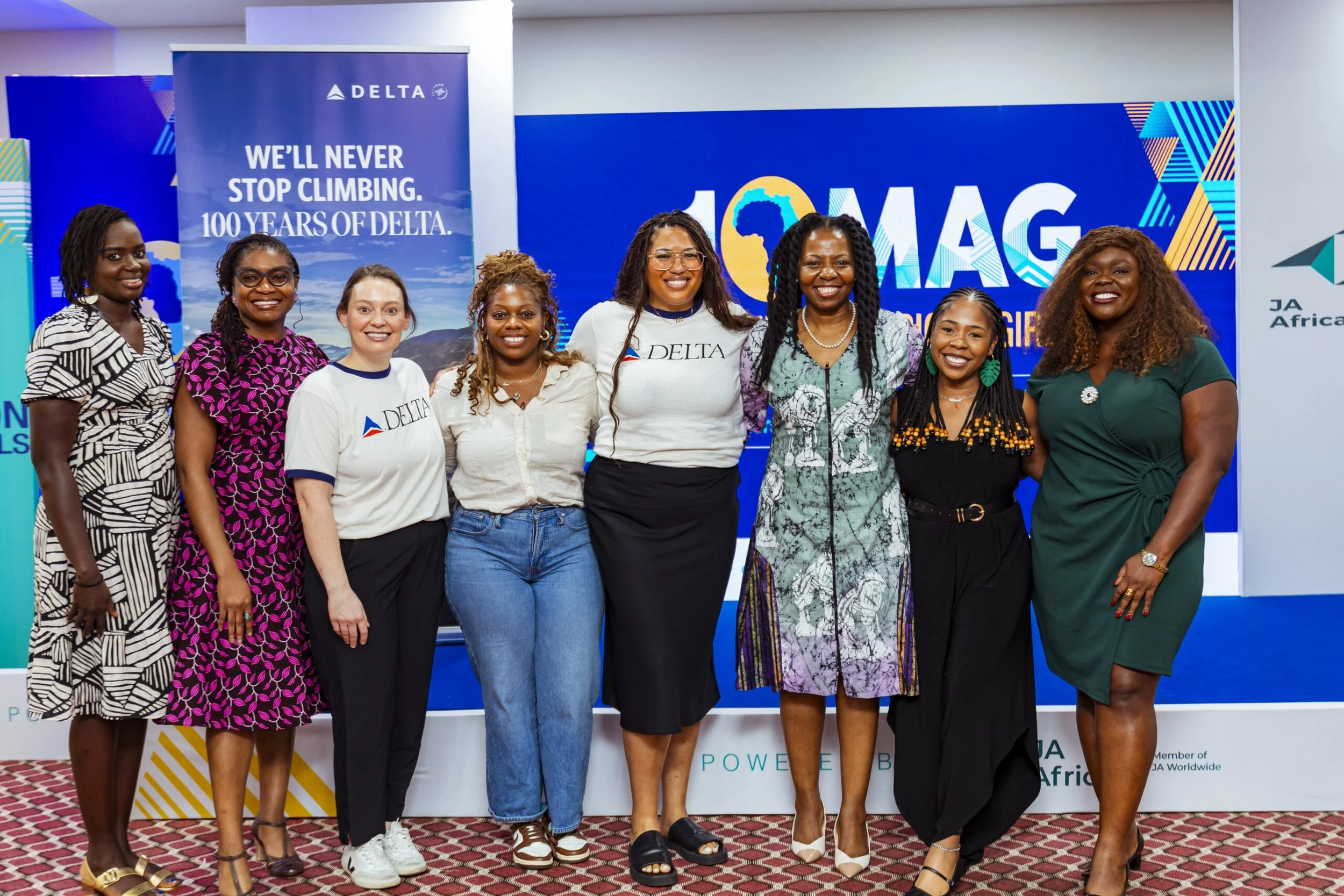
JA Africa, Delta Air Lines on course to empower girl-child through 10MAG | 10MAG
And in rural suburbs of Abuja, she described girls who watched produce rot on their families’ farms because it couldn’t get to market, while less-fresh produce sold in town for high prices. Through the program, they built a platform to sell directly to customers and partnered with motorcycle drivers for delivery. Nwogugu said they signed up 400 farmers, generated significant revenue, paid farmers and delivery partners, and retained earnings themselves. “These were girls who did not have five naira to their names,” she said.
The partners she’s looking for
Nwogugu’s partner request is intentionally broad because the barriers are practical.
She wants technology and mobile network partners who can help with access. “Our young people are not even able to access the internet. They don’t even have electricity,” she said. “And when they have electricity, they don’t have devices because devices are too expensive.”
She wants foundations and high-capacity funders to support reach, and governments to strengthen infrastructure. She also wants consumer products companies to address constraints that quietly erode attendance. “One of the things the girls battle with is this notion of period poverty,” she said.
And she wants entrepreneurs who can mentor and incubate the girls who decide to build businesses and need real support to grow.
A final point on what makes financing work
For Nwogugu, the real work sits between ambition and execution. Funding matters, but so does the ability to turn funding into functioning businesses and durable livelihoods.
She pointed to conversations with the World Bank, where job creation is a stated priority, and argued that there’s a gap between capital and capability. “We believe that there is a missing link,” she said, between plans to expand financing and “the know-how for the young people to actually be able to develop sustainable businesses.” In her view, Junior Achievement can provide that know-how at scale, so when financing does come, young people can use it well. “We believe that we are the missing link,” she said.
Ten million is the target. The deeper aim is what that scale produces over time: girls who can earn, lead, and advocate for themselves — and who bring those gains back into their communities in ways that compound.
At Conspiracy of Love, we help changemakers tell their most powerful stories — stories that inspire action, build movements, and create lasting impact.
Find out more about our Values-Driven Storytelling and GPS to Purpose workshops, and how we can help you scale your impact.