How Laura Rubin’s New Book The Big Unlock Reclaims Journaling For A Distracted Age
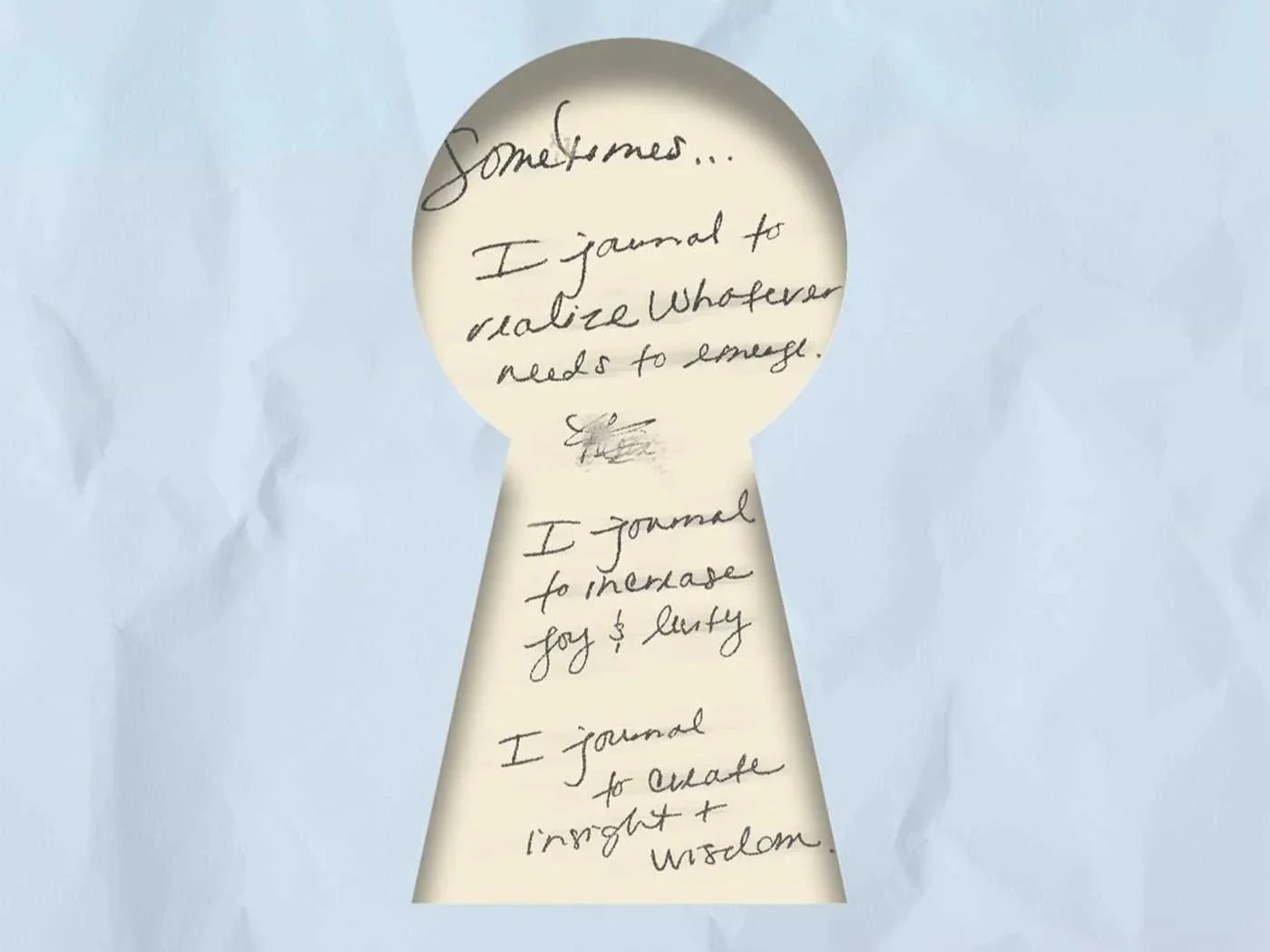
THE BIG UNLOCK: Liberate Your Creativity Through Mindful Journaling | AllSwell Creative
For something so simple, journaling carries a surprising amount of baggage. For many people, the word still brings to mind teenage diaries, gratitude lists that never quite stick, or pages filled with late-night spirals. Laura Rubin has spent more than a decade trying to change that. A creative coach, speaker and founder of AllSwell Creative, she has guided thousands through mindful writing workshops designed to reconnect journaling with creativity and self-knowledge.
With her brand new book The Big Unlock, Rubin argues that journaling is not just a wellness habit. It is a tool for clearer thinking, better decisions and more original ideas. The book distills years of teaching into a modern practice built around more than 75 prompts, foundational techniques and simple rituals for a more distracted age.
Reclaiming Journaling
Rubin did not set out to reinvent journaling. What she wanted to do was rescue it from the narrow story that had grown around it. “I saw that journaling had a really bad PR problem and I set about fixing it,” Rubin said. Traditional journaling still has value, she argues, but too often it gets reduced to emotional dumping. “Complaining on the page might be your little black dress, but there are so many different ways to utilize journaling.”
That matters even more now than it did when earlier classics first arrived. Brains shaped by email, social media, and constant notifications do not process the world the way they once did. Rubin’s answer is not to romanticize the past, but to update the practice for the present. She wants to “meet people where they are now” and “build a big enough tent to invite more people in,” as she put it.
In The Big Unlock, Rubin offers more than 75 original prompts designed to turn journaling into something more deliberate and more generative. Prompt-based writing, she argues, creates structure in a culture built on reaction. Instead of living inside the endless loop of incoming data, people can use the page to get to deeper forms of awareness. “Structured journaling that’s prompt-based gives us this whole other level of cognition,” Rubin explained.

Listening to the Body
One of the most revealing examples in her work is a deceptively simple exercise. Rather than writing a letter to another person, Rubin asks people to write a letter from their body to themselves. The prompt is grounded in a belief that people have become increasingly disconnected from their own physical and emotional intelligence. “We hold so much information in all of ourselves,” Rubin noted. “There is a lot of good intelligence there.” For some, that letter may express gratitude. For others, it may surface a need that has gone ignored for too long, more rest, more play, more care. What matters is that the page becomes a place where buried wisdom can finally speak.
Rubin is not dogmatic about how that writing happens. She would rather see someone type into a notes app than not write at all. But she believes putting pen to paper offers something screens cannot. “There are synaptic connections that get made in your brain as you move your hand across the page,” Rubin said. It helps people retain information. Just as importantly, “it also slows you down.”
That slowdown may be the point. In a world where even rest has been digitized, a few analog minutes can create a rare kind of clarity.
Creativity Beyond the Arts

Journaling workshops | AllSwell Creative
For Rubin, creativity is not a niche talent reserved for artists. It is a human capacity and, increasingly, a professional necessity. “Every single person on this planet is inherently creative,” Rubin said. “If you are choosing between two options, you are considering the outcome. That is imagination.” In other words, creativity is not just about making something beautiful. It is about imagining possibility, weighing consequences, and seeing beyond the obvious. That makes it as relevant in a boardroom as it is in a studio.
It also makes Rubin’s argument feel especially timely. At a moment when AI can draft emails, summarize meetings, and mimic tone with alarming ease, the real premium may shift to the thing machines cannot truly originate. “The ability to generate original thought is going to become that much more important in the age of AI,” Rubin argued. Journaling, in her view, is not a retreat from modern life. It is training for it.
That is particularly true for leaders. Rubin sees mindful writing as a way to build what she calls cognitive fitness, the ability to step away from overload, think clearly, and generate ideas that do not arrive prepackaged by the algorithm. She also sees it as a private refuge in roles that often demand performance and restraint. “It can be very lonely to be a leader,” Rubin observed, noting that many people in positions of responsibility spend their days managing necessary filters. The journal offers a place to be “utterly unfiltered,” which she sees as not only emotionally useful, but mentally restorative.
No Ritual, Just the Page
Perhaps the most refreshing part of Rubin’s philosophy is that she refuses to make journaling feel precious. Asked about her favorite ritual, her answer was immediate. “My favorite ritual is no ritual,” Rubin said. She wants people to write on the subway, between meetings, on vacation, wherever the spark appears. The point is not to perform wellness. The point is to notice what is happening inside you before it disappears.
“When the creative impulse strikes, you are able to honor that creative impulse by capturing it,” Rubin reflected. Rubin describes that practice as following breadcrumbs, those small inner glimmers that can easily get buried under speed, distraction, and self-censorship. Her approach is less about perfection than permission. Permission to pause. Permission to notice. Permission to trust that not every meaningful thought has to arrive fully formed.
The Power of the Intentional Pause
That idea leads to the deeper invitation at the center of her book. Rubin is advocating for an intentional pause in a culture that rewards instant reaction. “This idea of intentional pause is really important,” she said. Instead of feeling pressure to have an opinion ready on every subject, she believes people can step back, process, and return with a more complete thought. It is a simple shift, but also a quietly radical one.
The modern workplace prizes speed, volume, and seamless output. But the qualities that often matter most, judgment, imagination, discernment, are slower. They require attention. They require silence. They require some space between stimulus and response.
That is what makes The Big Unlock feel larger than a book about journaling. It is really a book about reclaiming a part of ourselves that modern life keeps trying to rush past. Rubin’s argument is that the page still matters, not as an escape from the world, but as a way to meet it more fully. And in a time when so much communication is optimized, outsourced, and accelerated, that may be exactly the kind of creativity worth protecting.
At Conspiracy of Love, we help changemakers tell their most powerful stories — stories that inspire action, build movements, and create lasting impact.
Find out more about our Values-Driven Storytelling and GPS to Purpose workshops, and how we can help you scale your impact.