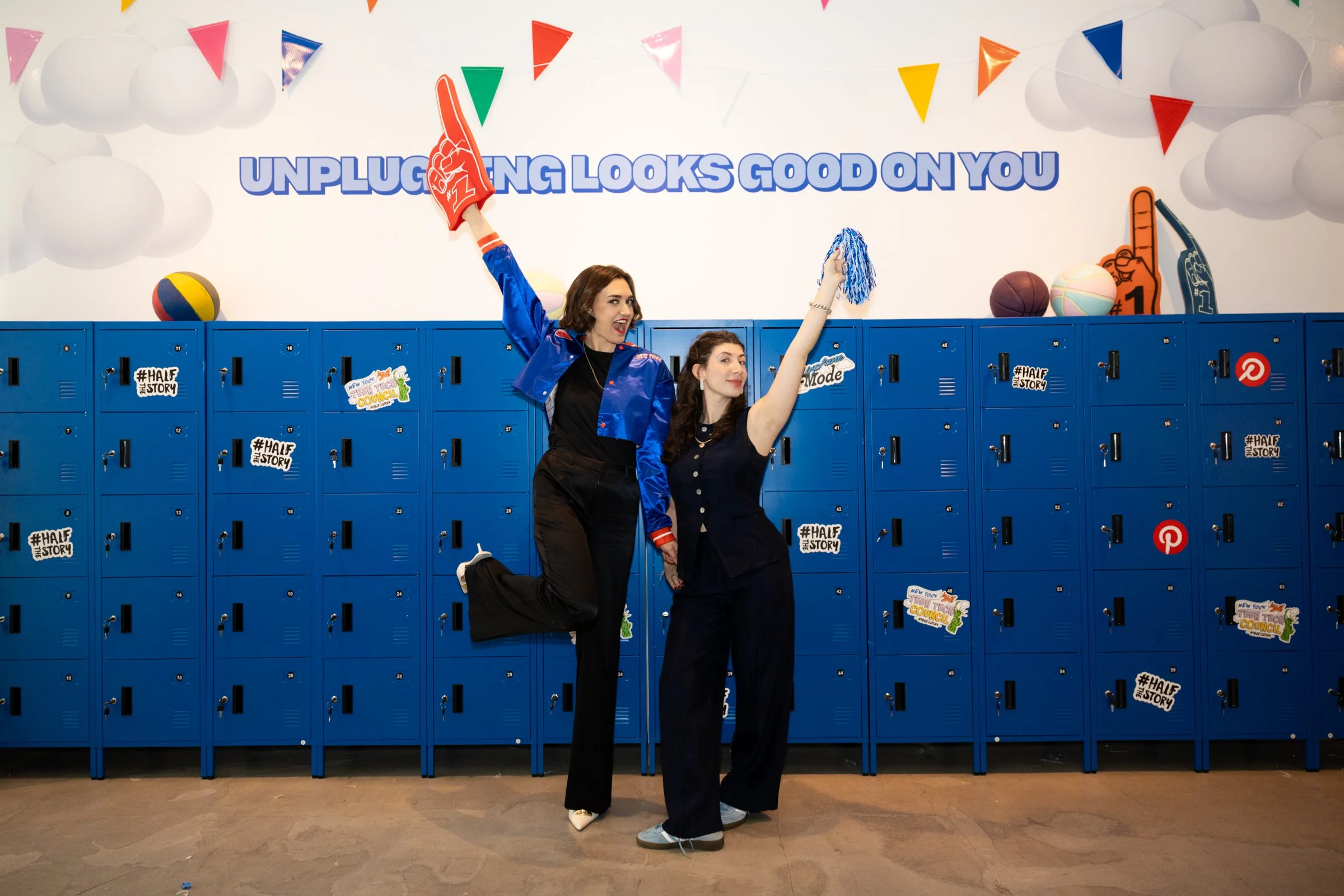
What happens after a school goes phone free? | Photo: Jim Fryer / Iri Greco | BrakeThrough Media
What happens after a school goes phone free?
That’s the question Larissa May keeps coming back to as phone-free school policies spread across the United States. Removing devices can shift a classroom’s energy almost instantly. But May believes the real work starts where policies have less reach — lunch, hallways, after school — the small, unstructured moments when a phone wasn’t just a distraction, but a place to hide.
“We know that by taking away phones at school, it can be really helpful,” May said. “But there’s also things we need to solve for — what do we do with the kids at lunch who were using their phones to deal with their hard emotions and don’t have friends and feel alone?”
May is the founder of #HalfTheStory, a nonprofit improving the next generation’s relationship with technology. She’s also the co-founder and CEO of Ginko, a clinician-backed AI guide helping parents navigate the digital world. Across both, her goal is simple: make digital wellness something that empowers, not punishes.
Building from both sides of her brain

Larrisa May, Founder of #HalfTheStory and Ginko | #HalfTheStory
Long before she was running organizations, May was blending two identities rarely seen together. “I had my first business card when I was 10 years old, but I was also a musical theater kid,” she said. That mix taught her how to handle rejection — and how to share her own voice.
Her mission turned personal at 19, when she says she “almost lost my life to depression” and began to see how deeply technology shapes emotional life. “Technology is here to stay, but it’s only half the story,” she said.
She turned that insight into a movement. Starting #HalfTheStory with just $250 in her dorm room, she built it into a leading youth-led nonprofit backed by the Oprah Winfrey Charitable Foundation and Pivotal, a Melinda French Gates organization. Its central belief: screen time is not the problem — disconnection is.
From rules to culture
May welcomes the wave of new school phone bans. “It’s beautiful that almost 50 states have passed phone-free bills,” she said. But she’s quick to note that policy alone can’t fix culture. “You can pass all the bills you want,” she said, “but why don’t we build a youth tech council? Why don’t we fund teens to create fun screen-free initiatives and measure what actually works?”
Her point is clear. Taking away phones can change behavior, but not necessarily belonging. The deeper challenge is helping kids find connection in real life — and giving them a say in how that happens.
“The most powerful thing in the world is when we not just educate, but actually empower the next generation of leaders,” she said. Her goal: “shift the lens from fear to hope.”
The New York Teen Tech Council
That vision came to life in November when #HalfTheStory partnered with New York State to launch the Teen Tech Council — a year-long initiative bringing young people into the heart of the state’s phone-free policy.
“Secretary Clinton, a longtime champion for youth, advocated for us to move the initiative forward, alongside Governor Hochul’s call to bring teens to the table — together setting a blueprint for expansion,” May recalled. Soon after, more than 60 teen leaders from across New York gathered in Manhattan for a half-day training on digital wellness and civic innovation.
The council represents students from very different realities — from schools with metal detectors to well-funded campuses on Long Island. “Policy can’t improve without feedback,” May said. “A school where a kid is going through a metal detector is not the same as one with every resource.”
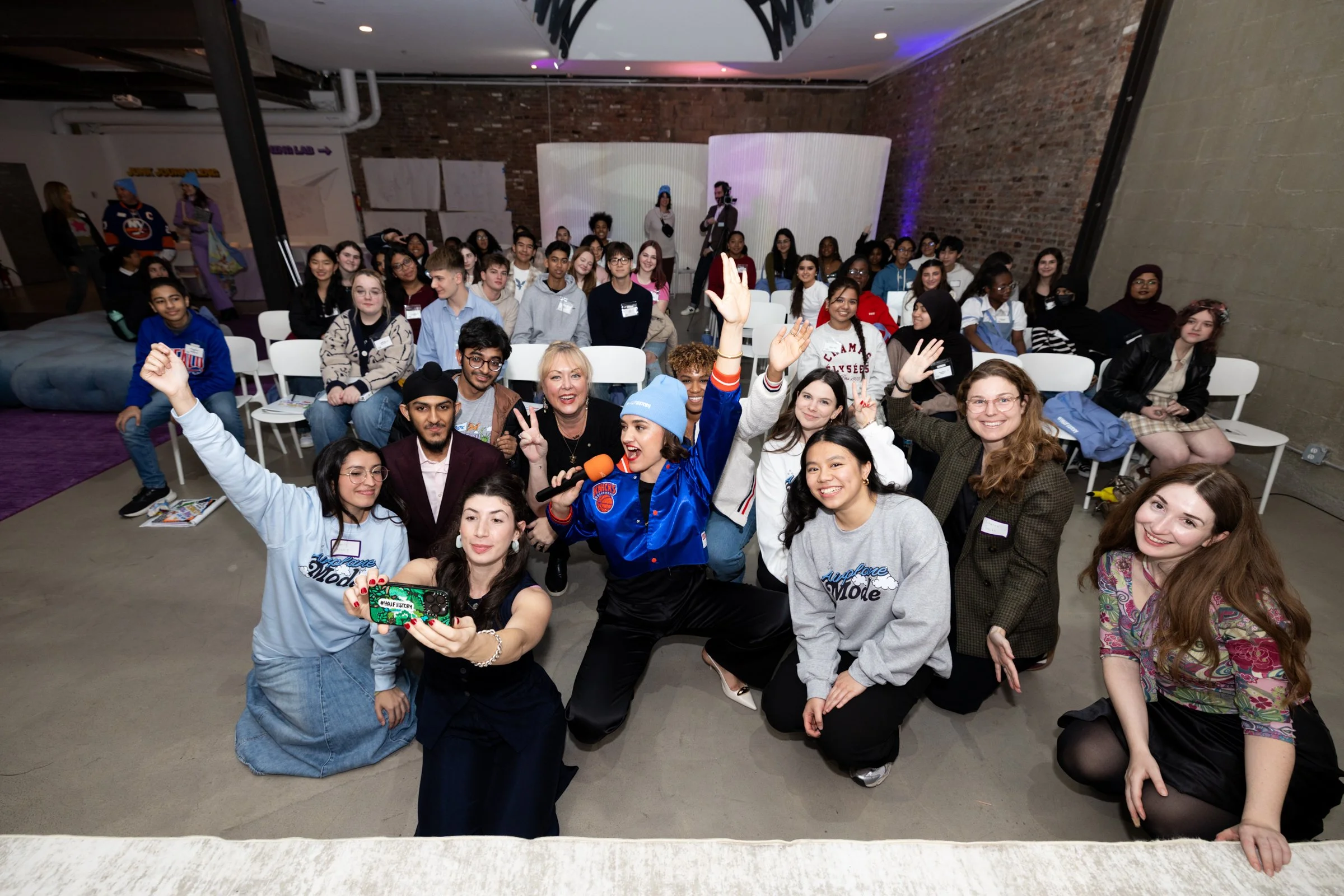
New York Teen Tech Council training day in NYC, November 2025 | Jim Fryer / Iri Greco | BrakeThrough Media
The Phone Free Fund
The Phone Free Fund turns that feedback into action. Backed by a new $300,000 grant, #HalfTheStory is offering $2,000–$5,000 grants for student teams to design their own screen-free initiatives. About 50 teams will be funded, with applications open through January 11.
This isn’t about banning devices — it’s about replacing them with belonging. May described one training day where teens brainstormed ways to redesign the social spaces of school life. “We know phones can be a crutch,” she said. “So what happens at lunch? How do we create connection after school?”
Some early projects are already inspiring others: phone-free proms, screen-free teas, even a “TeenChella” — a music event where connection, not content, is the headliner.
“To be a high schooler and get $2,000 or $5,000 to lead your own idea, learn how to build a budget, and do it through the lens of joy and play — that’s what changes culture,” May said. “Kids are not motivated through fear. We can’t save the world through fear.”
One ecosystem, two audiences
#HalfTheStory focuses on teens. Ginko focuses on parents. Together, they form what May calls a “digital wellness ecosystem.”
#HalfTheStory runs after-school programs and teen councils that train youth in digital civics and leadership. Its teens are compensated for their time and research — a small but radical shift in a world where young voices are often treated as token input.
Ginko, meanwhile, was born from seeing how lost many parents felt. “What I saw in the digital space is that we were just stalking our kids to death,” she said. She wanted to build something that helps families understand why kids are online, not just what they’re doing.
Ginko’s AI guide is doctor-backed, data-secure, and designed to build trust, not fear. “By the time most parents are trying to build trust with their kids, it’s too late,” May said quietly. “And in the worst cases, some of their kids are gone.”
Trust, play, and the kitchen table
Underneath it all is a philosophy that blends empathy with practicality.
“You can’t build things for people,” May said. “You have to build things with them.”
That’s why her programs always include youth voices, playfulness, and real-world experimentation. “Trust is my moat,” she said. “We are people first, layered with an essence of play.”
She’s quick to remind anyone listening that digital wellness isn’t really about phones. It’s about relationships — and the work starts closer to home. “At the end of the day, we’re living in a system of broken relationships that start at the kitchen table,” she said.
The Phone Free Fund is her way of starting there: one lunchroom, one classroom, one idea at a time. Because when young people are trusted to lead, they don’t just comply. They create.
If you’re a parent, educator, or school leader trying to make phone-free policies actually work in real life, May would argue the next step isn’t stricter enforcement. It’s better scaffolding. #HalfTheStory has put together practical resources, including its Phone Free Toolkit, designed to help schools and families build healthier habits and stronger connection once the phones are put away.
At Conspiracy of Love, we help changemakers tell their most powerful stories — stories that inspire action, build movements, and create lasting impact.
Find out more about our Values-Driven Storytelling and GPS to Purpose workshops, and how we can help you scale your impact.