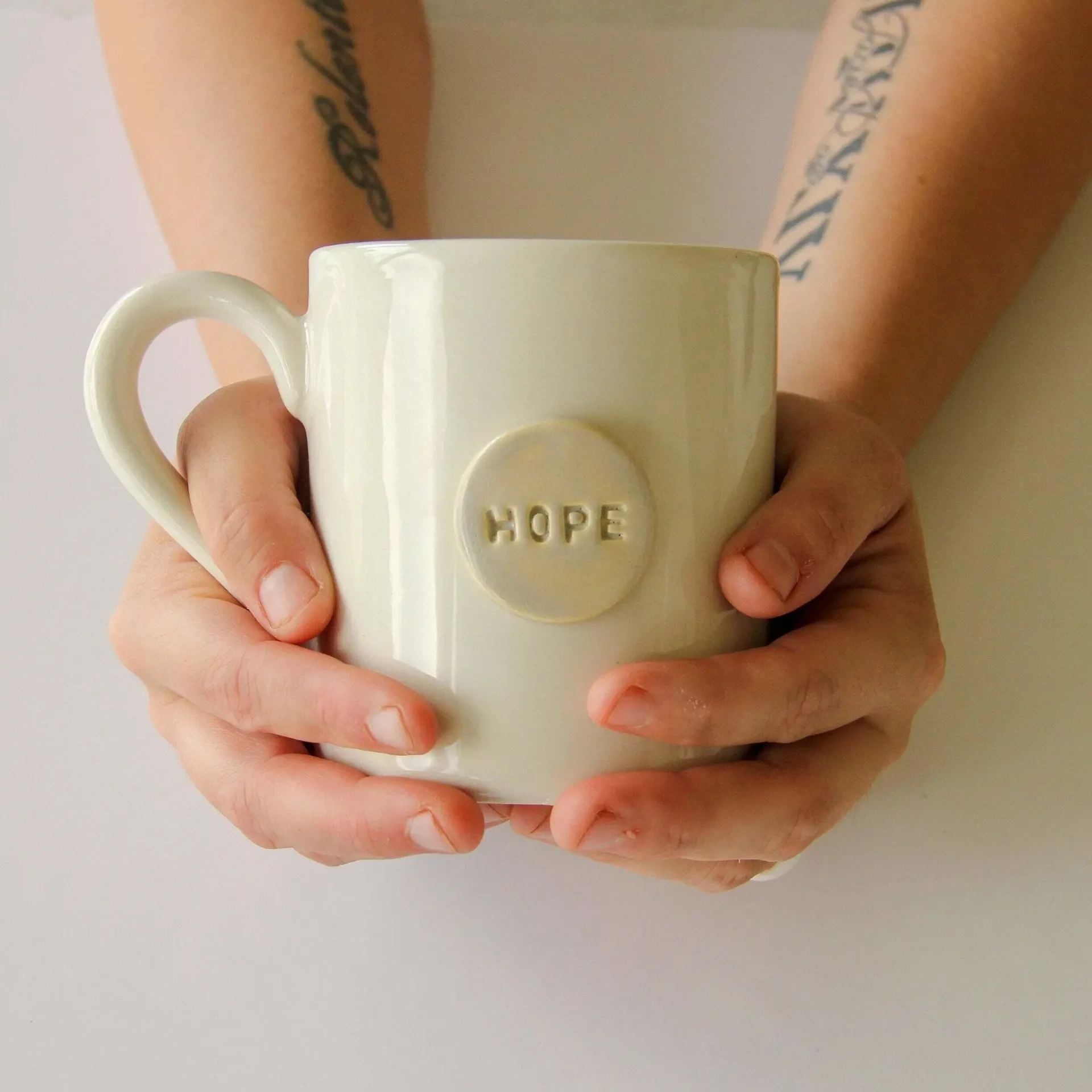
PRODIGAL POTTERY Hope Mug | PRODIGAL POTTERY
Two weeks after buying a new Subaru, new owners are invited back to the retailer to learn how their new car works. Those who return receive a gift. For years that gift was a gas card. Today it arrives as an email inviting them to choose a a tote bag made by women in Guatemala, a crossbody made in India, or a charity impact like providing mental health coaching for at-risk youth. Some customers write back, and one wrote, “This is why we love being a Subaru customer, because you care about the things we care about.”
That exchange traces back to a Los Angeles company that came close to losing its business in 2020.
A Pivot Born of Necessity
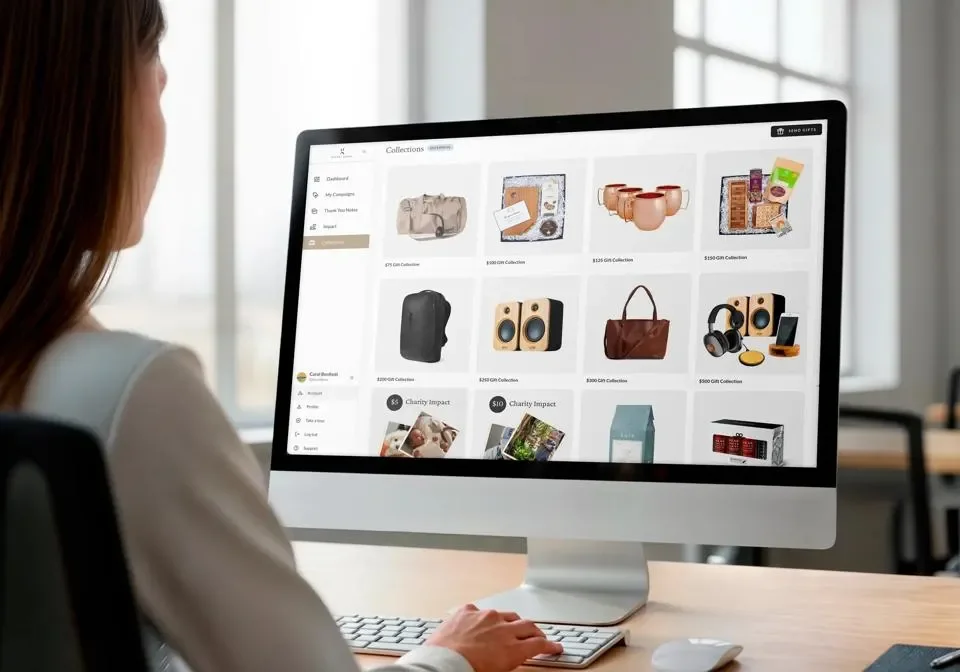
Gifts for Good Dashboard | Gifts for Good
Gifts for Good launched in 2017 as an online store for corporate buyers. It sold products a business could brand and send to clients, such as candles, drinkware and blankets. Every item came from a partner with a social or environmental mission. Some partners donate a product or a share of revenue with each sale. Some make goods from materials headed for the landfill, including one that cuts discarded billboards into new products. Many employ people facing serious barriers to work, such as homelessness, trafficking or domestic abuse.
When COVID emptied offices, the company’s sales almost vanished. Corporate gifts had always gone to work addresses, and asking a client for a home address felt awkward. Jenise Steverding, Gifts for Good’s Chief Impact Officer and a member of its founding team, helped rebuild the company around a simple idea: let recipients choose their own gift and enter their own shipping address.
The change also solved a problem she had watched for years. “Determining what’s a gift that all 500 people will like is hard,” she says. “So you tend to get more and more neutral in your gifting selection.” The safe choice usually ends up bland.
The platform works like this. A client provides its branding, an optional video message, a list of email addresses and a price level for each group. Gifts for Good sends the invitations, often within a day. “Instead of needing months to put together something custom, we can send it in a day and then people pick out what they want,” Steverding says. Recipients who would rather skip a physical item can direct the money to one of about two dozen causes, such as clean water or rides to cancer treatment.
Money From a Different Drawer
The charity options grew faster than Steverding expected. Before the platform, the company sold “honor cards” with a donation built into the price, and some quarterly checks to charity partners came to $12.52. Once those causes became options inside large gifting campaigns, some quarterly checks reached $100,000.
What interests her most is where that money comes from. Client gifts are paid for out of sales and marketing budgets, so the donations add to corporate philanthropy instead of drawing from it. “We’re basically saying, let’s turn this gifting budget into a budget for good,” she says.
Last year, recipients who chose a cause sent $1.56 million to charities. Since launch, the total has passed $5 million. The company also tracks the hours of work its orders create, and last year purchases across its partners added up to more than 60,000 hours of employment for people with barriers to work.
Steverding is careful about what those figures show. They count outputs, she says, such as hours worked, dollars given or billboards reused. The long-term outcomes in people’s lives are harder to measure. She still knows what the hours stand for. Even the company’s warehouse runs with Goodwill Southern California, where people in workforce programs pick and pack the orders. When one large client signed on, Goodwill hired a new person to handle the extra volume. “Those hours are turning into real people who have lives changed,” Steverding says.
The People Who Make the Products
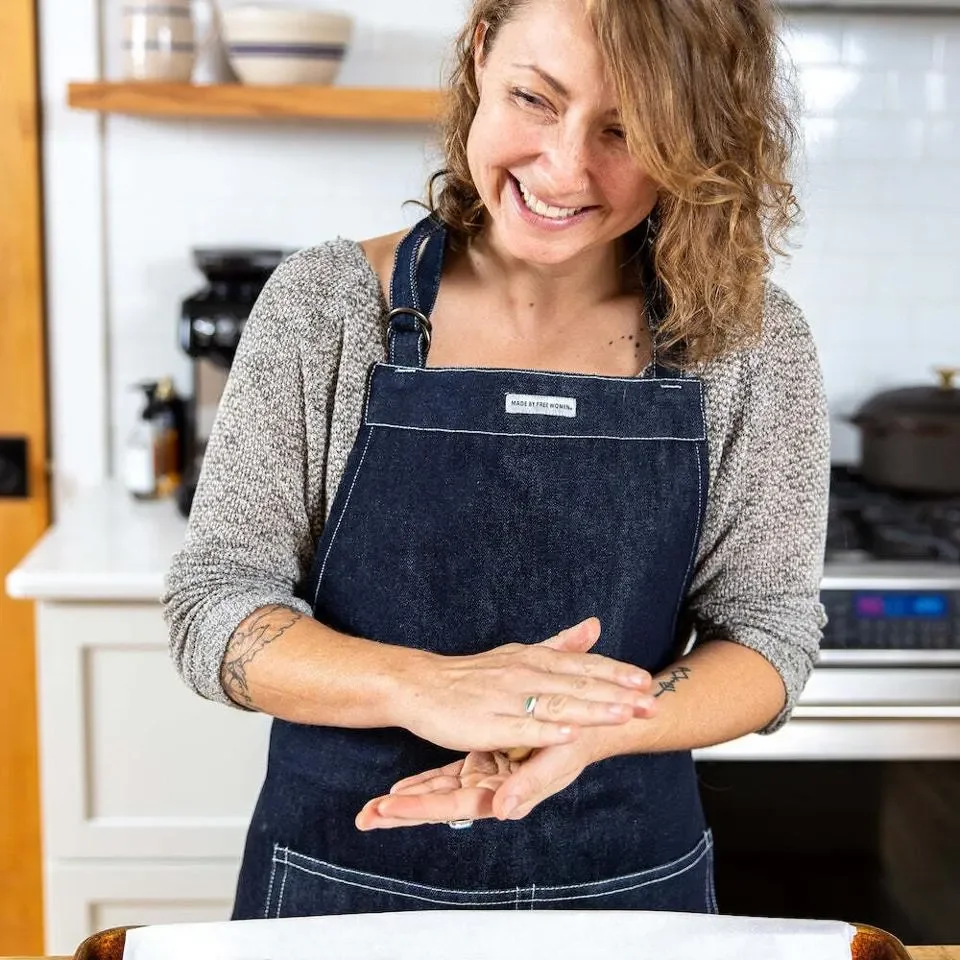
MADE FREE Denim Apron | MADE FREE
Vetting partners starts with the product itself. “We are a gifting company and we want quality premium gifts,” she says. Her team then looks at each partner’s mission, its theory of change, its capacity for large orders, and a result it can measure.
Sackcloth & Ashes, a blanket company inspired by TOMS, gives a new blanket to a homeless shelter for every one it sells. Its licensed designs include a Star Wars line. MADE FREE employs women in India who are at risk of trafficking or recovering from it. Prodigal Pottery, a small studio near Birmingham, Alabama, employs women rebuilding their lives after domestic violence, homelessness and trafficking, and Steverding eats off its plates at home. Well Told etches maps of hometowns onto glasses and cutting boards, and its sales help move homeless veterans into permanent supportive housing.
The partnership she talks about most is with the Downtown Women’s Center in Los Angeles, which Steverding describes as the only program in the city dedicated exclusively to homeless women. Women in its MADE by DWC program pour candles there, and Gifts for Good has bought them since its first year. It is usually the center’s largest customer. Steverding has visited many times, and each year she checks the numbers to see whether the partnership has grown.
Some partners can produce 5,000 units. Others are tiny, including one that works on Skid Row with a handful of people. “Their program is small, but it’s impactful,” she says. Steverding keeps both kinds of partners on the platform and matches each order to what a partner can handle.
The Order That Seemed Too Big
Subaru found the company through a referral. An agency that had worked with Subaru on its customer experience initiatives used Gifts for Good for its own client gifts, and two Subaru employees received one. “This felt so good,” they told her. “This is how we want customers to feel when we give them a gift.”
Subaru had been managing the gas card program internally, struggled to confirm that customers received them, and considered them off brand. Then they asked whether Gifts for Good could handle about 300,000 gifts a year. Steverding briefly wondered whether the email was real.
The companies started with a pilot in two regions. Subaru wanted to be sure return visits would hold steady at strong retailers and rise at weaker ones. The results held up, and on March 1, 2025, the gifts became part of Subaru’s Love-Encore program at participating retailers across the country.
Larger vendors offered faster production. Gifts for Good’s ethical supply chain needs more lead time, and Subaru agreed to wait. When Steverding asked her contact why, theanswer came back to how the gift made customers feel. Today Subaru also receives thank-you notes from customers and an impact report showing how the gifts supported people, animals, and the planet.
Small Changes, Spent Often
Steverding looked at a routine business expense and asked what else it could do. Much of the progress in impact work comes from small decisions like this one, made thousands of times by people who simply want to say thank you.
The client list now reaches well beyond large brands. Smaller organizations such as the law firm Perlman & Perlman, the outsourcing company Boldr and the software company Reputation use the platform. The latest version lets someone send around 20 gifts free of any annual subscription. Steverding also sees choice as a way to cut waste, since people tend to keep and use a gift they picked themselves.
At the Downtown Women’s Center, another order has just shipped. The candles will reach offices and homes across the country. For the women who poured them, each box that leaves the building means more hours of work ahead.
At Conspiracy of Love, we help changemakers tell their most powerful stories — stories that inspire action, build movements, and create lasting impact.
Find out more about our Values-Driven Storytelling and GPS to Purpose workshops, and how we can help you scale your impact.