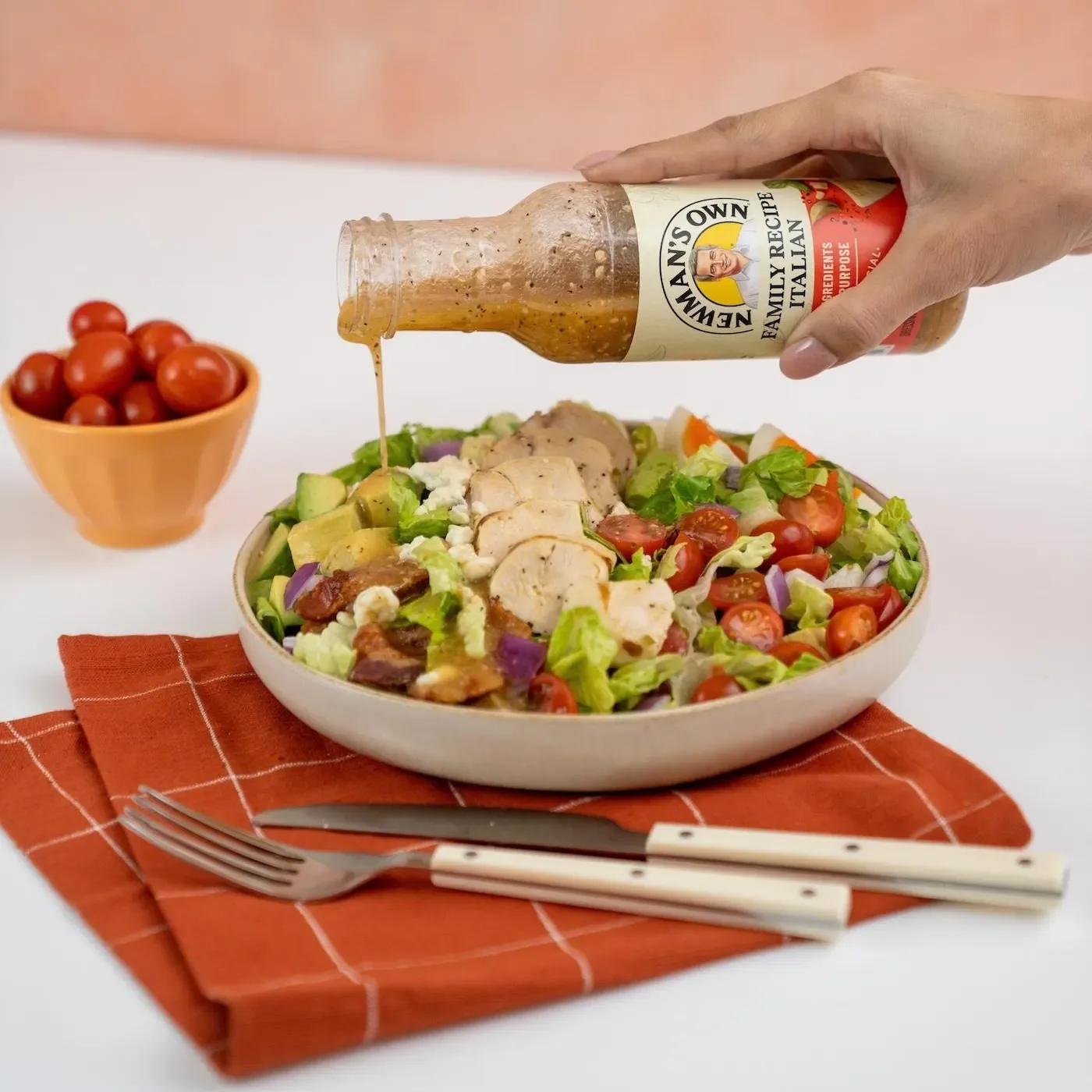
Newman's Own - Family Recipe | Newman's Own
In 1982, Paul Newman mixed up a batch of homemade salad dressing in his Connecticut basement. He bottled it and gave it to neighbors for Christmas. A year later, he and writer A.E. Hotchner put in $20,000 each, put it on store shelves, and gave every dollar of profit away.
Forty years and more than $600 million in donations later, that jug of dressing has grown into Newman’s Own, the food company behind the salad dressings, sauces, and popcorn found in most American grocery stores. Few people buying them realize the company’s real job is funding Newman’s Own Foundation, the nonprofit that owns it. The foundation gives away 100% of Newman’s Own’s profits and royalties to causes helping children.
“It’s a 15,000x return on their investment. If today we could start a company with $40,000 that gives away $600 million, we’d be pretty happy. There might be a couple of YouTubers who can do it, but I don’t know what else we could start with that amount of money.”
That’s Alex Amouyel, president and CEO of the foundation, doing the math out loud. She took the job in an unusual way. Before anyone from the organization had contacted her, she had already written about it in her 2022 book on purposeful living, holding it up as a rare example of a company that gave away everything, not just a marketing-friendly slice. Six months after the book came out, a headhunter called asking if she’d consider the top job. She had spent more than six years running MIT Solve, the innovation initiative at MIT, and the timing lined up.
An Original, Not a Trend
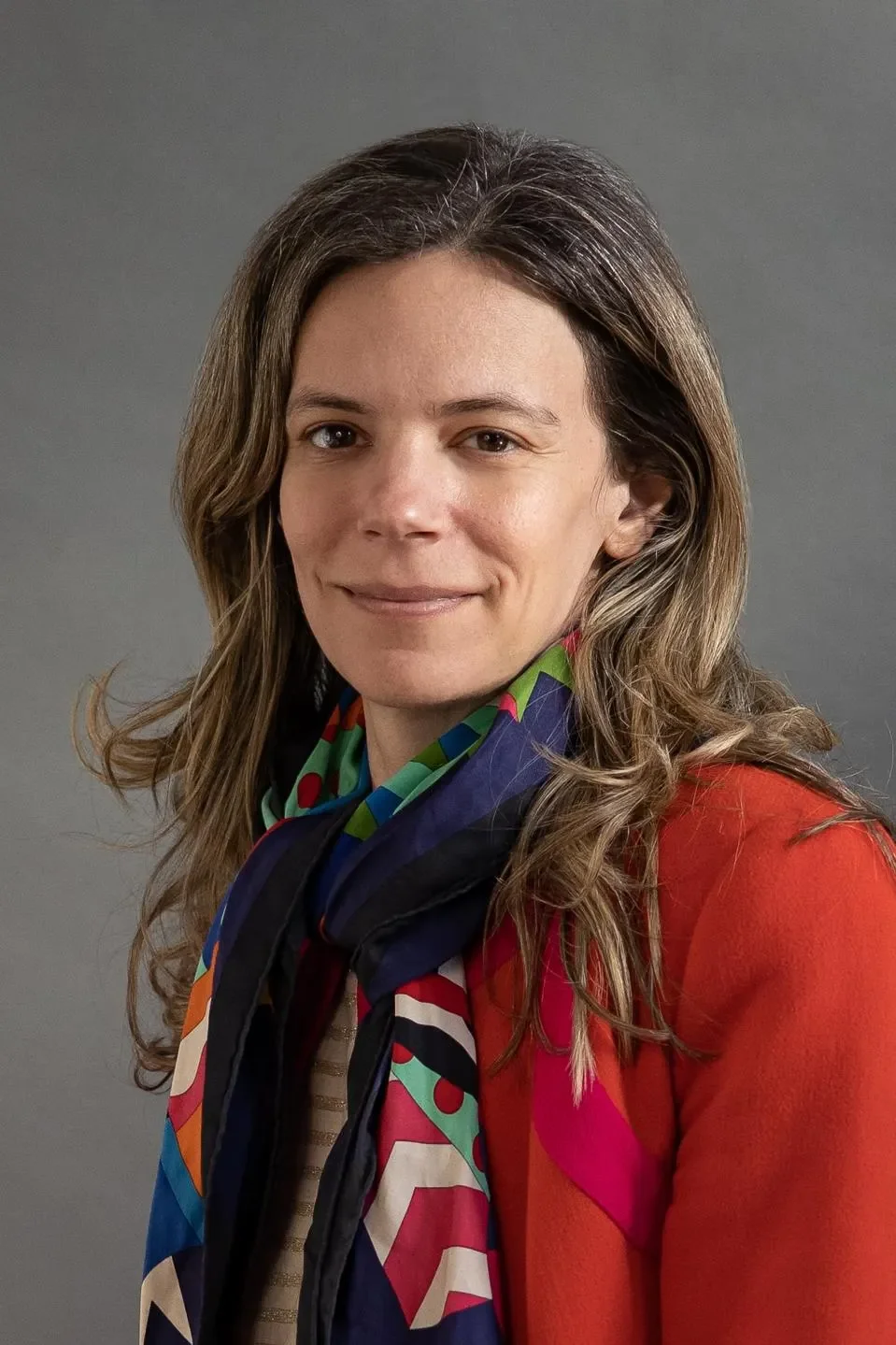
Alex Amouyel, President and CEO of the Newman's Own Foundation |
Newman's Own Foundation
Purpose-driven business is a crowded category now. Newman’s Own predates the label by decades. “It’s before whatever that wave of the purpose business was,” she says, pointing to brands like Everlane, which have drifted from the missions they were built on. Newman’s has held its line.
The structure explains why. Newman’s Own funnels its entire profit into the foundation, with no shareholders to please and no board pushing to redirect the margin. The mission runs the business, not the other way around.
That mission, nourishing and transforming the lives of children who face adversity, breaks into three areas.
The largest is the SeriousFun Children’s Network, the system of summer camps Newman founded in 1988 for kids with serious medical conditions. It now runs 30 camps and programs worldwide. Newman talked about giving hospitalized children a week to “kick back and raise a little hell,” as it’s still paraphrased today. What looked like intuition in the 1980s now has research behind it: positive experiences during childhood build the resilience kids need to face illness. Even a single week away from a hospital ward can matter.
The other two pillars, nutrition education and Indigenous food justice, tackle a less visible crisis. “You’ve got this unconscionable statistic of one in five children living in food insecure households,” Amouyel points out. American schools guarantee free transportation and free textbooks. Free breakfast is a patchwork, available in some states and not others. Kids who go to school hungry can’t concentrate, and many rack up lunch debt instead of eating.
The foundation’s grants fund cafeteria programs that are culturally relevant and made from scratch, building habits early to head off the chronic disease that follows. That work overlaps with Indigenous communities, who face some of the sharpest food insecurity and also hold some of the deepest knowledge for solving it, from traditional growing methods to a “food is medicine” philosophy with Indigenous roots.
Multiplying What’s Already There
The question at the center of her leadership is simple: how do you get the most impact out of the resources already in hand?
The foundation runs without a traditional endowment, since Newman never wanted one, so it has started inviting other funders in rather than working alone. The Food Justice for Kids Prize, run jointly with Humanitix, the Henry P. Kendall Foundation, and Hunger to Health Collaboratory, put $500,000 of Newman’s Own money into this year’s round, which grew to $1.4 million once the partners added their own funding. On October 8, the partners announced this year’s 14 winners, among them the Eastern Band of Cherokee Indians Cooperative Extension Center, the Yurok Tribe’s Food Sovereignty Program, and Colorado’s Good Food Collective, each working to get kids access to nutritious, culturally relevant food at school and in their communities.
The Indigenous Tomorrows Fund, seeded with grantee partner Native Americans in Philanthropy and an initial gift from Novo Nordisk, has since attracted more major donors.
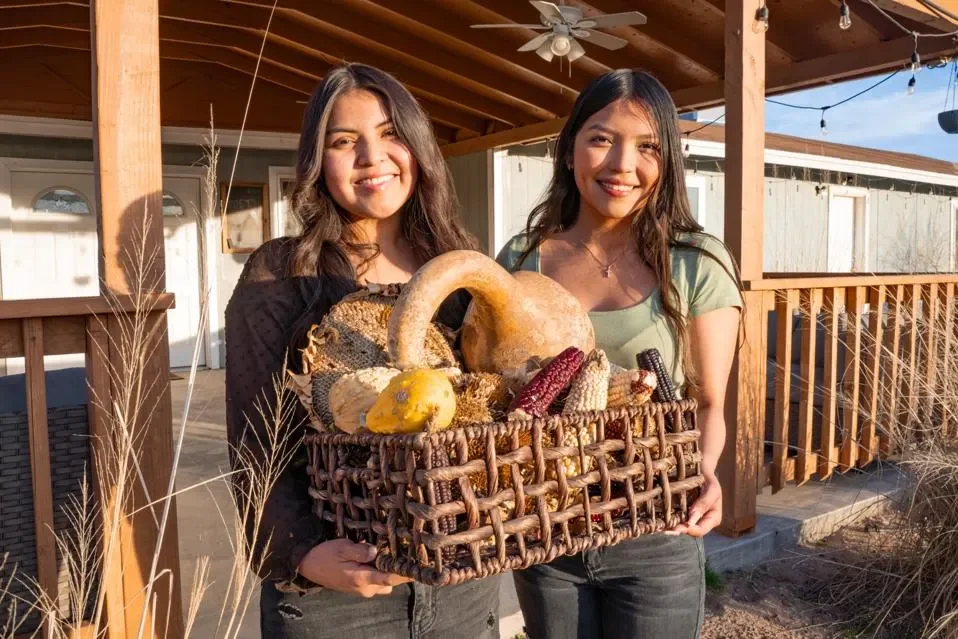
Newman’s Own Foundation grantee partner, Nalwoodi Denzhone Community | Newman’s Own Foundation
The bigger bet is cultural. Newman’s model has already influenced other companies, informally. Yvon Chouinard studied it before restructuring Patagonia’s ownership through a trust. The founders of Humanitix, the ticketing platform that gives away its profits, point to growing up with Newman’s Own dressing in the fridge as a reference point.
Rather than let that influence spread on its own, the foundation formalized it last year, launching the Newman’s Own Foundation‘s 100% For Purpose Club with Humanitix, Ecosia, Dr. Seuss Enterprises, and others — a network for companies built to give everything away. “How do we inspire and support the next generation of companies who want to give their profits away?” is the question driving it. Much of the early work is basic awareness, since most business owners have no idea this structure is legally possible, or that private equity is one exit among several.
That last point is where the foundation sees its next opening. A wave of profitable, privately held American businesses is approaching a succession problem. Owners are aging out. Children aren’t interested in taking over. Estate taxes loom on the way out.
She calls it the “great ownership transfer,” and argues it’s an underused moment. An owner can restructure the exit so the business keeps operating and its profits keep flowing to a cause, becoming its own version of a Newman’s Own or a Patagonia.
The lesson underneath all of it is less about salad dressing than about leverage. Amouyel inherited a food company and a founder’s stubborn insistence on giving everything away, then turned that into a pattern other people could copy. The most effective philanthropy, in this account, comes from getting other people writing checks too.
Right now, a wave of business owners across the country are approaching an exit with no plan for what comes next: no heir who wants the company, no clean sale that doesn’t mean handing it to a competitor or a private equity firm. Newman’s Own is proof there’s another option. Give the company away, keep it running, and let the profits do the work instead. Amouyel is already extending the invitation. The next name on that list could be someone reading this now.
At Conspiracy of Love, we help changemakers tell their most powerful stories — stories that inspire action, build movements, and create lasting impact.
Find out more about our Values-Driven Storytelling and GPS to Purpose workshops, and how we can help you scale your impact.