Fudge Fascism | Ben & Jerry's
When I co-wrote my book Good Is The New Cool in 2016, only a handful of companies showed that a business could be good, cool and profitable. Patagonia was one. TOMS was another. Ben & Jerry’s had the oldest and loudest claim of all. For decades it was the beacon: proof that you could make a profit, take a stand and sell a lot of ice cream while doing it.
Today that beacon is at the center of a public battle. Ben & Jerry’s is now owned by The Magnum Ice Cream Company, which Unilever spun off with its ice cream division. Co-founder Ben Cohen is leading a campaign to “Save Ben & Jerry’s” and to return it to socially aligned owners. To understand what is happening, I spoke with four people who know the brand from the inside: Ben Cohen; Walt Freese, former CEO; Rob Michalak, former Global Director of Social Mission; and Jay Curley, the company’s current Chief Marketing Officer.
A Mission Built to Survive Its Owner
The 2000 acquisition by Unilever was never meant to be a normal deal. Freese, who joined in 2001, said Unilever’s then co-chairman Niall Fitzgerald built the agreement deliberately “to protect Unilever from itself.” Big consumer goods companies, Fitzgerald believed, tend to buy distinctive brands and then homogenize away what made them special. He wanted Ben & Jerry’s to be “a grain of sand in the eye of Unilever.”
The protection was structural. An independent board held authority over the social mission and the brand’s “essential brand integrity.” Michalak described it as a division of ownership. “Ben & Jerry’s owned the social mission with the independent board,” he said. “Unilever owned the economic mission, and both co-owned the product mission.”
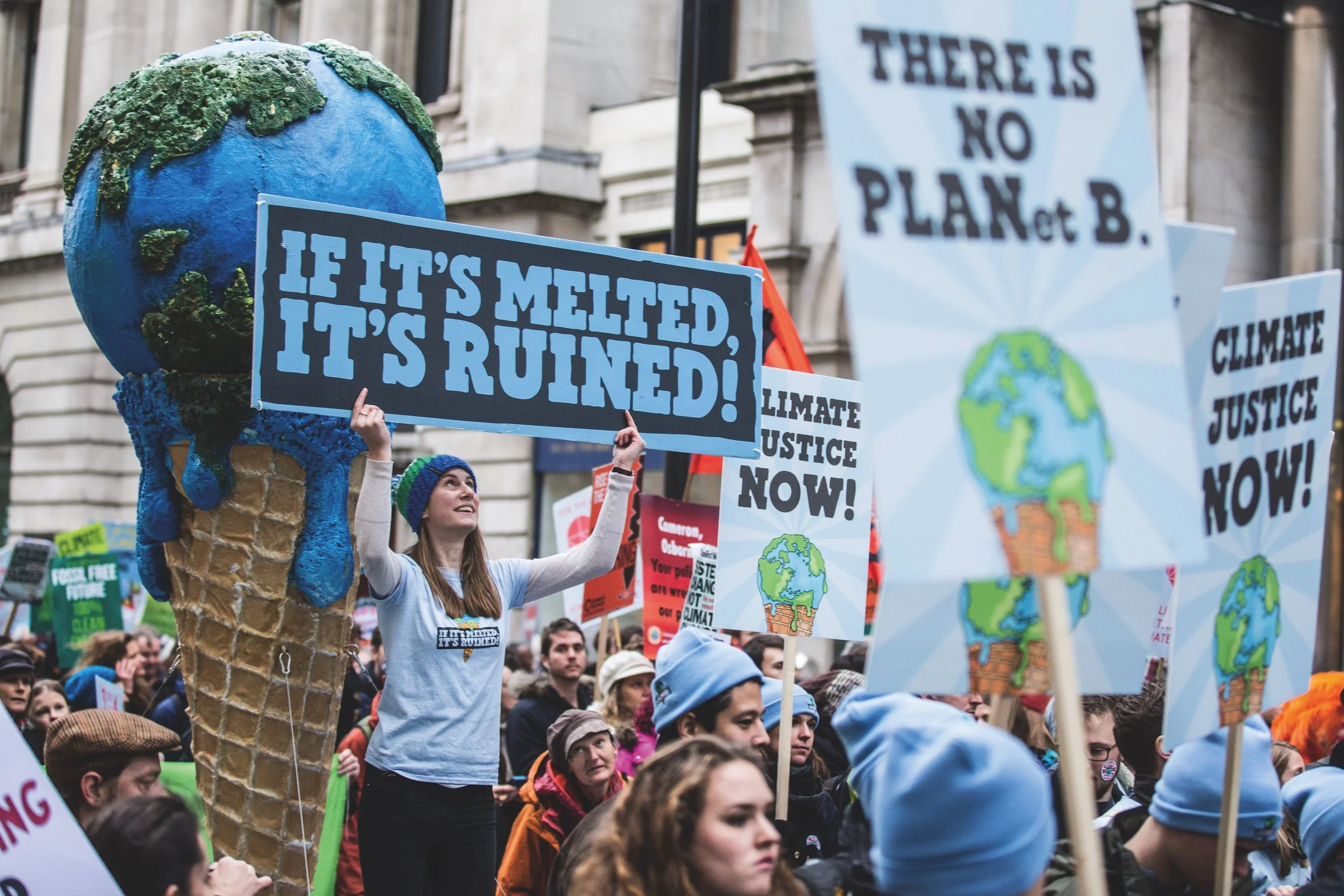
Michalak is clear that the mission was never only about marketing. He describes three legs. The first is internal operating programs: values-led sourcing, Fairtrade ingredients, the Caring Dairy program, the worker-led Milk with Dignity labor standards, and partners such as Greyston Bakery, which hires people facing barriers to employment. The second is the external voice: campaigns on climate, voting rights and racial justice. The third is philanthropy, through a foundation funding grassroots groups. “The internal programs, to me, were the core strength,” he said. “But many people externally don’t really know what those are.”
Fudge Fascism | Ben & Jerry's
The Mission as a Commercial Engine
Freese rejects the idea that purpose held the business back. “While I was CEO of Ben & Jerry’s, we doubled the size of the business,” he told me. Revenue grew from $500 million to $1 billion, and operating margin rose from 3% to 20%.
Controversial stands, he said, tended to help sales. When customers vowed never to buy Ben & Jerry’s again, “most of those people weren’t buying Ben & Jerry’s anyway.” The loyal fans bought more, and new ones joined. Ben & Jerry’s became the first national US brand to convert to cage-free eggs. A few years later, Unilever’s far larger Hellmann’s did the same. That is the ‘grain of sand’ working as Fitzgerald intended.
The War of Attrition
So what changed? Freese and Michalak both point to leadership turnover. Michalak remembers a high point under Paul Polman, when the agreement worked “as it was intended,” and drift afterward.
The pressure grew after 2021, when the independent board moved to stop sales in the occupied Palestinian territories. Unilever overrode the decision by selling the Israeli license. Cohen says the relationship then degraded further. Unilever had once received a heads-up before Ben & Jerry’s took a controversial stand. That became a requirement for approval, “and there were a lot of disapprovals.”
Since the Magnum spin-off, Cohen says, the longtime CEO was removed, the independent board was sidelined and foundation funding was halted. The independent board is now suing Magnum, alleging violations of the acquisition agreement. “They’ve made a strategic decision to say the words,” Cohen said, “and not really do the actions.”

Left to right: Ben Cohen, co-founder; Walt Freese, former CEO; Jay Curley, current Chief Marketing Officer. | Ben & Jerry's
The Company’s Answer
Chief Marketing Officer Jay Curley has spent nearly two decades on the brand’s activism, and firmly rejects the idea that the mission is fading. “Ben & Jerry’s commitment to its social mission is strong and that will never change,” he said. He points to the principle of Linked Prosperity and to the durability of the sourcing programs. In 2027, US Caring Dairy will mark 15 years, Milk with Dignity 10 and the Greyston partnership 40.
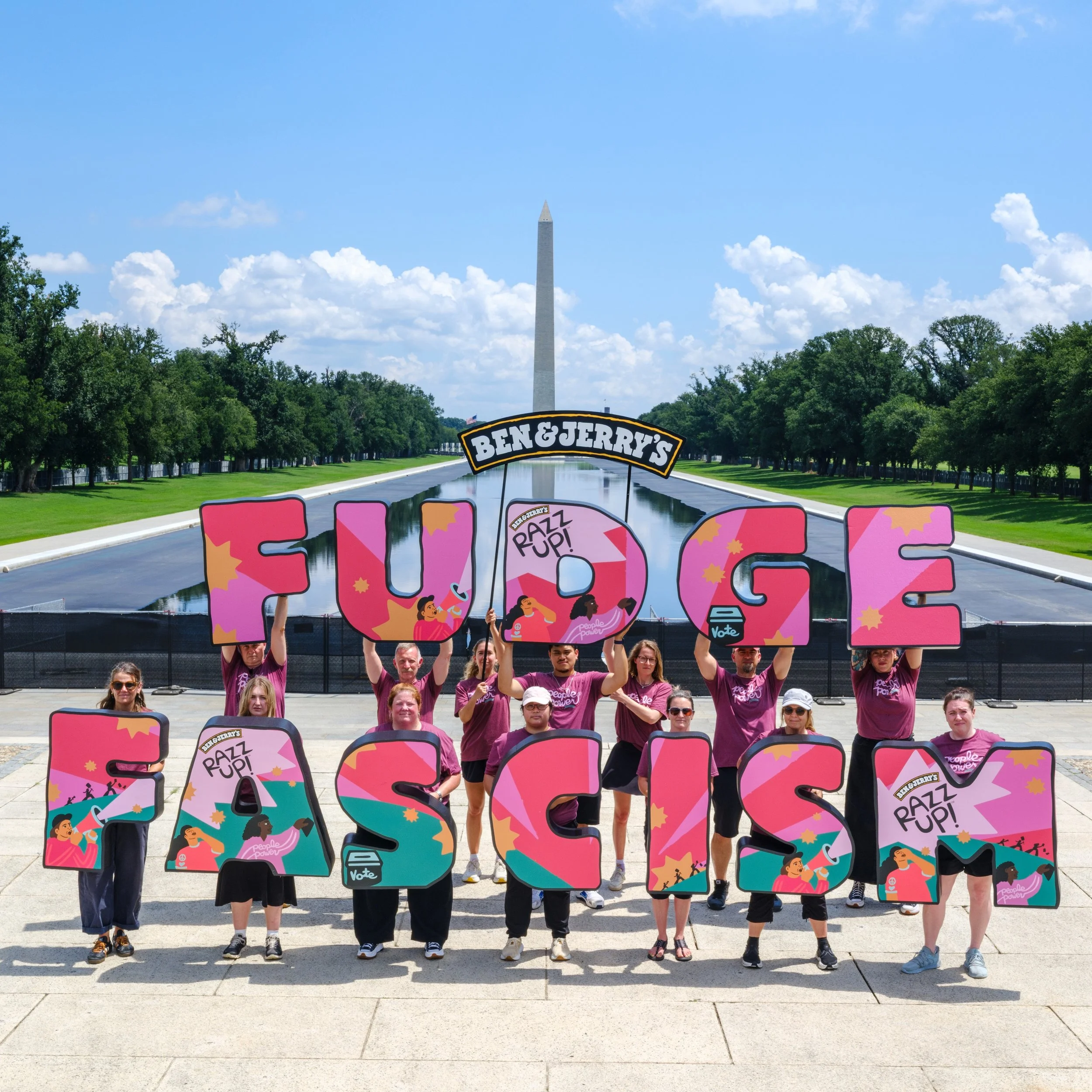
On advocacy, Curley says the company is focused on the 2026 midterms through its Razz Up! flavor and voter campaign with the ACLU, Black Voters Matter, Community Change and NAKASEC. He also cites a Last Prisoner Project campaign that helped pass Virginia sentence-review legislation in May 2026. A new grant-giving organization will be announced soon, he says, with the same financial commitment as the previous foundation.
Cohen is skeptical of the board’s three new independent directors. “When is an independent director not an independent director?” he asks. “When it’s appointed by the corporation it’s supposed to be independent from.” Curley’s response to Cohen is gracious: “We love Ben Cohen… He has his own perspectives and doesn’t speak on our behalf, but we absolutely support his right to speak freely.”
Ben & Jerry's
What’s Really at Stake
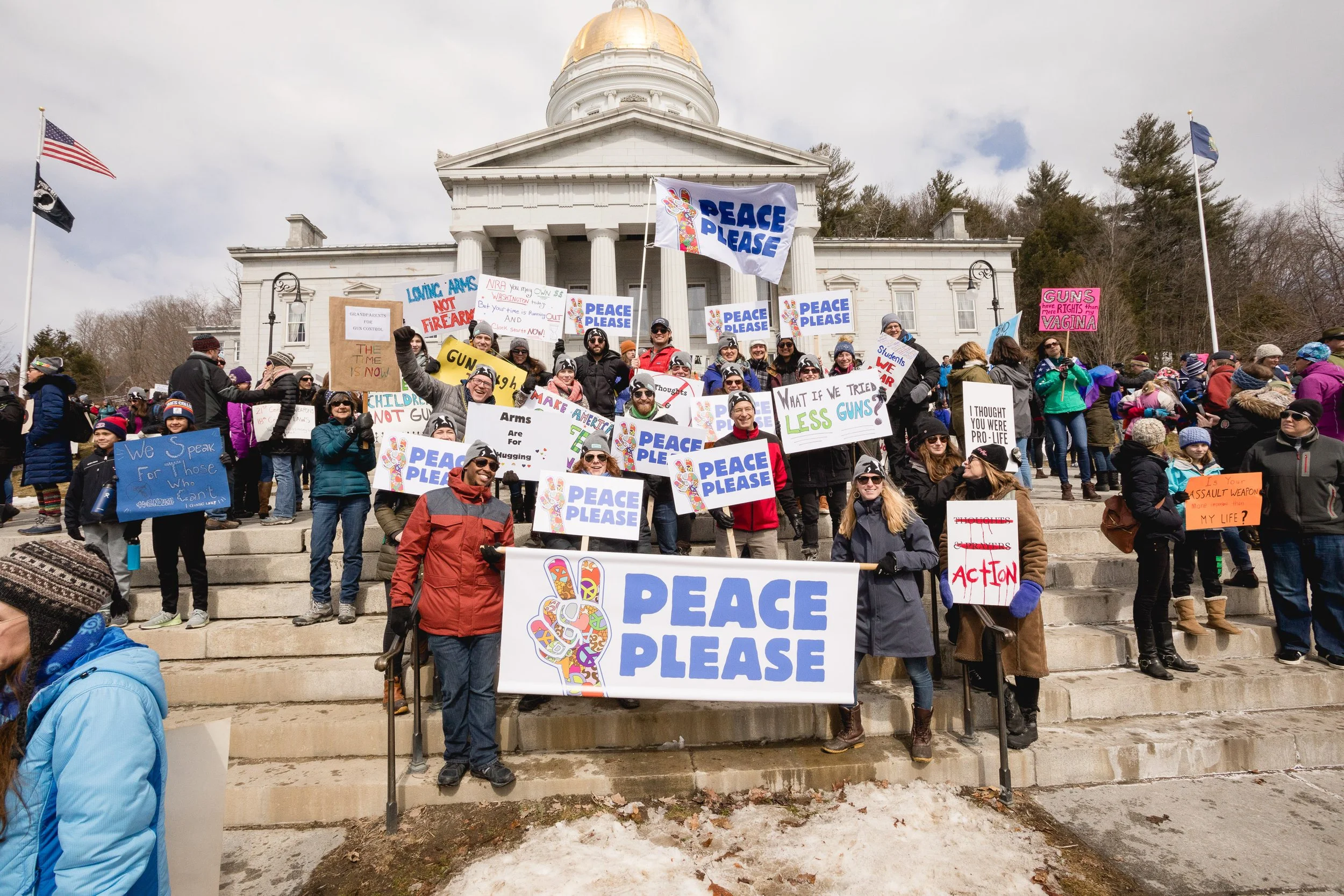
The real question is whether Ben & Jerry’s can still be an activist brand. Most companies can only be allies to social movements. Ben & Jerry’s has led them, often taking stands before issues went mainstream. Cohen argues that this matters beyond ice cream. A credible, profitable brand with a marketing machine gives movements resources that nonprofits lack.
Here’s what struck me after these four conversations. For all the outside criticism, the Ben & Jerry’s I see today looks more committed to its social activism than at almost any point in its recent history.
It is also growing.In his Q3 update, CEO Jochanan Senf reported sales growth of 9.1%, driven by innovation. Three Ben & Jerry’s sticks ranked among the top 10 novelties in the US, and its sandwich ranks in the top five in Europe.
Over the same period, the company has been:
running its Razz Up! midterms campaign, whose activations with partners in Detroit and Houston reached more than 10,000 people
investing $3 million, unrestricted, in People’s Action Institute
launching Love Nut Hate in Europe, co-created with refugee entrepreneurs
adding three independent directors with backgrounds in civil rights, racial equity and economic and environmental justice
Those directors are still disputed by Cohen and the original independent board. But the activity alongside them is not the profile of a company retreating from its mission. It reflects a team and culture inside the company that has held onto its values under enormous pressure, now as part of a publicly listed business no less, with all the quarterly scrutiny that brings. That’s no small feat, and the people doing that work deserve credit.
The critics still play a vital role. Cohen, Freese and Michalak are the guardians of the original promise. Their pressure, on reporting transparency, on Vermont dairy and on the independence of the board, is part of what keeps the mission honest. Healthy tension, as Curley puts it, has always been part of the Ben & Jerry’s recipe.
Here is what I told Cohen at the end of our conversation. Whatever happens in this battle, he has already won the war. Today there are tens of thousands of purpose-led brands in every category, from chocolate to insurance, and many exist because Ben & Jerry’s proved it could be done.
The evidence suggests the brand that started it all is still proving it. It is growing its business and its activism at the same time, inside a public company. If it keeps doing that, with the transparency its critics are rightly asking for, it may end up as the best case yet that Linked Prosperity can survive almost anything capitalism throws at it.
At Conspiracy of Love, we help changemakers tell their most powerful stories — stories that inspire action, build movements, and create lasting impact.
Find out more about our Values-Driven Storytelling and GPS to Purpose workshops, and how we can help you scale your impact.