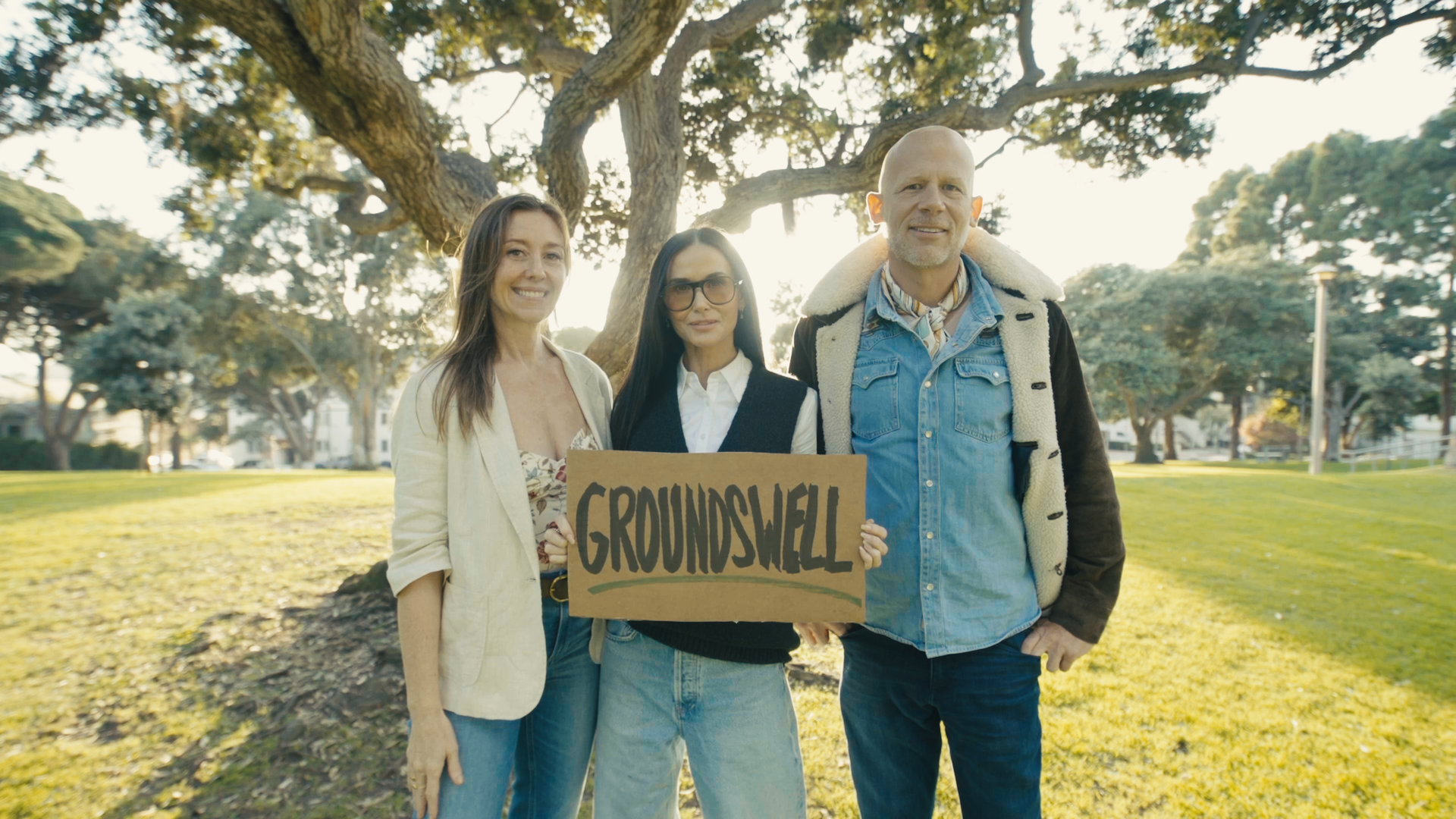
Josh Tickell and Rebecca Harrell Tickell, the filmmakers behind Groundswell, narrated and executive produced by Demi Moore and Woody Harrelson | Amazon MGM Studios
There is a moment in Groundswell, the new documentary from award-winning filmmakers Josh Tickell and Rebecca Harrell Tickell, when a Brazilian soy farmer — a man who has spent his career feeding into the industrial agriculture machine — walks across a small patch of his land he has spent the last few years regenerating. He looks back at the barren fields stretching behind him, stripped bare by decades of chemical farming. Then he looks at what he's rebuilt. And says, quietly, that he can't believe how different things look now.
It is a small moment. But it is also the whole argument. The world needs farmers and the companies who rely on them to embrace ‘regen’ (regenerative agriculture) not just because it makes food taste better - but because it could be the biggest solution to climate change right under our feet.
Josh Tickell and Rebecca Harrell Tickell, the filmmakers behind Groundswell — releasing globally on Prime Video on June 5th, narrated and executive produced by Demi Moore and Woody Harrelson — have built a decade-long career on the belief that documentary film is how you show them. Their soil trilogy — Kiss the Ground, Common Ground, and now Groundswell — has functioned less like traditional filmmaking and more like a slow-moving policy intervention. Three films. One argument. The soil beneath our feet can save us, if we let it.
A Decade of Shifting the Ground
The numbers bear that out. When Kiss the Ground premiered in 2020, the United States had roughly 3.5 million acres in transition to regenerative agriculture. Today, that number is over 86 million. Harrell Tickell is careful not to overclaim causality, but she doesn’t shy away from it either. “These films have a role to play in that,” she says. “They were a huge catalyst in achieving this kind of transition.”
Groundswell expands the lens globally — seven countries, twelve crew members, two children, one bout of typhoid for the whole team. Harrell Tickell and Tickell traveled with their kids, then aged seven and ten, through refugee settlements in northern Uganda, into the steep coffee highlands of Colombia, deep into the Mato Grosso region of Brazil. “Every time I think I’ve learned something or I know something about this issue,” Harrell Tickell says, “my eyes get opened again.”
What they found — and what the film makes vivid — is that regenerative agriculture is not a niche practice. It is already a global movement. What it needs now is scale. And that is where the business case begins.
One Billion Acres: The Tipping Point
At the Cannes Film Festival, ahead of Groundswell’s premiere, Harrell Tickell and Tickell launched One Billion Acres — a campaign calling on companies worldwide to commit to the regenerative transition. The math is deliberate. One billion acres represents roughly 10% of global agricultural land. That threshold, Tickell explains, is where the movement becomes self-sustaining. “Once we reach 10% of global ag land, the resources, the information — everything opens up and becomes this unstoppable force for regeneration.”
Nespresso became the first company to sign the pledge, committing to have at least 75% of its agricultural supply chain verified or certified as regenerative. For Tickell, it is a signal to an entire sector. “If you look at the trajectory — the volatility of the climate is so dangerous to the sustainability of these big brands,” he says. “Whether it’s berries, coffee, cocoa, bananas — regenerative agriculture makes sense both from a consumer standpoint and from a securing the supply chain standpoint.”
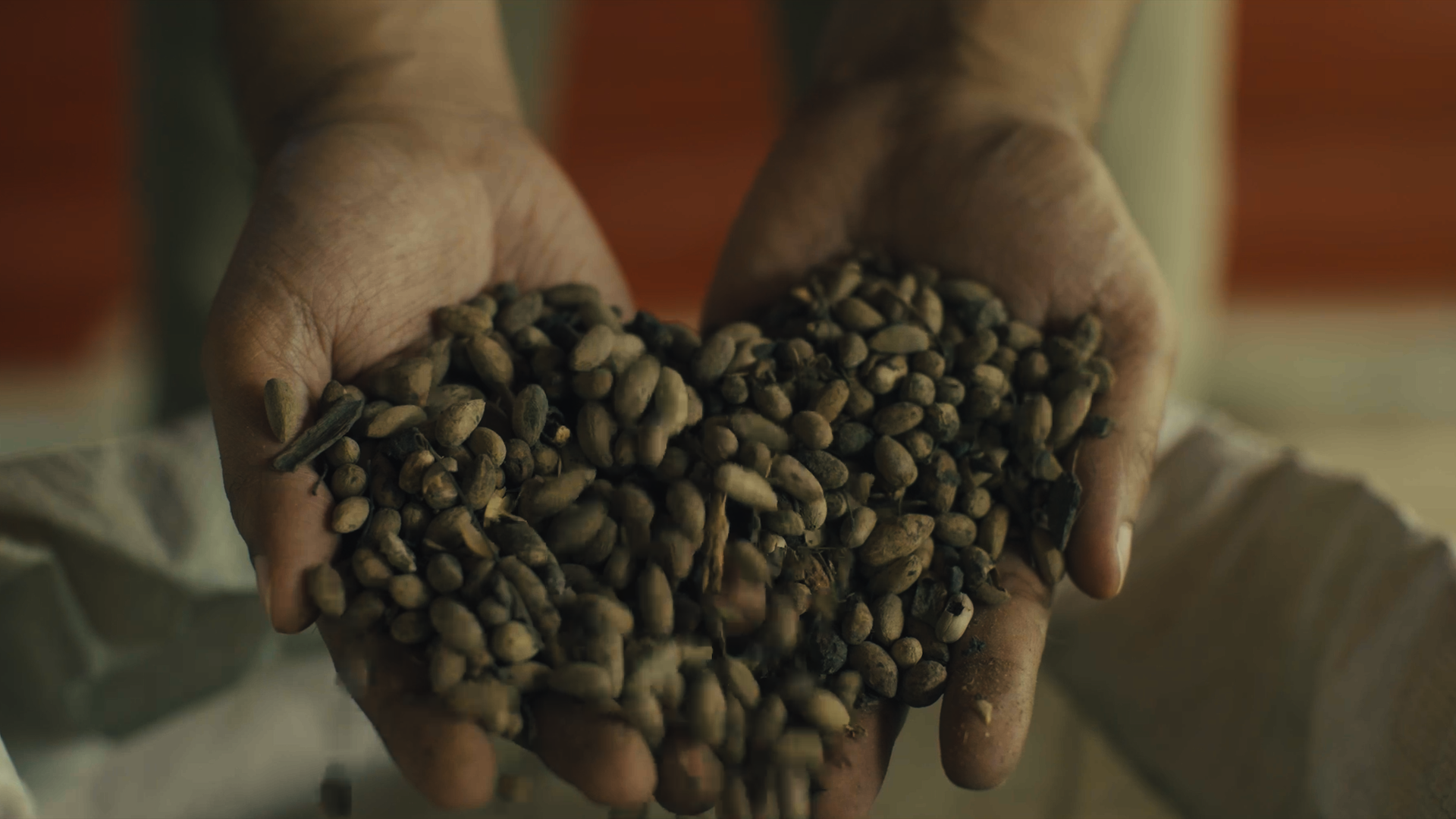
Groundswell | Amazon MGM Studios
Why the World's Biggest Food Brands Are Paying Attention
Nespresso’s commitment is not new to this announcement. Julie Reneau, the company's Head of Coffee Sustainability and Regenerative Agriculture, has been inside this work for nearly fifteen years. The company works with 130,000 farmers across 18 countries and a sourcing footprint of 320,000 hectares — all of it, Reneau says, pointed toward the same transition. “We started 20 years ago by minimizing the negative impact on nature. Now we are definitely trying to find the positive — to sequester carbon, to farm with the services nature provides, to reintegrate diversity into the farming system.”
That last phrase — reintegrating diversity — turns out to be the key to something most consumers have never thought about: why regenerative food tastes better.
The Science of Flavor
Harrell Tickell describes it plainly. “Flavor is a result of food being grown with insects. It’s what creates the color. It’s what creates the flavor. It’s a natural response.” Reneau adds the science. Working with researchers from the Smithsonian Institution since 2018, Nespresso commissioned a study asking whether regenerative practices leave a detectable signature in the soil — and whether that signature shows up in the coffee itself. It does. “If you have a big bean of coffee that is not rich in terms of nutrients internally,” Reneau explains, “you don’t have the precursors of flavors.” Biodiversity, quite literally, is terroir.
There is also a bird study. Cornell’s eBird database — billions of data points from birdwatchers around the world — was used to build an AI index measuring biodiversity at the farm level. The results were striking. In Colombia, where Nespresso has been planting shade trees since 2013, researchers found that tree cover on program farms doubled, from 25% to 50%. Bird populations followed. “When you have bird presence,” Reneau says, “it means they have home and they have food — and the above ground and below the ground are usually connected.” Biodiversity is health. Health is resilience. Resilience is the whole point.
The Largest Growth Sector You've Never Heard Of
For Tickell, the business opportunity is as clear as any he has seen. Regenerative agriculture has only existed as a mainstream market category for a few years. “We’re looking at the largest growth sector of the domestic and soon international food market, period,” he says. “There's no accident why companies like Nestlé and Nespresso are looking at this.”
What One Billion Acres offers is a shared measure of progress. Companies can register their supply chain commitments against recognized regenerative certifiers. Consumers can look for logos on their products — a bottle of ketchup, a bag of chips, a capsule of coffee — and know that a purchase is a vote. “It’s both a goal for food entities and a goal for consumers,” Tickell says. “Everywhere.”
The Lesson in the Method
The leadership lesson in all of this is quieter than it might seem. Harrell Tickell and Tickell did not build a movement by arguing with the people they were trying to change. They built it by showing — across three documentary films, in seven countries — what was already working. They gave the soy farmer in Brazil a mirror. They gave the indigenous seed-gatherers of Mato Grosso an audience. They gave a refugee settlement in northern Uganda a close-up.
Reneau puts it simply. “The change cannot happen if we are working on our own. It has to be collective actions, collective intelligence.” She pauses. “The snowball effect is now happening with the movie, which for us is a real gift.”
One billion acres is not a destination. It is the moment when a Groundswell becomes unstoppable.
Groundswell is available globally on Prime Video on June 5th. To learn more about One Billion Acres, visit onebillionacres.org.
At Conspiracy of Love, we help changemakers tell their most powerful stories — stories that inspire action, build movements, and create lasting impact.
Find out more about our Values-Driven Storytelling and GPS to Purpose workshops, and how we can help you scale your impact.