How Stolpman Vineyards Is Turning Wine Into A Force For Human Dignity
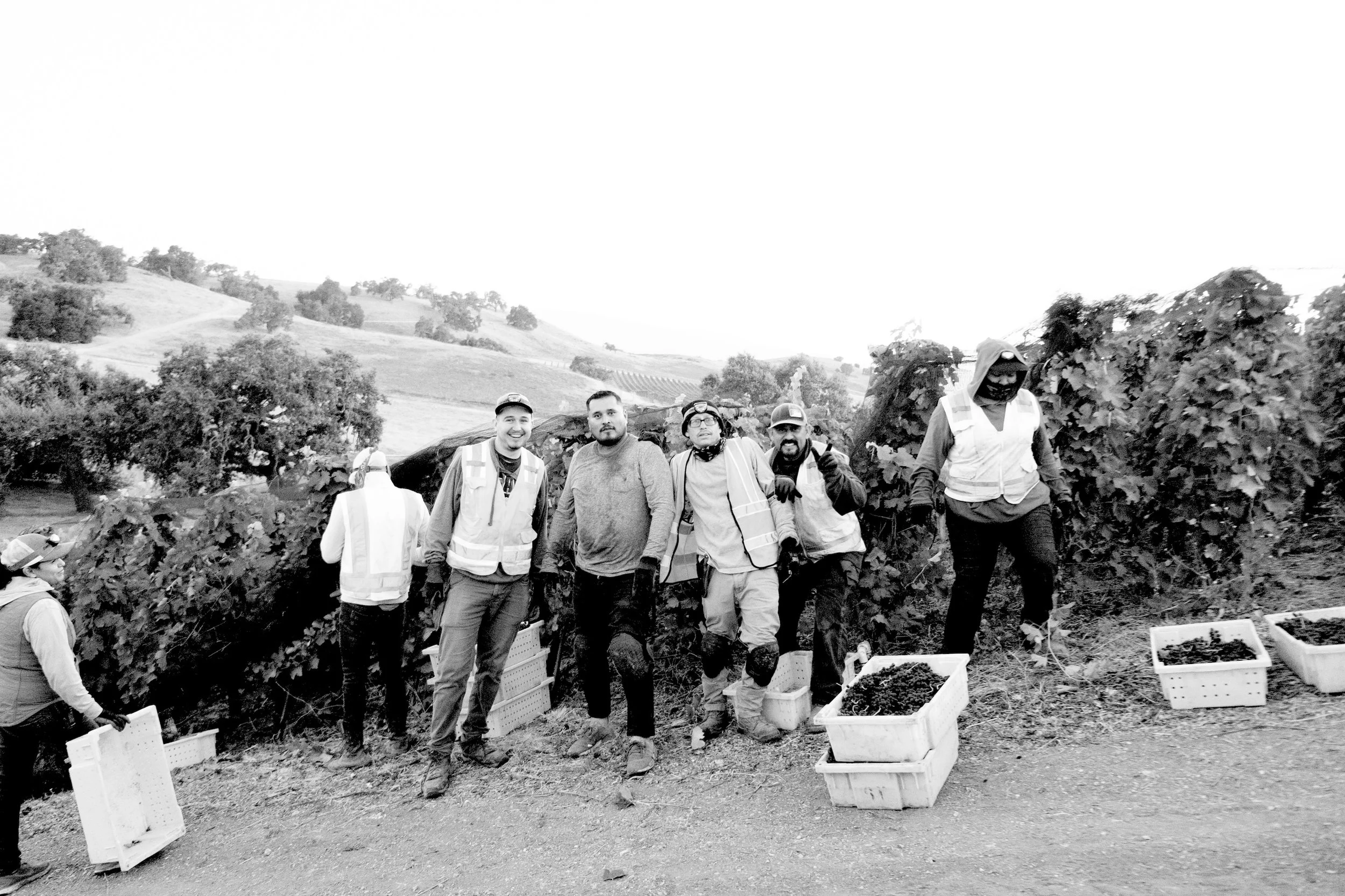
Members of La Cuadrilla, the year-round crew at Stolpman Vineyards in Ballard Canyon, Santa Barbara County | Kari Crist
There is a moment, somewhere between the pruning and the harvest, when Ruben Solorzano — vineyard manager, crew architect, the man owner Peter Stolpman calls the soul of the operation — walks the rows of La Cuadrilla — 20 acres of vines so tightly planted no machine can fit between them — and looks at what his crew has built. El Guapo is working one row. Suleyma, another. Chonpas and Gordito are a few vines over. Lalo, Pepe, Poncho, two workers named Naylos, Chaparrito, Pirana, Colorin, Don George, Tranquilito, three Guerreros, Sequio, Chuchi, Lupillo, Valdo, Neto, Hapo, Triste, La Patrona, Vero, Dona Lidia, Dona Raqueti, Dona Virgin, Tilin, Chiva, Chupes, Soruno, Lolo, Lulu, La Choco — 37 farmers in all, each treating every vine as an individual. Every pruning cut made intentionally.
This is not a vineyard. It is an argument, made in soil and labor, about what American agriculture could be.
That argument has a name: Stolpman Vineyards. And it is winning.
Stolpman is a Santa Barbara County winery that has farmed one of California's most distinctive terroirs in the Ballard Canyon AVA for nearly thirty years. La Cuadrilla — Spanish for "the crew" — is both its entry-level wine label and the name of the team that makes everything possible: 37 full-time farmworkers whose labor, livelihoods, and futures are woven into every bottle.
The Night Everything Changed
On the night of March 16, 2020, when Governor Newsom announced that all restaurants would close by morning, Peter Stolpman was at a Michelin-starred party in Los Alamos, surrounded by winemakers and restaurateurs who had no idea how to survive. He went home, put his kids to bed, and opened QuickBooks. His receivables — money owed by restaurants — were about to evaporate. His business model faced collapse.
Most owners made the same call that night: stop all labor. Let the vines go wild. Cut the losses.
Peter Stolpman waited until Monday morning to call Ruben.
Ruben told him, "You're the only owner that waited." He had spent the night fielding panicked calls from every other grower he worked with. And when Peter finally made his ask, it was the opposite of every other owner's. No matter what, La Cuadrilla is full-time.
It was, by Peter's own admission, as much an act of survival as one of principle. "If we don't double down on our values now, this whole thing is done." But it was also true. And it set in motion something neither man fully anticipated.
Going Against the Grain
The American wine industry is in crisis. Oversaturation built over three decades collided with shifting demographics, marijuana legalization, and rising competition from craft spirits. Tequila got better. Bourbon got better. The rosé boom of 2015 produced a glut that the post-COVID hangover made worse. Today, all 40 of the top corporate wine brands are down double digits.
Against that backdrop, Stolpman's name appeared on a screen at the industry's state-of-the-union seminar in Sacramento this January — not as a cautionary tale, but as one of the only wineries in the country with significant growth in 2025. Peter found out when his phone started blowing up with messages from friends in the room.
"We should be double digits down," he says simply. "And we're not."
He attributes it to the decision, repeated year after year, to go the opposite direction from the industry. Where others mechanized, Stolpman hired. Where others chased volume, Stolpman chased intensity. The result is La Cuadrilla — not just a wine label, but the economic engine of a community.
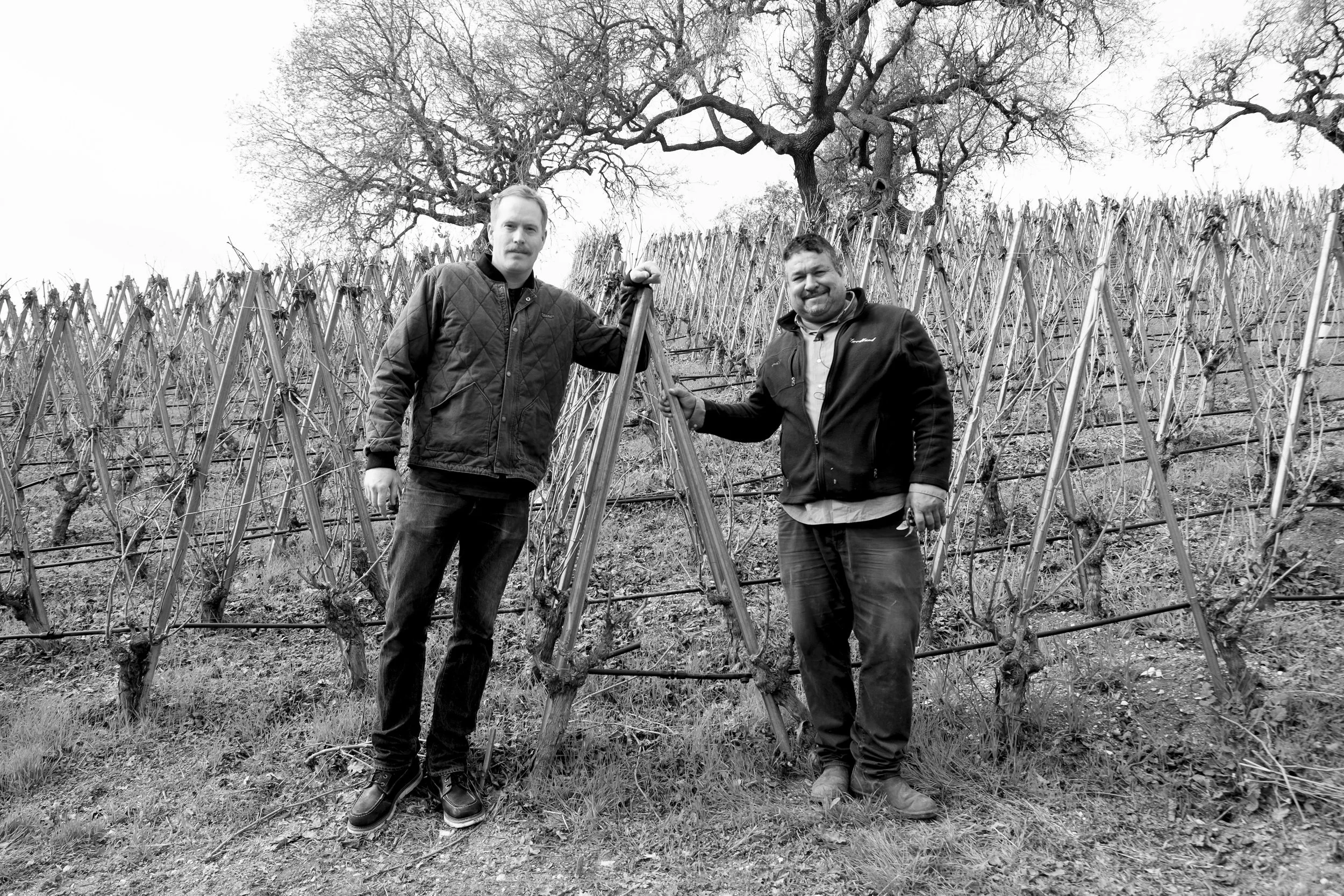
Peter Stolpman (left), owner of Stolpman Vineyards, and Ruben Solorzano (right), vineyard manager and crew architect, at Stolpman Vineyards in Ballard Canyon, Santa Barbara County | Kari Crist
What Human Labor Actually Produces
The program now produces over 10,000 cases annually, all by hand, all tied to the livelihoods of those 37 farmers. The profit-sharing model, just over $100,000 when last reported, now distributes $250,000 annually among the crew. Last year alone, the year-end bonus increased by $600 per person.
In 2025, in the middle of a downturn, Stolpman planted five more acres of high-density vineyard — so tightly packed that mechanization is permanently impossible. Twenty acres now, up from 13 a few years ago. One person per acre per year to farm. That is not an accident. It is a philosophy made physical.
The payoff is in the glass. With one-tenth the fruit per vine, the vines pour all their energy into what remains. Stolpman's The Great Places wines are the highest-rated in Santa Barbara County. Critics cannot quite explain them. "How are these wines so tactile, so buoyant?" Peter asks, with the satisfaction of someone who knows exactly why.
Ruben knows why too. "La Cuadrilla has been the school of Santa Barbara County for farming grapes," he says. "People start here and become tractor drivers, foremen, supervisors, vineyard managers." For Ruben, the work is inseparable from its human stakes. His goal is to support families — to ensure the second generation has the opportunity to go to college and have the American dream.
A Label That Tells the Truth
La Cuadrilla's current vintage, the 2023, is titled Saves the World with Their Grapevine. A rider gallops through a dark night, not with a gun but with a wine bottle, not with a lasso but with a grapevine raised high, bright stars of hope in the sky above. The 2024, now available, is titled Coming Down the Mountain — depicting a Mariachi Band descending the mountains behind wine country, the optimistic wager that the chaos will have crested by the time the last bottle is drunk.
This is not branding. It is testimony. Stolpman's wine club, nearly 6,000 members strong, has seen its less-engaged members drift away — replaced by a core that opens every email, responds to every offer, and spends more per person than ever. The entry point is the Quadrilla Club — six bottles for $100, all under $20, sold direct. "Why would you ever quit that?" Peter asks. But it is also an invitation — to a vineyard hike, a harvest, the story behind the label.
Even Love You Bunches, the winery's most popular wine, carries the mission inside the pun. Whole-grape fermentation requires hand-harvesting because machines reduce fruit to uncontrollable muck. The most accessible product is also the most labor-dependent. There is no version of Love You Bunches that doesn't require the crew.
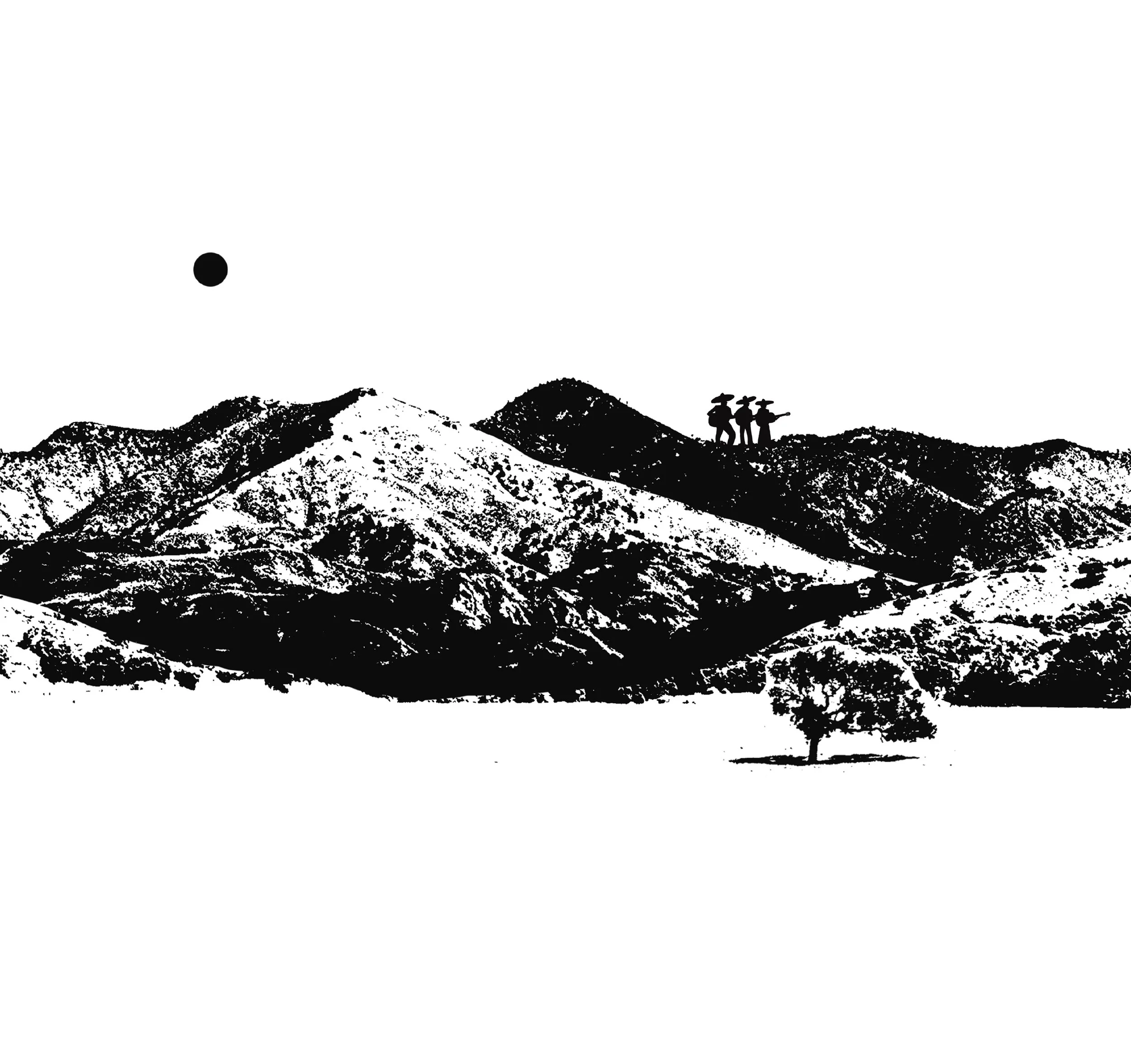
The 2024 La Cuadrilla label, "Coming Down the Mountain" — depicting a Mariachi Band descending the San Rafael mountains behind Santa Barbara wine country | Stolpman Vineyards
The Lesson the Rest of the Industry Is Missing
The leadership lesson here is not about wine. It is about what happens when you refuse to separate your economics from your ethics. Peter Stolpman did not protect his workers in March 2020 because it was good marketing. He did it because he understood that the people and the product were the same thing. Ruben Solorzano has spent thirty years proving him right — building not just a farming operation but a pipeline, a school, proof that agricultural work in America can be dignified, stable, and generational.
The 37 farmers of La Cuadrilla are not a feel-good footnote. They are the reason the wine tastes like it does, the reason the critics are confounded, and the reason Stolpman's name appeared on that screen in Sacramento while the rest of the industry stared at red numbers.
At Conspiracy of Love, we help changemakers tell their most powerful stories — stories that inspire action, build movements, and create lasting impact.
Find out more about our Values-Driven Storytelling and GPS to Purpose workshops, and how we can help you scale your impact.