How SkillUp Coalition’s Steve Lee Is Filling The Potholes On The Road Out Of Poverty
SkillUp Coalition is a nonprofit that helps working people find better jobs, training and careers. | SkillUp Coalition
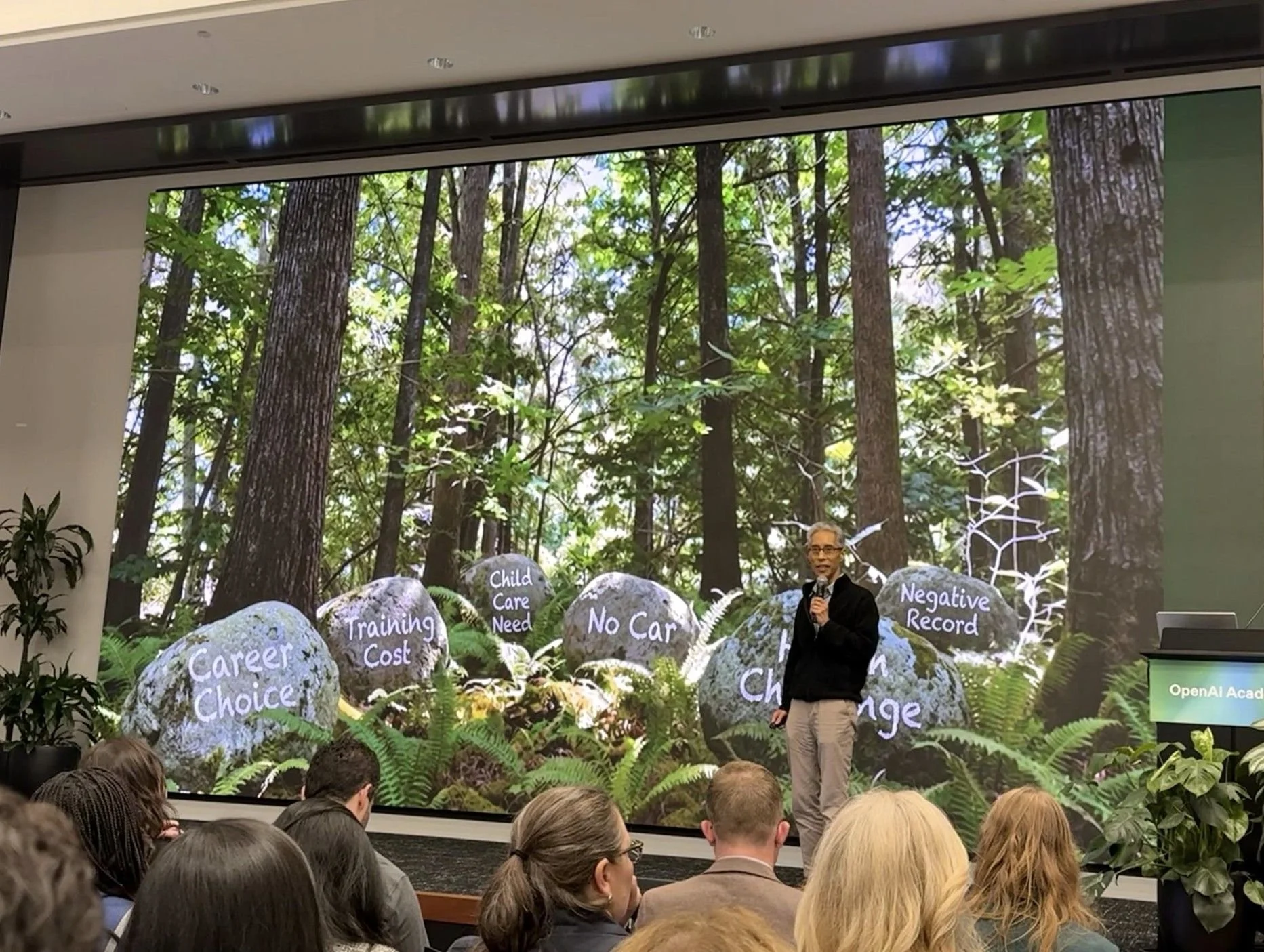
Anyone who has driven the Brooklyn-Queens Expressway knows the feeling in the pit of the stomach. The road is notorious for its potholes, and they rarely come alone. Swerve around one and you hit the next. For millions of low-income Americans, the road to a better life is built the same way. The new job falls apart the week childcare does. A hospital bill swallows the raise. Most help arrives one pothole at a time, and the rest of the road stays as broken as it was.
Steve Lee leads SkillUp Coalition, a nonprofit that helps working people find better jobs, training and careers. He has spent 15 years trying to fix that road, and he knows exactly what it costs when no one does.
Ten Kids In Durham

Steve Lee, CEO of SkillUp Coalition | SkillUp Coalition
As a Duke University student, Lee tutored ten high school kids from low-income families through a local nonprofit. Homework, SAT prep, the whole grind of trying to get into college. He loved them. He never knew whether he had made a difference, so on his ten-year anniversary he went back to find out. The same executive director was still running the place. Lee asked about his ten students.
“Every single one of them was either dead, in jail, or a single mom,” he says. “Every single one of them.”
At the time he was a lawyer and consultant with a comfortable private sector career, and the answer cracked something open. “This is the life sometimes of the people that we’re trying to help,” he says. He left consulting for philanthropy to make sure that answer becomes rarer.
What he had run into has a name. Intergenerational poverty is the trap that hands hardship from parents to their children, and Lee, a father himself, sees it as a betrayal of the most universal hope there is. “Any parent in the world, whether you’re rural, urban, low-income, or have means, wants their kid to do better in life,” he says. “And yet, a lot of kids don’t do better in life.”
His theory of how to break it fits on an index card. “Economic stability equals family stability, which equals kids’ stability,” he says. “And stable homes mean that kids will do better in school and life.”
Cutting Through The Noise
SkillUp began six years ago with the first obstacle anyone hits when they go looking for something better, which is confusion. “If you go to Indeed or LinkedIn, it is just so much noise,” Lee says. So SkillUp shows only jobs that pay a living wage and that genuinely don’t require a degree. Lee points to a Google software engineering listing that claims a degree is optional. “That’s baloney, to be honest,” he says. A team checks each opportunity to make sure it is real for the person reading it.
It worked, up to a point. Then, about a year after ChatGPT launched, Lee realized SkillUp was solving the wrong problem. “Like most nonprofits, we were solving for a transaction,” he says. “Let’s get someone a job, or let’s get someone food, or let’s get someone healthcare.”
Which brought him back to the BQE. “You remember all the potholes on the BQE? That is the life journey of the folks we’re trying to help,” he says. “And the problem is I’m only filling one pothole.”
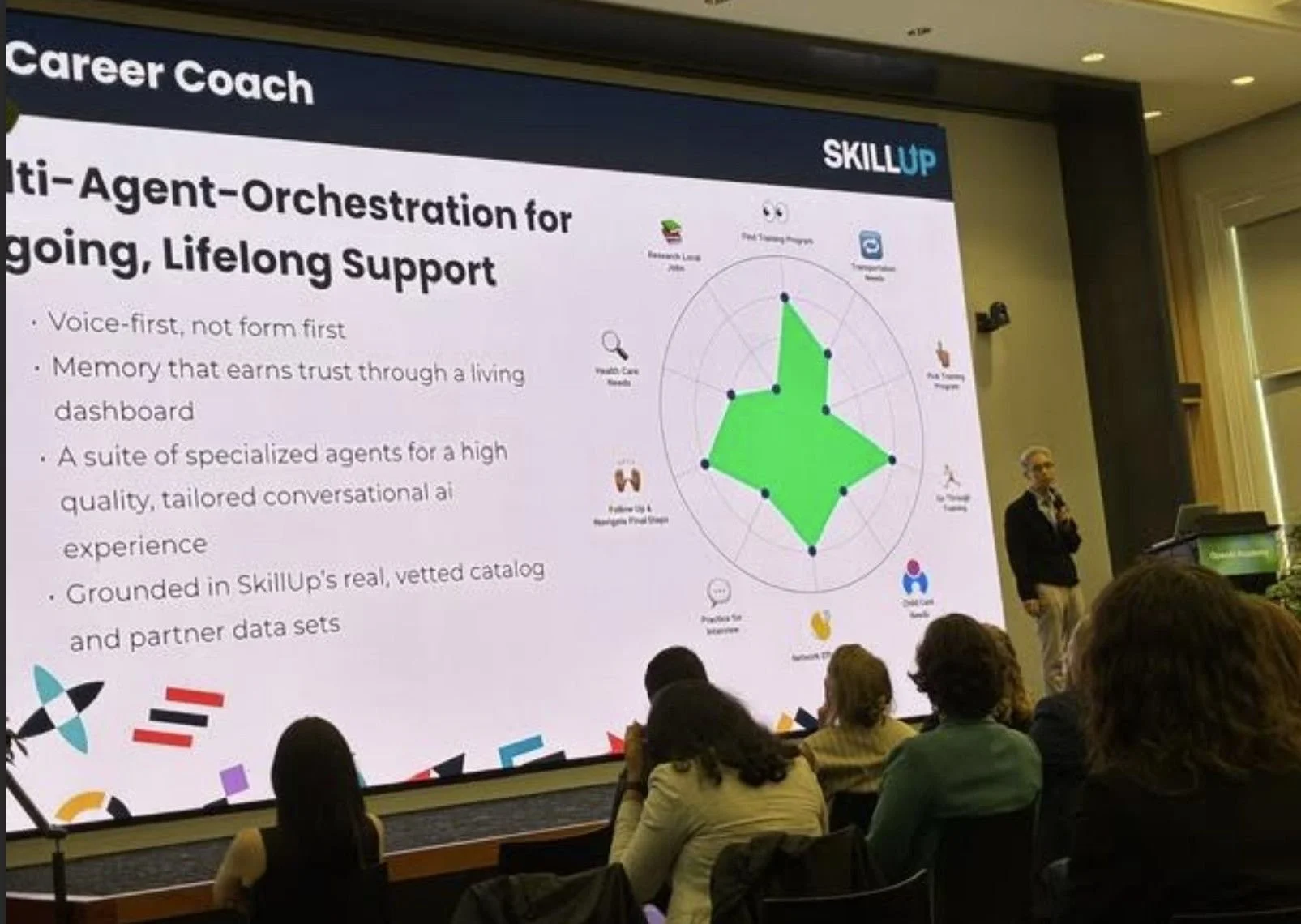
“Most folks have a journey problem,” he says. “They don’t have a transactional problem.” So SkillUp is now building what Lee calls middleware, a connective layer that links each person to the partners who can handle childcare, healthcare, money and everything else that decides whether a new job sticks.
Someone On The Other End
The deepest pothole, Lee believes, is loneliness of a particular kind. People who grow up with means have someone to call when work goes wrong, a relative with experience, a friend of a friend. The people SkillUp serves usually don’t. “They don’t have access to social capital,” he says.
That is where the HP Future of Work Accelerator came in. A joint program of HP and the HP Foundation, it gives selected organizations $100,000 in funding, about $100,000 in HP technology and a six-month virtual program, all aimed at helping disconnected communities take part in the future of work. For SkillUp, that support paid for a bridge to Empower Work, a partner that runs free coaching by text message. A person can write that they just lost their job, and a trained volunteer coach replies within moments, from anywhere in the country. As the rest of the industry races to automate, SkillUp used its AI investment to put a human being on the other end of the line. “Everyone needs a human,” Lee says.
The accelerator also helped SkillUp use AI to show people which skills stand between them and the job they want, and how to get each one. Next, Lee wants what someone shares with a coach to flow back into SkillUp’s system, so nobody has to start their story over.
SkillUp has reached about 5 million people and estimates its work has led to roughly 300,000 jobs. | SkillUp Coalition
From The Hallway To The Server Room
SkillUp has reached about 5 million people and estimates its work has led to roughly 300,000 jobs and $18 billion in additional lifetime earnings. Lee cares far more about the second set of numbers than the first.
Brianna is one of them. She was a janitor at her high school in Cincinnati when she saw a SkillUp spot featuring Bengals quarterback Joe Burrow. She signed up. SkillUp connected her to a six-month tech boot camp in the city and found scholarship money to pay for it, and she did the rest. She came out with an IT job paying two to three times what she earned as a janitor, then went on to college. Four years later, she is an IT administrator at a major company.
“We gave her the right information, the right resources, her own pluck and desire,” Lee says, quick to add that not everyone’s story ends this way. It is still the story he wants for every person who logs on, and almost exactly the opposite of the one he heard in Durham.
No Easy Promises
Lee will not tell anyone the future of work looks bright. “I am pessimistic about the future of work, to be very blunt,” he says, especially for young people from the communities SkillUp serves. He doubts even the trades are safe for long. “Everyone says you can be a plumber. I think that’s true. I think 10 years from now, a robot can be a plumber.” He admits he could be wrong. “I honestly could be totally wrong,” he says.
His honesty is the strategy. SkillUp ranks jobs by pay, career path and how long they are likely to survive automation, and it changes those rankings as the data changes. Plumbing sits near the top today. In two years it may not.
The organization’s 2030 goal is one million jobs and $50 billion in lifetime earnings, with two-thirds of the climb still ahead and a third of the time left. Lee is betting that the right technology, with real people built into it, can close the gap. Somewhere in Durham right now there are ten more kids at a tutoring table. He is trying to pave their road before they reach it.
At Conspiracy of Love, we help changemakers tell their most powerful stories — stories that inspire action, build movements, and create lasting impact.
Find out more about our Values-Driven Storytelling and GPS to Purpose workshops, and how we can help you scale your impact.