How MPAC And The Muslim House® Are Reshaping Hollywood’s Stories About Muslims
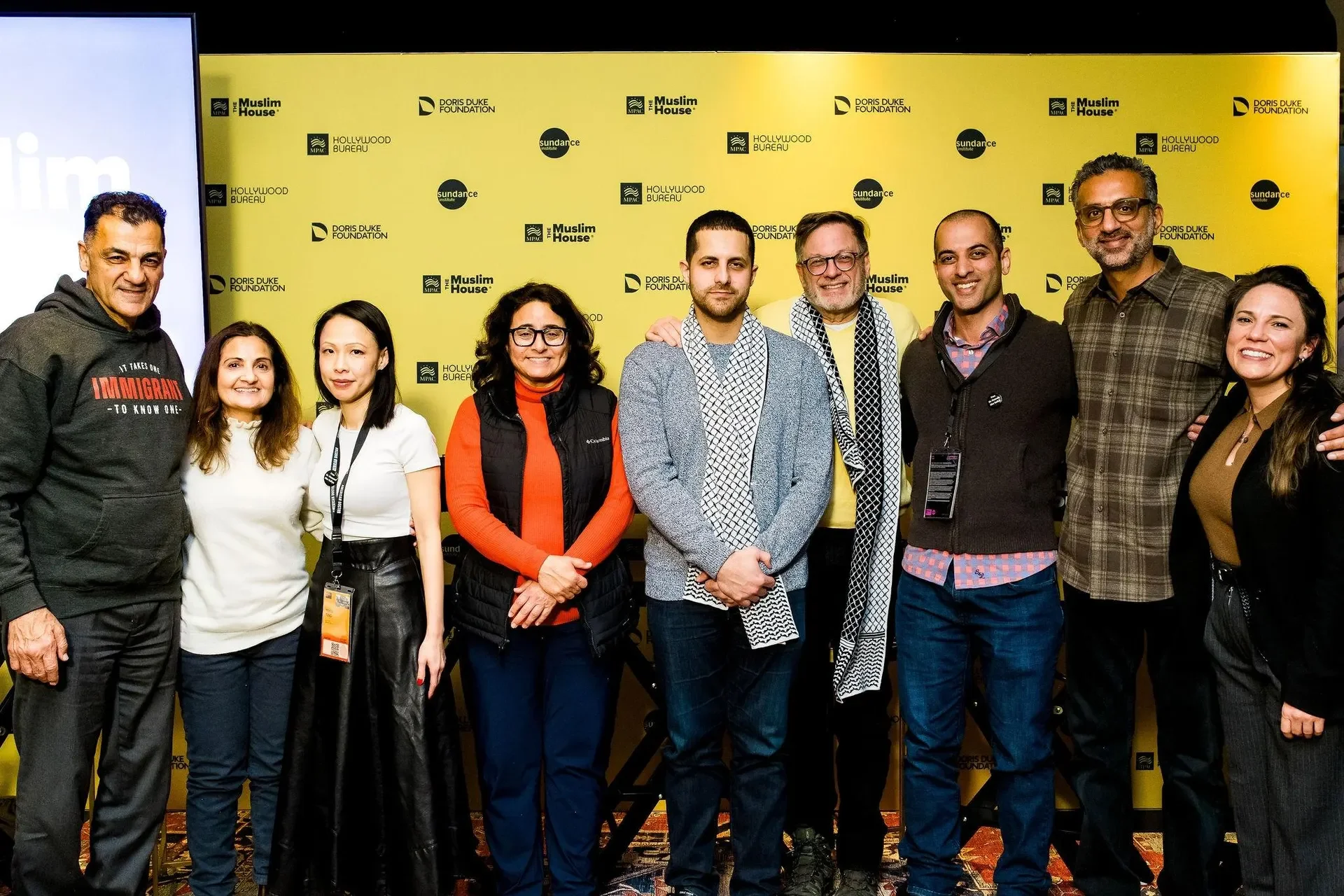
MPAC at Sundance 2025 | Lauren Lindley Photography
We seem to be in a golden age where authentic representation of Muslims in America are at an all-time high. Mo Amer cracks jokes about Palestinian refugee life on Netflix, the Deli Boys navigate a chaotic South Asian American family saga, and Hasan Minhaj sells out arenas. Two realities, sitting side by side — one fueled by fear, one quietly dismantling it. Sue Obeidi has spent twenty-five years building the bridge between them.
Obeidi’s path to becoming one of Hollywood’s most unlikely power brokers began not on a studio lot but in a bank. In early 2001, she walked away from a successful corporate career to join the Muslim Public Affairs Council — MPAC, one of America’s first National and Public Advocacy organizations — driven by what she calls a “midlife awakening.” “I needed something more,” she says. “I needed to work for the betterment and the health of my community and for the betterment of America.” Ten months later, September 11 happened, and any thought of going back to corporate life was never going to happen. “I never looked back,” she says simply.
What followed was years of grinding, reactive work. Studios and networks suddenly needed to understand Islam and the communities they had spent years rendering as background threat or foreign other. The organization found itself fielding consulting requests, touring production companies, trying to hold a corrective line. It was exhausting — and foundational. “We grew a network,” she reflects. “We started finding we have a lot of allies, and if they’re not allies, they have a lot of questions, and we can actually help counter the narrative.”
Building the Bureau
What began as damage control has since become something more ambitious: a proactive infrastructure for Muslim storytelling at the highest levels of the entertainment industry. In 2011, MPAC formalized that work by launching the Hollywood Bureau — a dedicated department designed to change the narrative around Muslims and Islam by going directly to the source. The Bureau consults on film, television, and streaming projects. It connects Muslim talent to industry decision-makers. It runs screenwriting labs and, in partnership with Film Independent, a fellowship that funds emerging Muslim storytellers. It is, as Obeidi puts it plainly, “the only Muslim organization doing proactive work at the intersection of entertainment media and public policy.” For years, the Bureau's presence at major film festivals was modest but deliberate — a single panel at Sundance here, a reception at Tribeca there. Each appearance was a foothold. Each conversation was a relationship. And slowly, the footprint grew.
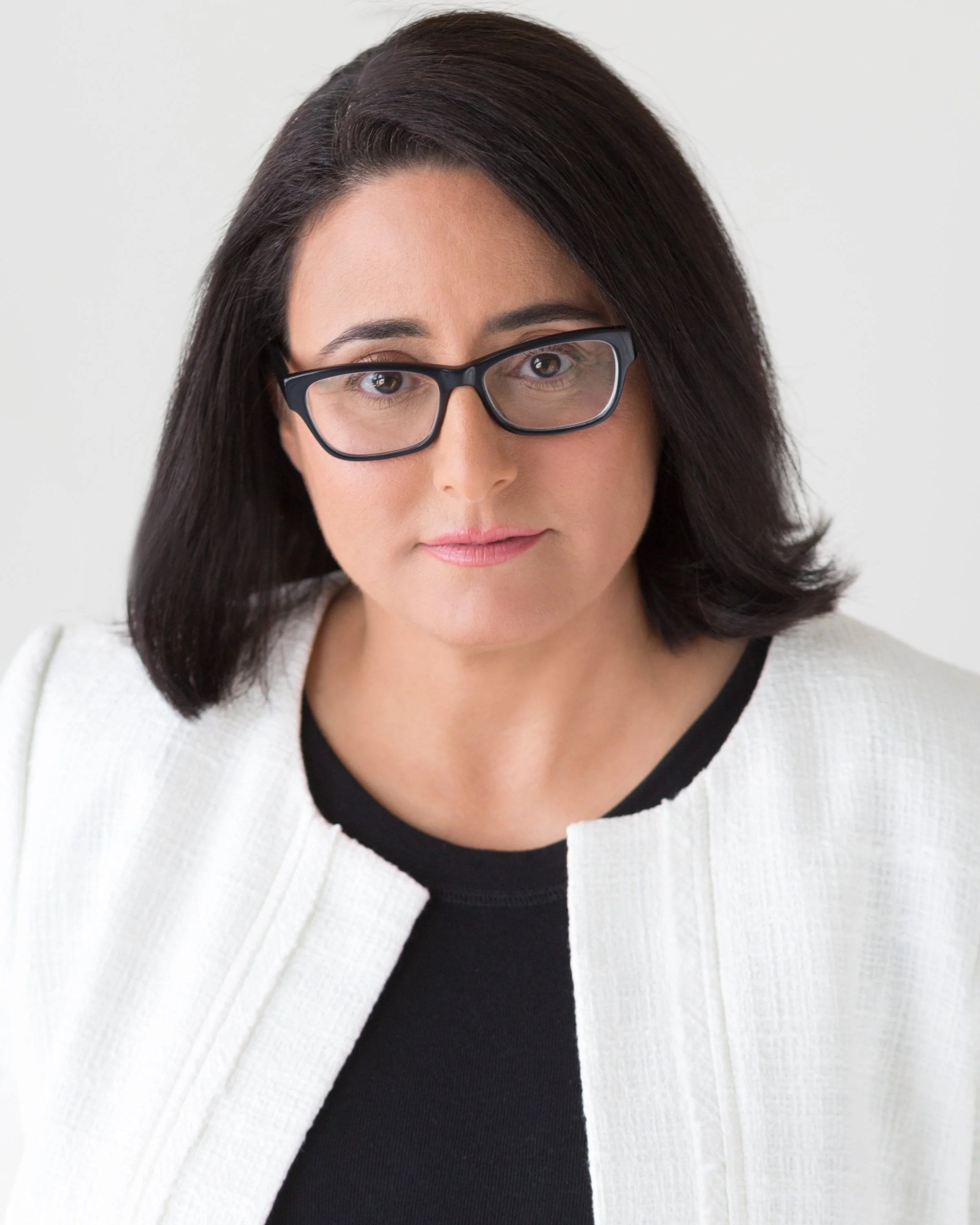
Sue Obeidi, Senior Vice President, Hollywood Bureau | MPAC
The House That Changed Everything
In 2021, the Hollywood Bureau took its festival strategy and built something permanent around it: The Muslim House®. Equal parts industry convening, cultural celebration, and strategic intervention, The Muslim House® is now a fixture at the most powerful film festivals in the world — Sundance, South by Southwest, Tribeca, the ATX TV Festival in Austin. It is, Obeidi says, “an industry and cultural hub for filmmakers and creatives and executives, Muslims and allies, to come together to learn, to meet, to collaborate with each other.” There is no comparable institution. No other Muslim organization has built anything like it.
The Muslim House®’s growth accelerated in 2023, when the Doris Duke Foundation stepped in with dedicated funding. The effect was compounding — the Bureau’s profile rose, The Muslim House® scaled, and work that had always mattered suddenly had the resources to prove it. “The funding by Doris Duke has been a game changer,” Obeidi says. “We’ve been able to elevate the profile of our work, both The Muslim House® and just in general, the Hollywood Bureau.” On June 11, The Muslim House® comes to Tribeca, hosted at the Soho Grand Hotel. The lineup includes a fireside chat with legendary filmmaker Mira Nair, interviewed by Bilal Qureshi, a former producer of NPR's All Things Considered. Panels, networking events, comedy showcases, watch parties. A single day that carries the weight of decades of exclusion — and the energy of what's finally changing.
Tipping the Scale
The proof is now visible on screens across America. Ms. Marvel. Mo. Ramy. The Deli Boys. Hasan Minhaj. These are not niche titles or critical curiosities — they are mainstream cultural events, watched by audiences who may never have sat across from a Muslim neighbor, colleague, or friend. “We have tipped the scale in changing the narrative,” Obeidi says. She is careful not to overclaim. The old stereotypes haven’t vanished — they evolved, went underground, and occasionally resurface when the news cycle makes fear profitable. “I don't think bad narratives are ever going to go away because sometimes they make money for the industry,” she acknowledges.
But the Bureau’s strategy has shifted the incentive. “What we’re doing is showing the industry you can actually make something better and make money by telling better stories.” Obeidi’s latest thesis, born from the tragic Islamic Center shooting in San Diego and a rising tide of anti-Muslim hate crimes, is both urgent and counterintuitive: familiarity saves lives. The more audiences see Muslim characters — laughing with them, grieving with them, recognizing in them something true and human — the harder it becomes to sustain the dehumanization that makes violence possible. She points to Nida Mansour’s We Are Lady Parts in the UK, to Mahershala Ali's upcoming film rooted in a hadith of the Prophet. “We've never had this many projects we can point to,” she says.
The Next Frontier
The challenge ahead isn’t representation on screen alone — it’s representation in the rooms where decisions get made. “We need people in the C-suites,” Obeidi says. “We need executives. We have a rich critical mass of creatives, but we need the business people at the agencies, at networks, at the production companies.” And as Hollywood’s old gatekeeping model fractures, she sees opportunity where others might see obstacle. “A web series on YouTube can become a series on Netflix,” she notes. “I don’t even know if the word challenge is how I look at it. It's the opportunities.”
After 9/11, after years of playing defense, after the slow grinding work of earning credibility in an industry that offered little in return, Obeidi has arrived somewhere most advocates never reach: the proactive future. The Muslim House® at Tribeca is the proof — not demanding a seat at the table, but having built an entirely different room, one filled with better stories already in production.
At Conspiracy of Love, we help changemakers tell their most powerful stories — stories that inspire action, build movements, and create lasting impact.
Find out more about our Values-Driven Storytelling and GPS to Purpose workshops, and how we can help you scale your impact.