How Julia Collins And PlanetHAUS Are Making Sustainability Irresistible

Julia Collins, Founder of the PlanetHAUS | PlanetHAUS
Sometimes the answer arrived not as a business plan but as a single sentence.
Toni Cade Bambara, the writer, had written it decades earlier: "The job of the movement maker is to make your revolution irresistible." Julia Collins read that sentence and felt the specific discomfort of recognizing a problem she'd been circling for years without being able to name it.
Collins had done everything right to drive sustainability forward. She'd built companies, raised venture capital, helped close the data gap that was preventing brands from understanding their environmental footprint. She knew the sustainability world from the inside — its wins, its compromises, its stubborn ceiling.
And that insider knowledge was precisely what made the problem so hard to ignore. The sector had better products, better data, and better intentions than ever before. What it didn’t have was desire. People weren’t buying in — not at the scale the planet needed. That gap, cultural rather than technological, became the founding logic of PlanetHAUS — a platform that brings climate solutions into everyday life, using design, consumer culture, and immersive events to show that sustainable living doesn’t have to be a sacrifice, but in fact can be an an upgrade.
Desire vs Data
By 2020, when Collins launched Planet Forward, the urgent problem was data. Brands wanted to do better but couldn't measure their own supply chains. A wave of companies rushed in to fill that gap. "We all believed that if you want companies to create more sustainable products, you have to create enabling technology to make that happen," Collins explains. "And guess what? We did it, and it worked, and that's no longer the problem."
The new problem is harder, and more human. "Not enough people actually think life will be better if they consume better," she says. The data is there. The products are there. What's missing is desire. And desire, it turns out, is not a technology problem.
Collins saw something the industry had been quietly ignoring: sustainability had a branding crisis. "Most people associate a sustainable lifestyle with being a little bit hungry, being a little bit ugly, being a little bit bored, and making so many sacrifices." That perception — formed in the era of scratchy recycled toilet paper and bland tofu — stubbornly persisted even as the products themselves transformed. The taste gap closed. The aesthetics gap closed. But the cultural story never caught up. That gap is what PlanetHAUS was built to close.
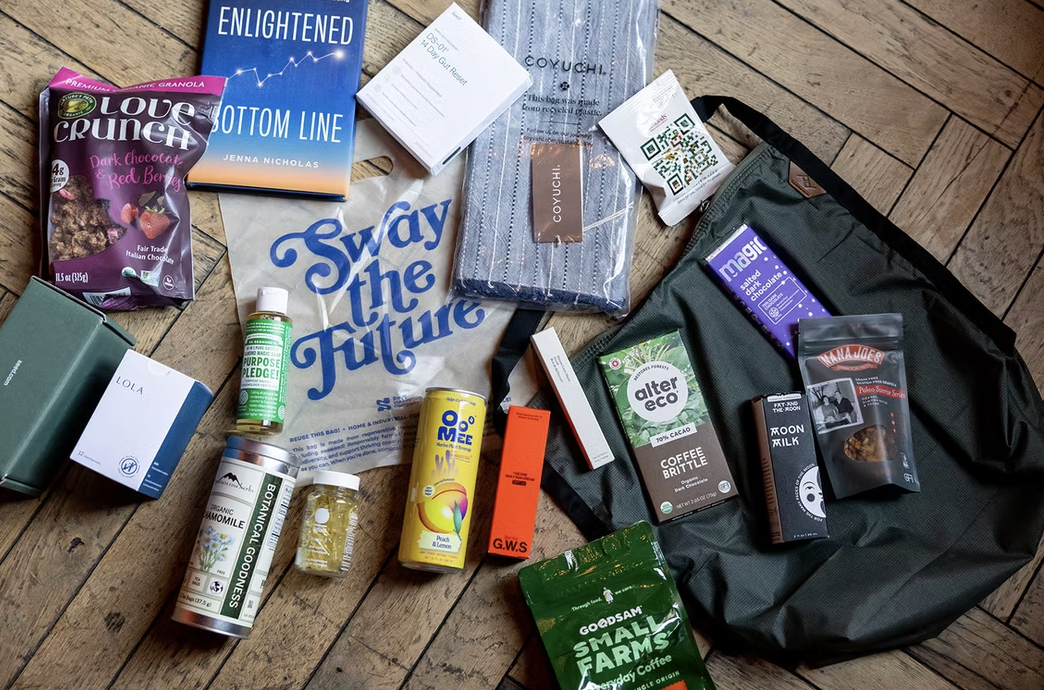
PlanetHAUS — a platform that brings climate solutions into everyday life, using design, consumer culture, and immersive events to show that sustainable living isn't a sacrifice. | PlanetHAUS
Make It Irresistible
The word landed like a diagnosis. "I think about this quality of irresistibility, undeniability, unstoppability," Collins says. "That is the kind of energy needed to really move the market." Looking back at the sustainability movement she'd been part of, she felt the shortfall acutely. "We were doing good stuff, nice stuff, pretty stuff, but not irresistible, undeniable, and unstoppable."
The shift she began imagining wasn't about education or guilt or data dashboards. It was about seduction. "Seduce and delight people," she says, "to show them what's already there, but curate it in a way that makes people go — oh, it's a lifestyle."
The name PlanetHAUS is a deliberate invocation of Bauhaus, the radical German design movement born in the chaos of the Weimar Republic — a group of free thinkers who questioned everything, and in doing so created an aesthetic so powerful it still shapes the built world a century later.
Crucially, Bauhaus embedded principles of circularity, durability, and low waste into its work. But the framing was never environmental. The framing was beauty. "If we could stop beating people over the head with the data and entice people with delight," Collins says, "if we could center the pleasure narrative rather than the impact narrative — might we start to get at what Toni Cade Bambara said: make it irresistible."
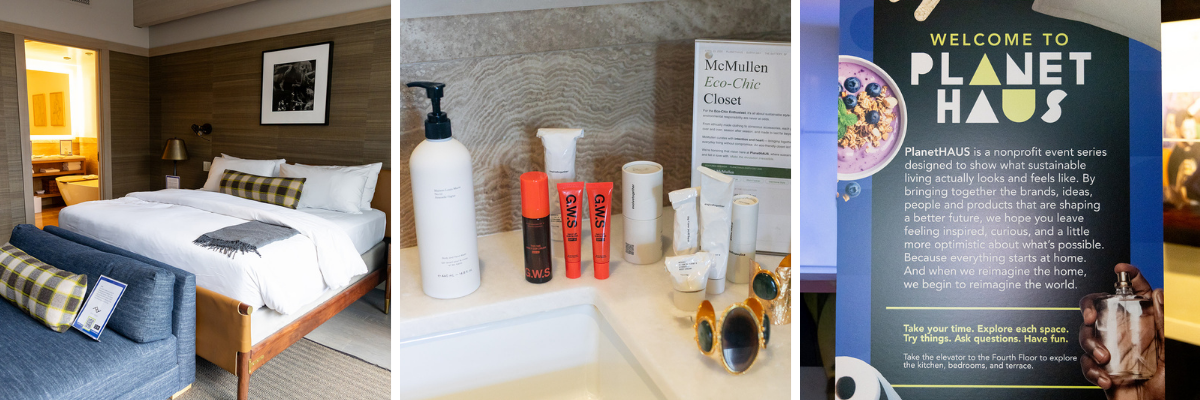
PlanetHAUS popup during San Francisco Climate Week | Chloe Jackman photography
A Home, Not a Conference
PlanetHAUS takes the form of immersive, home-like pop-ups — beautifully designed living spaces where every product on display, from toothpaste to paper towels to vitamins, has been curated for the planet. The premise is simple and quietly radical. "What would my house look like if everything inside were designed for the planet?" Collins asks. About two-thirds of global greenhouse gas emissions trace back to consumer choices, which means the answer to that question carries real planetary stakes.
The first event happened in New York during Climate Week, built on a shoestring budget with no dedicated team. It sold out, with two thousand people on the waiting list. The second, at The Battery in San Francisco, confirmed it wasn’t a fluke. Satisfaction ratings hit 95%. But one data point stood above everything in the post-event survey. "The only thing that got 100% was this: 100% of people said the event changed their point of view on sustainability." Every single person — from seasoned sustainability professionals to guests who’d simply heard it was a good party — left seeing the world differently.
That is the tipping point Collins is chasing. Not mass conversion through advertising, but nodes of influence that ripple outward. "I can’t touch 100 million people at a time," she says, "but I can create those nodes of change."
The Road Ahead
PlanetHAUS currently operates under a nonprofit structure, with brands donating to further its mission. But the demand Collins has encountered at every event suggests the model is only in its first chapter. Attendees have asked for a subscription box, a retail experience, home makeover services. The appetite is real — people just needed to be shown what was possible.
The calendar is expanding: Martha’s Vineyard in August, New York in September. By 2027, PlanetHAUS goes international — London, potential appearances at Cannes Lions and Davos. The vision is a movement with global reach, anchored by in-person experiences that prove, room by gorgeous room, that living well and living responsibly are not in conflict.
For someone who spent twelve years at a breakneck, venture-backed pace, what PlanetHAUS offers Collins personally is something unexpected. "PlanetHAUS allows me to build with more patience and spaciousness," she says, "which means I can say no a lot more. I can slow down in this work in a way that I haven’t been able to." That willingness — to build a movement rather than optimize a product, to persuade through beauty rather than data — may be the most underrated leadership insight of her career. The hardest problems don't always yield to speed. Sometimes they yield to seduction.
At Conspiracy of Love, we help changemakers tell their most powerful stories — stories that inspire action, build movements, and create lasting impact.
Find out more about our Values-Driven Storytelling and GPS to Purpose workshops, and how we can help you scale your impact.