How Hollywood Food Coalition Is Turning Surplus Food Into A Lifeline For Los Angeles
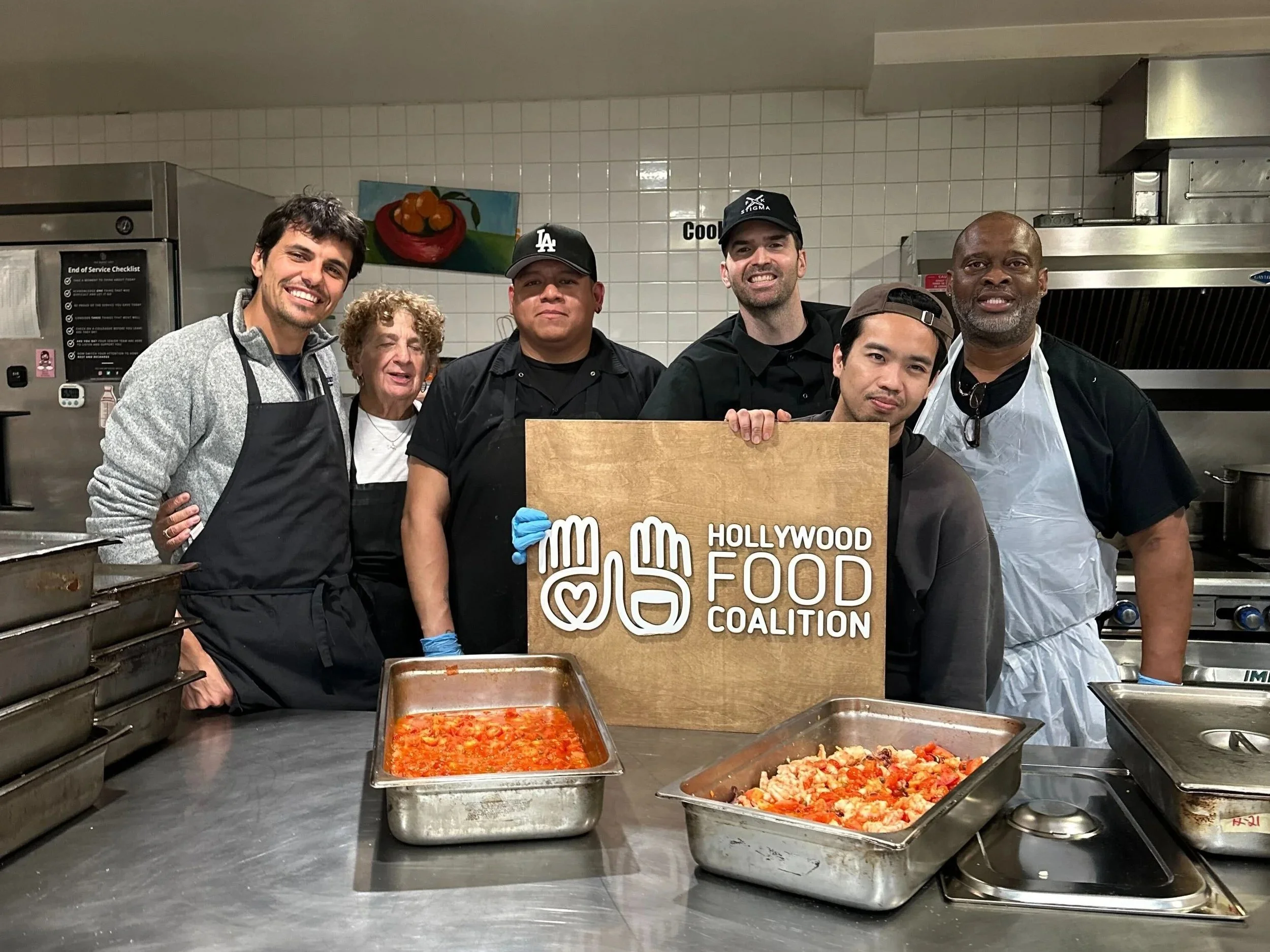
Hollywood Food Coalition
In a city where restaurant reservations can take weeks and grocery stores overflow with options, hunger can feel like a contradiction.
Yet across Los Angeles County, thousands of people struggle daily to access consistent, nutritious meals. Hollywood Food Coalition (HoFoCo), a nonprofit that has served meals in Hollywood for decades, is working to close that gap in a new way. For Arnali Ray, the organization’s Executive Director, and Linda Pianigiani, Director of Development and Communications, who helps lead community engagement and fundraising initiatives, that work is about far more than food relief. It is about building a more connected and dignified system of care.

Arnali Ray, Executive Director | Hollywood Food Coalition
Their latest step is the launch of a 4,500-square-foot space in Glassell Park, home to HoFoCo’s Community Exchange program and the LA Food Collective. Created together with Asian Pacific Islander Forward Movement (APIFM), Polo’s Pantry, and Sunrise Organic Farms, the hub brings together nonprofits and food producers to rescue surplus food and redistribute it to communities across Los Angeles.
The idea is simple. Good food shouldn’t end up in the trash when people nearby are hungry.
Food access shouldn’t be complicated
For Ray, the work sits at the intersection of health, dignity, and common sense.
She spent 14 years at Saban Community Clinic, where she helped expand programs addressing homelessness and healthcare access across Los Angeles. Over time, she began to see food access as one of the most immediate and solvable challenges.
"I thought there’s no way people are going to deny people food," Ray said.
But watching debates around food assistance and social programs unfold in recent years has shifted her perspective.
"It just feels so wrong," she said. "Los Angeles has so much wealth, but there’s such a disparity."
At its core, HoFoCo’s approach is built on a basic reality. "We’ve got an overabundance of food that would go to waste, and then we have all these people that are hungry. This is a no-brainer."
That logic helped spark one of the organization’s most ambitious projects yet.
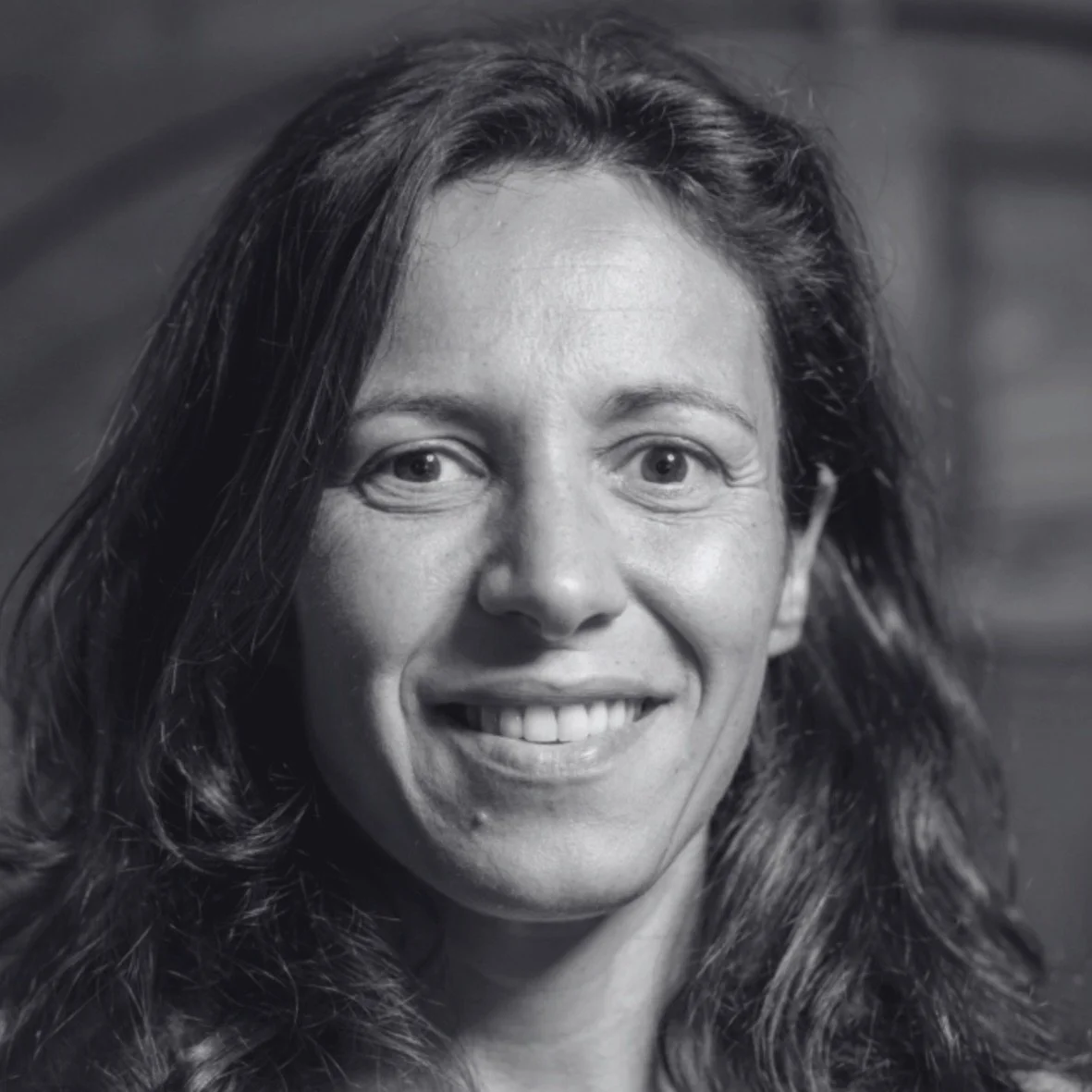
Linda Pianigiani, Director of Development and Communications | Hollywood Food Coalition
From emergency response to a citywide system
The Community Exchange grew out of the early days of the pandemic.
When restaurants, studios, and offices shut down in 2020, businesses suddenly had large amounts of unused food they didn’t want to waste. Many began calling Hollywood Food Coalition asking if they could donate it.
"We had so much food that we just didn’t have enough space in our kitchen," Ray said.
The organization began improvising. They stored food at a nearby church, added refrigerators wherever possible, and started sharing surplus supplies with smaller nonprofits trying to launch emergency meal programs.
"Other nonprofits were reaching out saying they wanted to start a food program because everything else had shut down," Ray said. "That’s essentially how the exchange started."
What began as an emergency workaround quickly became a growing network. Today HoFoCo distributes food to hundreds of community organizations and receives donations from roughly 600 to 700 businesses.
Eventually, the scale of the operation made one thing clear. The system needed its own infrastructure.
A hub built on collaboration
That realization led to the creation of the new LA Food Collective.
The newly leased warehouse, located in Glassell Park at the former Eagle Rock Brewery, expands refrigeration, storage, and distribution capacity for the coalition’s growing network. Designed as a shared infrastructure model, the hub allows multiple organizations to pool resources and coordinate food recovery and distribution across Los Angeles County.
Rather than operating independently, HoFoCo partnered with organizations that already serve overlapping communities but often lack the infrastructure to scale.
APIFM works closely with Asian Pacific Islander communities across Los Angeles. Polo’s Pantry focuses on grassroots food distribution and advocacy. Sunrise Organic Farms, a BIPOC-owned farm from Santa Barbara, connects the network to fresh produce and agricultural supply.
Together they share refrigeration, storage, and logistics inside the new warehouse, helping connect surplus food with community-based organizations and individuals facing food insecurity.
For many smaller community organizations, that infrastructure is the missing piece. Many serve neighborhoods experiencing the highest levels of food insecurity but lack the warehouse space, refrigeration, and transportation required to run large-scale food programs.
By sharing equipment, space, and systems, the partners aim to strengthen the local food ecosystem while creating a model that could potentially be replicated in other cities.
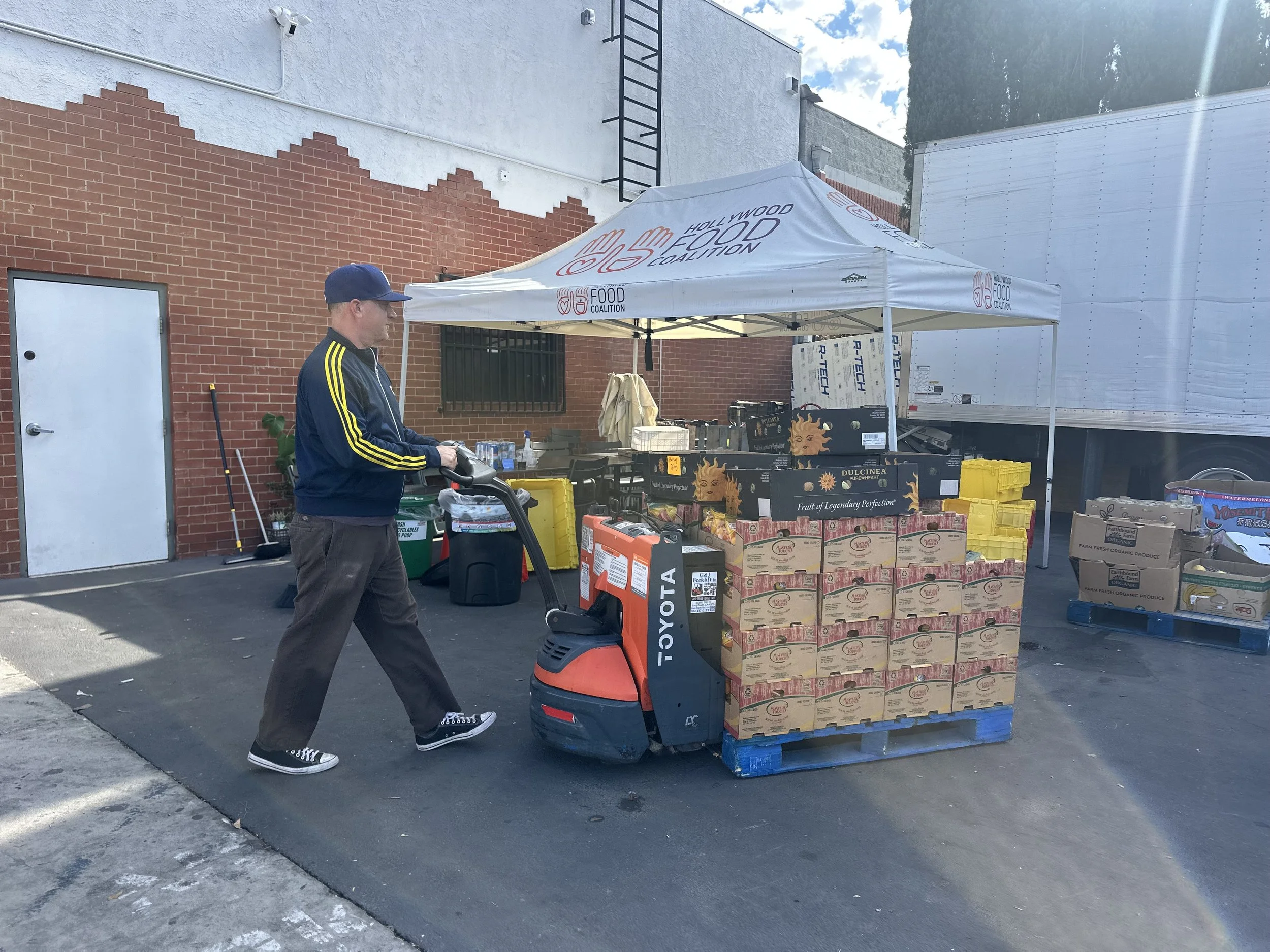
Hollywood Food Coalition
Building community around food
The coalition’s work doesn’t stop at distribution.
Hollywood Food Coalition has also developed a reputation for creative community events that bring new audiences into the mission.
"We like to say that we’re a fun organization," Pianigiani said.
Instead of traditional galas, the organization hosts events that reflect the creative culture of Los Angeles. One example is the Kitchen Sink Festival, a concert series that has featured artists such as Beck, Ben Harper, Rodrigo Amarante, and Rufus Wainwright.
The coalition has also hosted improv comedy shows, chef collaborations, and even a pickleball tournament inspired by Pianigiani’s own enthusiasm for the sport.
"We try to come up with interesting and varied opportunities for people to engage with us," she said. "Without being too focused on just making the big bucks or doing the big gala."
Food remains the center of gravity. Guest chefs regularly cook alongside the organization’s kitchen team, turning meals into opportunities for connection and storytelling.
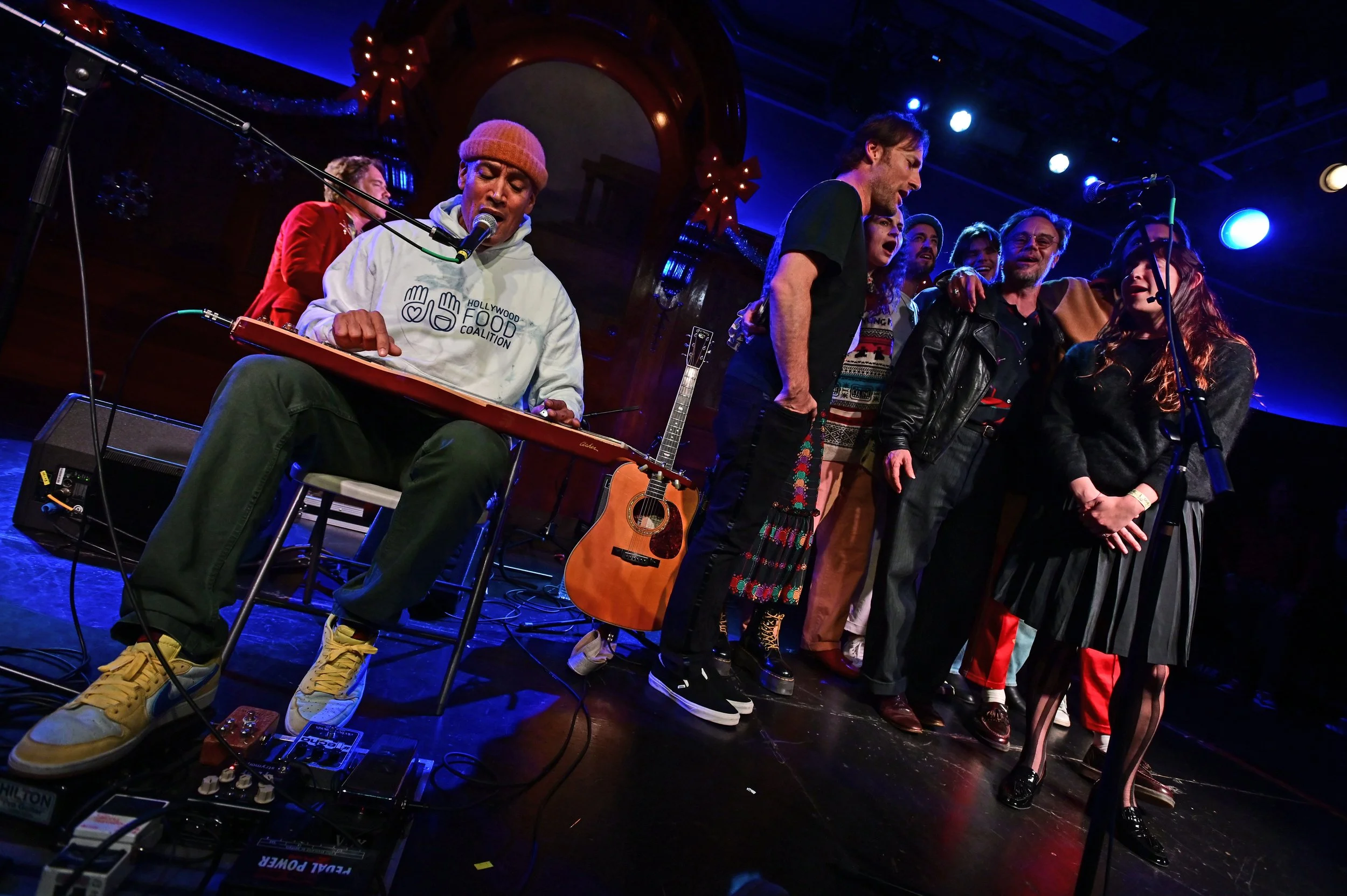
Kitchen Sink Festival | Stephen Albanese
An open door for partners
The work also relies on strong partnerships.
Over the years, companies including Sysco, NBCUniversal, Paramount, Netflix, State Farm, Cedars Sinai, Albertsons Companies, and Waymo have supported Hollywood Food Coalition’s programs. Restaurants, grocery chains, and food distributors play an especially important role by donating surplus food.
"Anything that is food related from restaurants, distributors, anybody that might have excess food that we could recover and redistribute obviously aligns with what we do," Pianigiani said.
But the invitation extends far beyond the food industry.
"Anybody who’s interested in our cause, whether it’s food related or another industry, we collaborate with any type of organization that aligns with our values," she said.
A vision beyond food relief
Even as the LA Food Collective opens, the organization is already thinking about the next step.
Hollywood Food Coalition is currently searching for a permanent service space where volunteers, staff, and guests can gather around meals together.
Ray hopes that space will feel less like a charity program and more like a shared community table.
"My hope is that we have a space where we’re all sitting together, eating together, working together. It’s one community," she said.
Because the real goal isn’t simply moving food from one place to another.
It’s creating a city where no one has to wonder where their next meal will come from.
At Conspiracy of Love, we help changemakers tell their most powerful stories — stories that inspire action, build movements, and create lasting impact.
Find out more about our Values-Driven Storytelling and GPS to Purpose workshops, and how we can help you scale your impact.