How Circle Is Helping The US Build A Packaging System That Actually Works
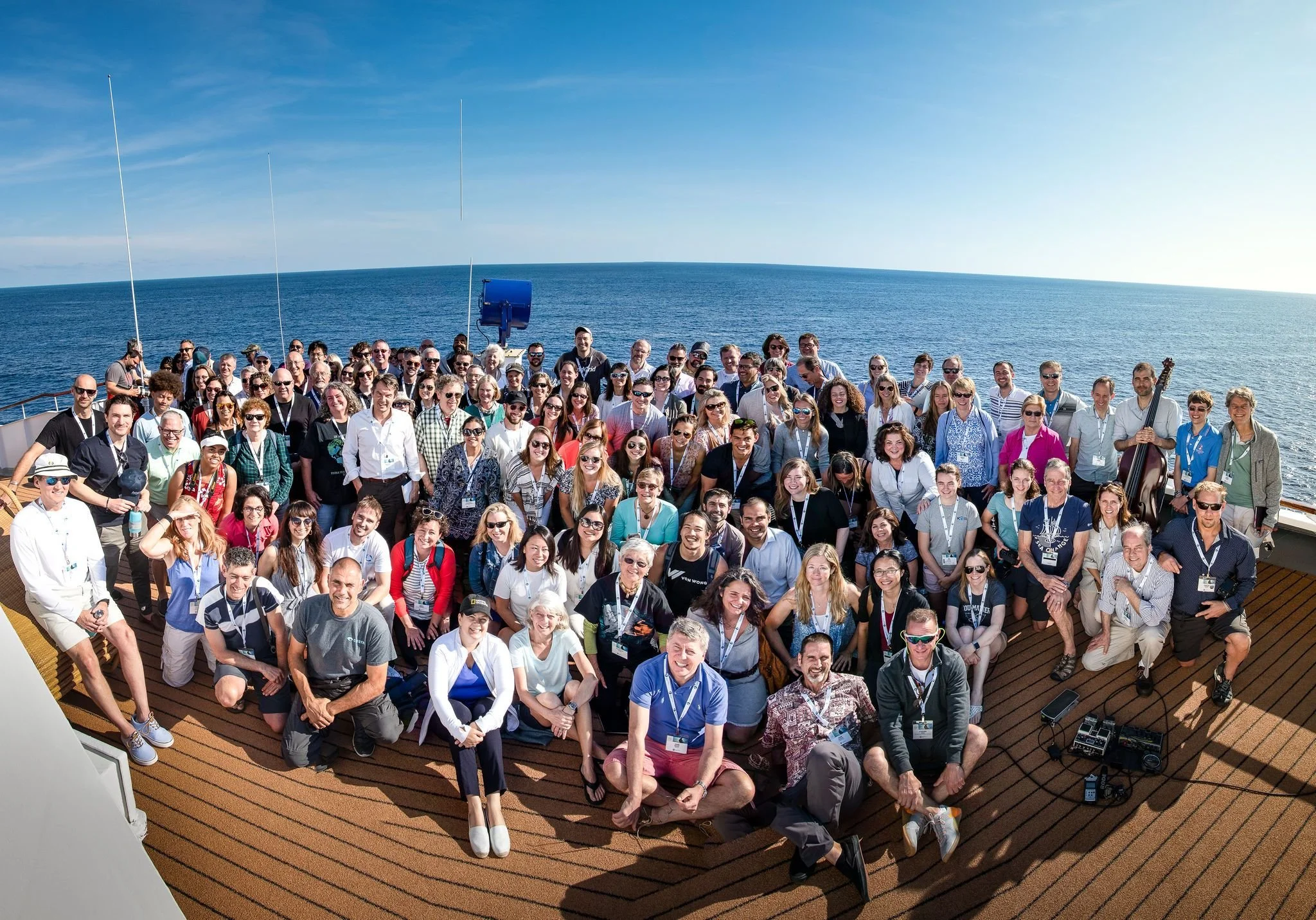
Circle was founded in 2019 as the Ocean Plastics Leadership Network (OPLN) to create a neutral, trusted space for the plastics and circularity ecosystem. | Circle
Packaging waste isn't a mystery. The confusing part is the system around it.
For eight years, Marta Fiscina and Dave Ford have been helping the people shaping the packaging system sit at the same table and learn from one another. As co-founders of The Circular Leadership Network—known as Circle, formerly the Ocean Plastics Leadership Network—they've built a neutral platform where policymakers and industry leaders can make sense of circular packaging policy and recycling infrastructure.
Fiscina describes the mission plainly. "We're a neutral education platform dedicated to closing the knowledge gap on circularity and its complex policy landscape."
A ship that launched a different kind of forum
Circle's origin story starts far from a conference room.
In 2019, Ford organized an expedition to the Atlantic Garbage Patch. They brought 165 people from across the ecosystem: petrochemical executives, consumer brand leaders, waste pickers, and environmental NGOs.
"Oppositional forces were on the same ship in the middle of the Bermuda Triangle," Ford recalls, "in the middle of the Atlantic Garbage Patch."Everyone sat together, floating above the problem they'd all created or were trying to solve.
That expedition established what would become Circle's defining capability. "It really gave birth to this neutral convening gift that we were given," Ford says.
That gift? The ability to hold a different type of forum—one that opened possibilities for diametrically opposed parties to actually hear each other.
Convening Hundreds of Stakeholders Across the Globe on Plastic Pollution Crisis
In 2022, UN Member States agreed to start negotiating a new global treaty to end plastic pollution.
Circle spent the next three years running the Global Plastics Treaty Dialogues, convening over 50 countries and hundreds of companies in one of the few neutral spaces where oppositional forces came together to shape international plastics policy.
Fiscina, who led that program, explains its significance: "We created a space where countries and companies that were fundamentally opposed to each other could actually have productive conversations about the future of global plastics policy."
That work cemented Circle’s reputation as an organization that could hold the room when others couldn't.
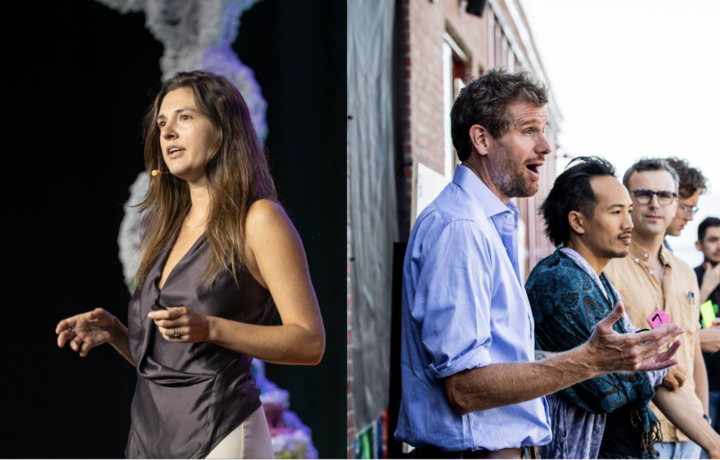
From left to right: Marta Fiscina, Dave Ford, Co-Founders of Circle | Circle
When the treaty stalled, the focus shifted home
When the global plastics treaty negotiations began to stall, the Circle team made a decisive pivot. They shifted 100% of their efforts to their U.S.-focused work, concentrating on how packaging policy is rapidly changing across America.
"In 2023 we started taking legislators here in the United States, state officials, to visit countries and provinces, mostly in Canada and Europe," Ford says—places where circular policy legislation like Extended Producer Responsibility(EPR), and Deposit Return Systems (DRS) is already operational and working.
Circle became the platform for that learning, bringing together lawmakers and the packaging ecosystem so people can compare systems, understand tradeoffs, and see implementation realities up close.
Packaging is the real frame
Ford is careful to define the issue broadly. This isn't about demonizing one material.
"You go into a supermarket and everything is packaged," he says. "All of that is going to end up in the waste stream—either in a landfill, recycled, or hopefully reused."
That's the world Circle operates in: not abstract sustainability rhetoric, but the real-life system behind everyday consumption.
The policy that's forcing change
At the center of Circle's work is extended producer responsibility, or EPR. Ford explains it as laws "where producers of goods are responsible for their materials and have to basically pay for the waste management at the end of life up front."
Instead of municipalities shouldering most of the burden, producers begin funding the collection and processing of the packaging they put into the world.
In the United States, seven states — including California — have passed Extended Producer Responsibility (EPR) laws since 2020, and many are now moving into implementation. Without a federal mandate, this patchwork of state-level legislation creates significant challenges for both obligated producers and legislators alike.
Last December, Circle launched the Legislator Guide for Circular Policy, the first centralized, nonpartisan repository providing legislators with cross-value-chain insights into EPR design and implementation.
As Fiscina puts it, there is a tremendous opportunity in systematizing access to information to support the transitions and adjustments needed to make circularity policy viable for both business and government at scale.
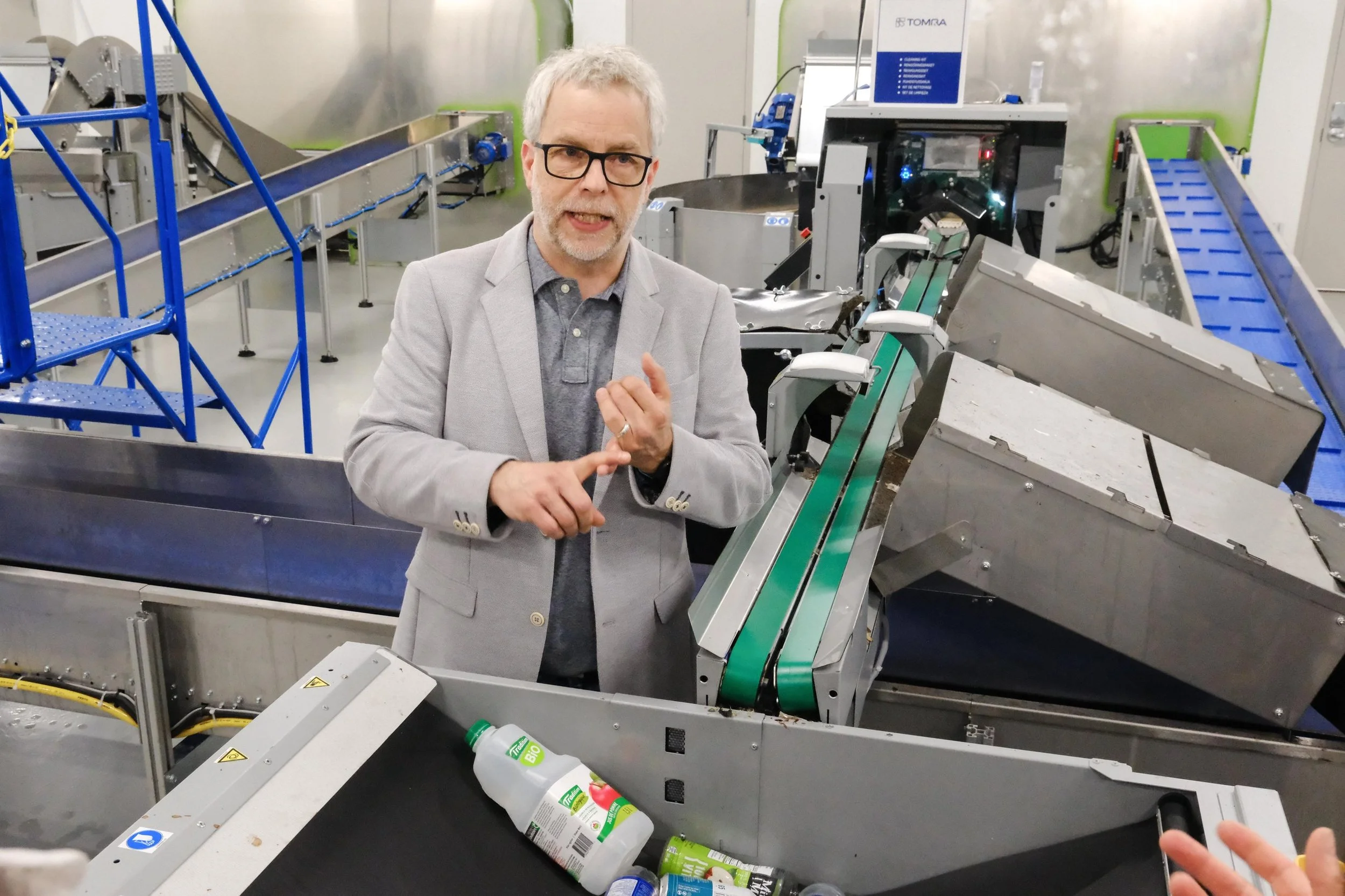
Circle launched the EPR Readiness Circle — a cross-functional forum for obligated producers navigating reporting, source-reduction, and compliance coordination across the first wave of U.S. EPR states. | Circle
Why everyone is tense right now
EPR creates friction from every direction.
"All the stakeholders involved are unhappy in one way, shape, or form," Ford says. Environmental groups push for stronger requirements around reduction and reuse. Producers worry about new costs and a confusing patchwork of state-by-state regulations. Lawmakers try to move policy forward while fielding competing demands from all sides.
Ford acknowledges the producer pressure directly. "There are significant costs," he says, costs that affect "bottom line" realities.
But he also believes the intent matters. "The spirit is that there will be more recycling and less materials going to landfill," he says, "and the system can change as a result of these policies."
Circle’s role is to keep the conversation grounded in real constraints, not ideology.
When policy turns into real money
One reason the rollout feels chaotic is that programs are arriving state by state. Companies aren't learning one set of rules—they're learning many at once, and each looks different.
Under these laws, producers fund the system, which means budgeting for costs they never carried before.
Oregon, with 4 million people, was first. "This summer was the first check that the producers had to cut," Ford says. He knows a partner company that faced a major unexpected expense. "We have a member that had a $2 million check that they needed to write for 4 million people."
Now scale that up.
California has ten times the population and a massive share of the U.S. market. "The check in California with 40 million people is going to be $8-10 million that they didn't have budgeted," Ford says.
The point isn't the exact number. It's the uncertainty. Producers are being asked to plan for large, unfamiliar costs while the rules are still being written.
That uncertainty is what Circle is trying to reduce—by helping lawmakers understand what they're designing and helping producers understand how to prepare.
Where success is already visible
When Fiscina talks about systems that work, she points outside the United States.
"In Europe and Canada, this has been happening for a long time," she says, "and their recycling numbers are just significantly better than the United States."
The U.S. is still early in this transition. That's why Circle believes education matters now, before decisions harden and mistrust spreads.
From "save the world" to compliance
Ford also sees a cultural shift inside corporations.
"The era of voluntary corporate goals is over," he says, “Sustainability teams used to be driven by aspiration. Leaders back then were save-the-world characters."
Now? "We're in a compliance phase."
Circle's role is helping companies learn from each other and helping lawmakers understand the real-world consequences of the tradeoffs they're writing into law.
The gift that keeps giving
"When we started this company eight years ago in the Atlantic Garbage Patch, we were gifted the ability to neutrally convene the entire ecosystem," Fiscina reflects. "That gave us the ability to be really useful in the Global Plastics Treaty process. Now, that same gift is applying to the confusion and complexity of EPR and Circular Policy in the United States."
Circle’s ambition isn't to eliminate disagreement. It's to create a space for understanding that gives enough common ground for the ecosystem to move forward anyway.
"There's such a huge education gap," Fiscina says, "and we're here to help everyone in this entire ecosystem learn from each other."
At Conspiracy of Love, we help changemakers tell their most powerful stories — stories that inspire action, build movements, and create lasting impact.
Find out more about our Values-Driven Storytelling and GPS to Purpose workshops, and how we can help you scale your impact.