How Barbara Perry And Harry Hutson Are Putting Hope To Work As A Leadership Strategy
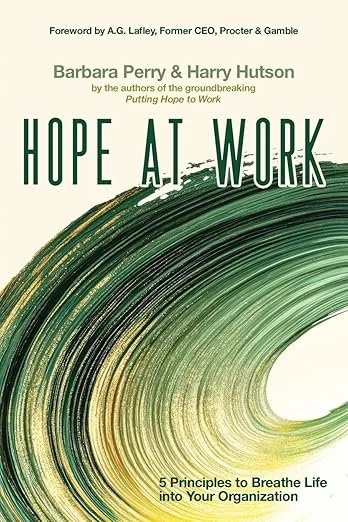
Hope at Work - 5 Principles to Breathe Life into Your Organization
Hope is not a word Barbara Perry and Harry Hutson use lightly.
They know how it sounds in a workplace shaped by layoffs, burnout, distrust and AI anxiety. Soft. Vague. Maybe even naïve. That is exactly why they think it matters.
In their new book Hope at Work, out April 20, 2026, the longtime leadership advisors argue that hope is not a slogan or a personality trait. It is something leaders either build into an organization or fail to build at all.
Hutson puts the problem plainly. “It’s a crisis of confidence in the future.”
That is the real subject of the book. Not hope as mood. Not hope as branding. Hope as a leadership responsibility.
“Leaders cannot solve every problem, but they can create the conditions where people believe the future can still be better, that their efforts matter,” Hutson says. “Hope causes a better future to emerge.”

Barbara Perry, author
Why they came back to this idea
Perry and Hutson have been working on this idea for years. They first began focusing on collective hope in the early 1990s, long before it became a familiar topic in leadership conversations. At the time, Perry says, it was almost taboo. Now, after decades of working with leaders and watching organizations struggle through disruption, they felt the need to return to it with more urgency. They also explored many of these ideas in their earlier book, Putting Hope to Work.
This time, the context is harsher.
Perry says they felt “a sense of urgency about putting it out into the world,” not only because the world needs it, but because “we are elders at this point and we feel a real urgent need to pass on what we’ve learned.”
That urgency is tied to how long they have been thinking about this. As Perry puts it, “Thirty-five years ago Harry Hutson and I set out to understand the workings of Hope in organizations — collective hope.” What emerged from that work was “5 principles, a scaffolding, key to putting shared hope to work.”
Perry also makes clear that this is not abstract theory. Their research, she says, “has been on the ground.” The book comes out of years spent inside organizations, watching what helps people move and what makes them shut down.
Hope is not optimism
One of the clearest ideas in the book is the distinction between hope and optimism.
When asked how the two differ, Hutson answers with one word. “Agency.”
Then he sharpens it. “You’ve got to get off your duff. You’ve got to move. You’ve got to do something.”
That is what gives their argument force. Leaders often ask people to stay positive when what they really need is influence. If people feel stuck, ignored or unable to affect outcomes, hope disappears fast. What remains may look like compliance, but it is not belief.
For Perry and Hutson, hope needs action. People need to feel they can shape what comes next.
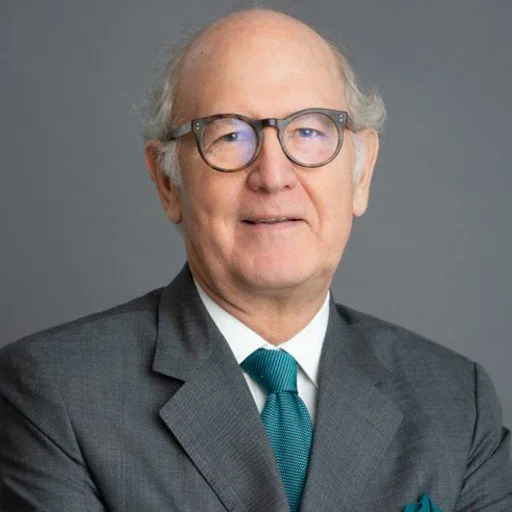
Harry Hutson, author
The five principles
The new book is built around five chapter ideas that double as leadership practices — Create Possibility, Activate Agency, Uphold Worth, Embrace Openness and Establish Connection.
Perry and Hutson see these not as soft concepts, but as a working structure. “When all five principles are present, they strengthen one another and set in motion a cycle of positive change,” Perry says. “In every story of real, resilient hope, one or more can be seen.”
Create Possibility
Perry starts with possibility. “Hope is born in possibility.”
She defines it as “the search for opportunities in the face of obstacles.” In practice, that means more than a vision statement. It means people can actually see a future worth moving toward. Perry describes it as “that shared dream” and asks, “Do we believe that it’s possible?” If the answer is no, the rest does not hold for long.
Activate Agency
Agency is where the framework gets its force. Perry defines it as “the capacity to act and influence outcomes.”
That is why hope is different from optimism. Hope is not passive. It is not waiting for someone else to fix things. It depends on whether people believe they can influence outcomes and then act on that belief.
Hutson keeps returning to that point because he knows how quickly organizations lose energy when people feel powerless.
Uphold Worth
The third principle is worth. Perry defines it as “the sense that hoped-for outcomes have intrinsic value.”
Hutson puts it more plainly. “Worth is the attitude that not just that we’re in it together, but what we do together matters to all of us.”
That moves the conversation beyond morale into meaning. Perry and Hutson are not talking about personal ambition dressed up as purpose. Hutson is explicit about that. It is not just about “my own wealth, my own fame, my own fortune.” It is about whether the work matters beyond the self, including to the people “surrounding your enterprise and count on it.”
Embrace Openness
Perry describes openness as “the willingness to stay receptive in the face of uncertainty.” In the interview, she calls it “the principle of learning” and says it means being “open as a system,” open to questioning assumptions, and open in terms of “curiosity and humility.”
Hutson gives a strong example. He talks about a large system he is advising that knows how to do almost everything well, but struggles to adapt because it is too attached to what made it successful before. “Their enemy is their past success,” he says.
That line captures a common problem. Organizations often do not fail because they lack talent. They fail because they stop learning.
Establish Connection
The fifth principle is connection, which Perry defines as “the experience of belonging with others in authentic relationships.”
She puts it simply in organizational life. Hope “is something that happens with others.” People need to be connected to each other, connected to reality and connected to what matters. Without that, teams fragment.
That collective piece is what Perry and Hutson are really trying to name. Hope is not just something an individual leader feels and projects outward. It has to exist in the culture.
What leaders should take from it
What Perry makes clear is that the book is not just aimed at CEOs. It is meant for anyone leading a group of people, whether that is a company, a classroom or a community. That broader point matters, because Perry and Hutson are not presenting hope as a leadership trend or a feel-good extra. They are arguing that when people are trying to do hard things together, leaders have a responsibility to create the conditions that keep them engaged, connected and able to act. As Hutson says, “It’s more than a strategy, more than a skill, more than an attitude, more than positivity. It’s a responsibility of leadership.”
And that may be the clearest way to understand what Perry and Hutson are arguing for. Not false confidence. Not easy inspiration. Something steadier, more demanding and more useful in hard times.
As they put it, “Hope at work makes a better future possible.”
At Conspiracy of Love, we help changemakers tell their most powerful stories — stories that inspire action, build movements, and create lasting impact.
Find out more about our Values-Driven Storytelling and GPS to Purpose workshops, and how we can help you scale your impact.