How Nicholas Bruckman And People's Television Are Convincing The World's Biggest Brands To Fund The Truth
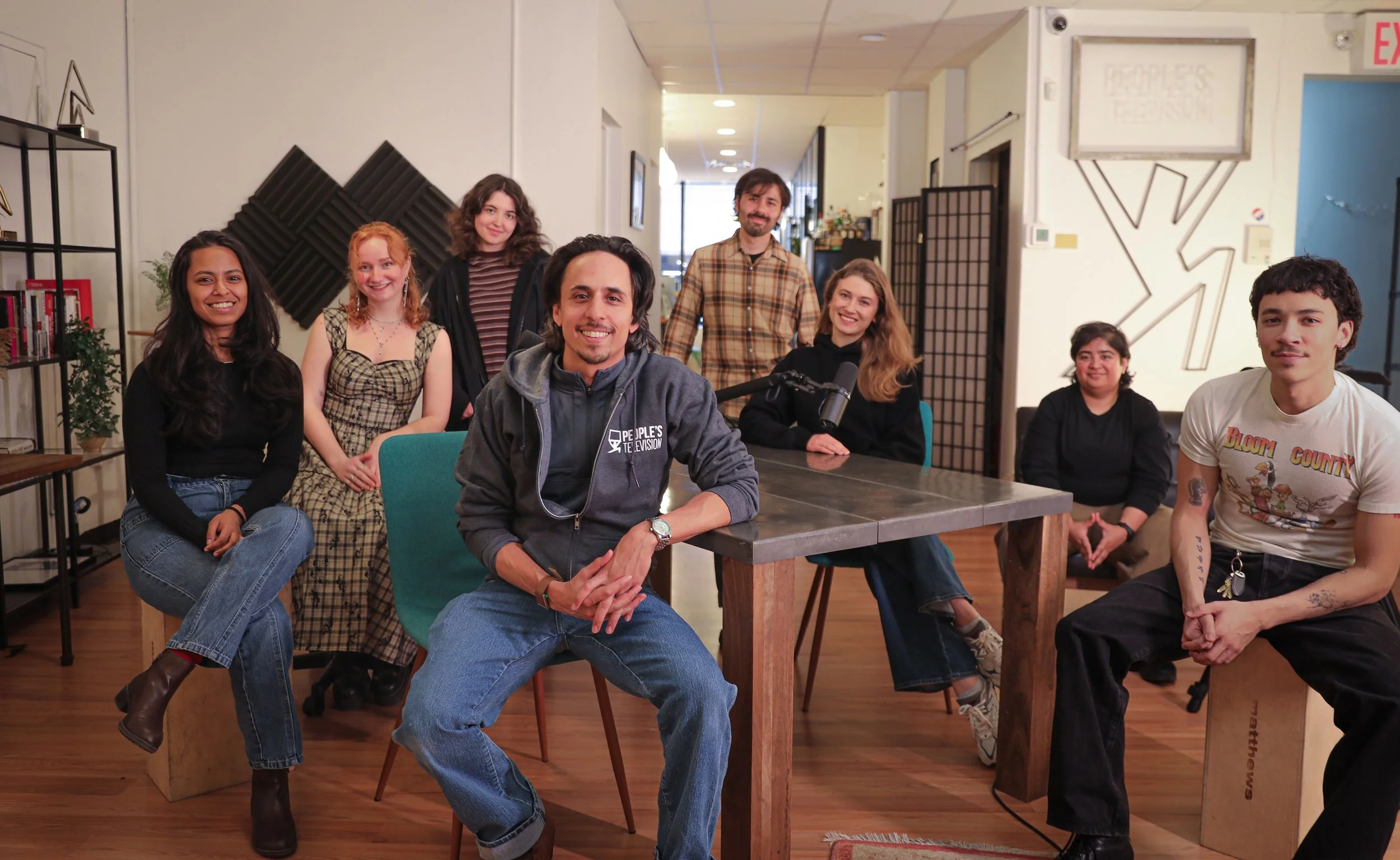
People's TV’s NY team in their Chelsea office | People's Television
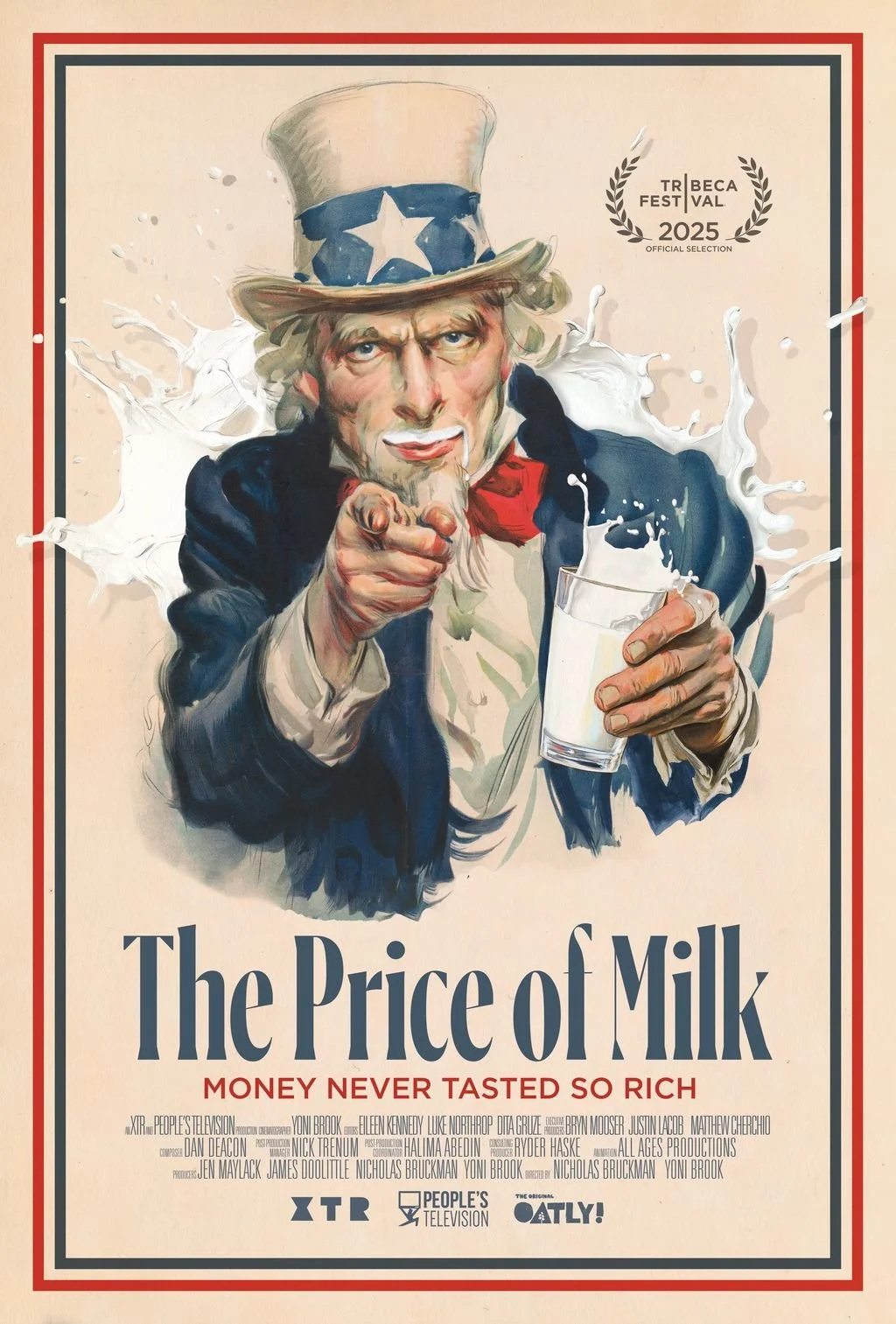
There is a moment in The Price of Milk — a docuseries that premiered at the 2025 Tribeca Film Festival — where a Pennsylvania dairy farmer named Joe Cochran describes writing a $4,000 check to the federal government so that it could produce the famous “Got Milk?” ads he despised. "I get tired of people reaching their fingers into my wallet and taking money from me and I’m not getting anything back," he says. "To hell with it." It is the kind of raw, quietly furious line that no marketing department would ever write. Which is exactly why it works. And which is exactly why Oatly, the Swedish plant-milk brand, paid for the film that contains it.
That paradox — a brand funding journalism that doesn’t mention the brand — is the business Nicholas Bruckman has spent nearly 15 years building.
Bruckman is the founder of People’s Television, an independent film and commercial production studio he runs with business partner Ryder Haske and a team of 15 across offices in New York and Washington, D.C. He has won Audience Awards at Sundance and South by Southwest, earned Emmy nominations, and landed films on Netflix, PBS, and Hulu. But the animating question of his career has never been about prestige. It has been about sustainability — how a filmmaker committed to social justice storytelling can keep the lights on without surrendering the independence that makes the work worth watching.
"You have to create your own paths to be a storyteller," Bruckman says. "You have to find your own artistic voice, but also your own platform on which to make a sustainable career in storytelling."
A camera and a cause
He didn’t arrive at that philosophy easily. Growing up in New York City, Bruckman wanted to be Quentin Tarantino or James Cameron. That changed on September 11, 2001, when a 16-year-old Bruckman laced up his rollerblades, skated downtown to the World Trade Center, and filmed what he saw. The tool he'd been treating as entertainment revealed itself as something closer to medicine — a way to build empathy across divides that were, suddenly, visibly catastrophic.
He redirected his lens toward the unseen. Valley of Saints, a narrative feature he produced set in Kashmir, won the Sundance Audience Award. Then came Not Going Quietly, his portrait of disability rights activist Ady Barkan — losing his voice to ALS while becoming the face of the Medicare for All movement — on a final road trip across America. It won both the Audience Award and the Special Jury Prize at SXSW, was released theatrically by Greenwich Entertainment to critical acclaim, and earned multiple Emmy nominations.
But Bruckman discovered that winning prizes doesn’t automatically unlock the next project.
"Just because you have Sundance credentials, the system doesn't always reward projects that don't have clear financial ROI," he says. The independent documentary world was contracting. The industry, as Bruckman puts it plainly, was dying.
So he built something new.
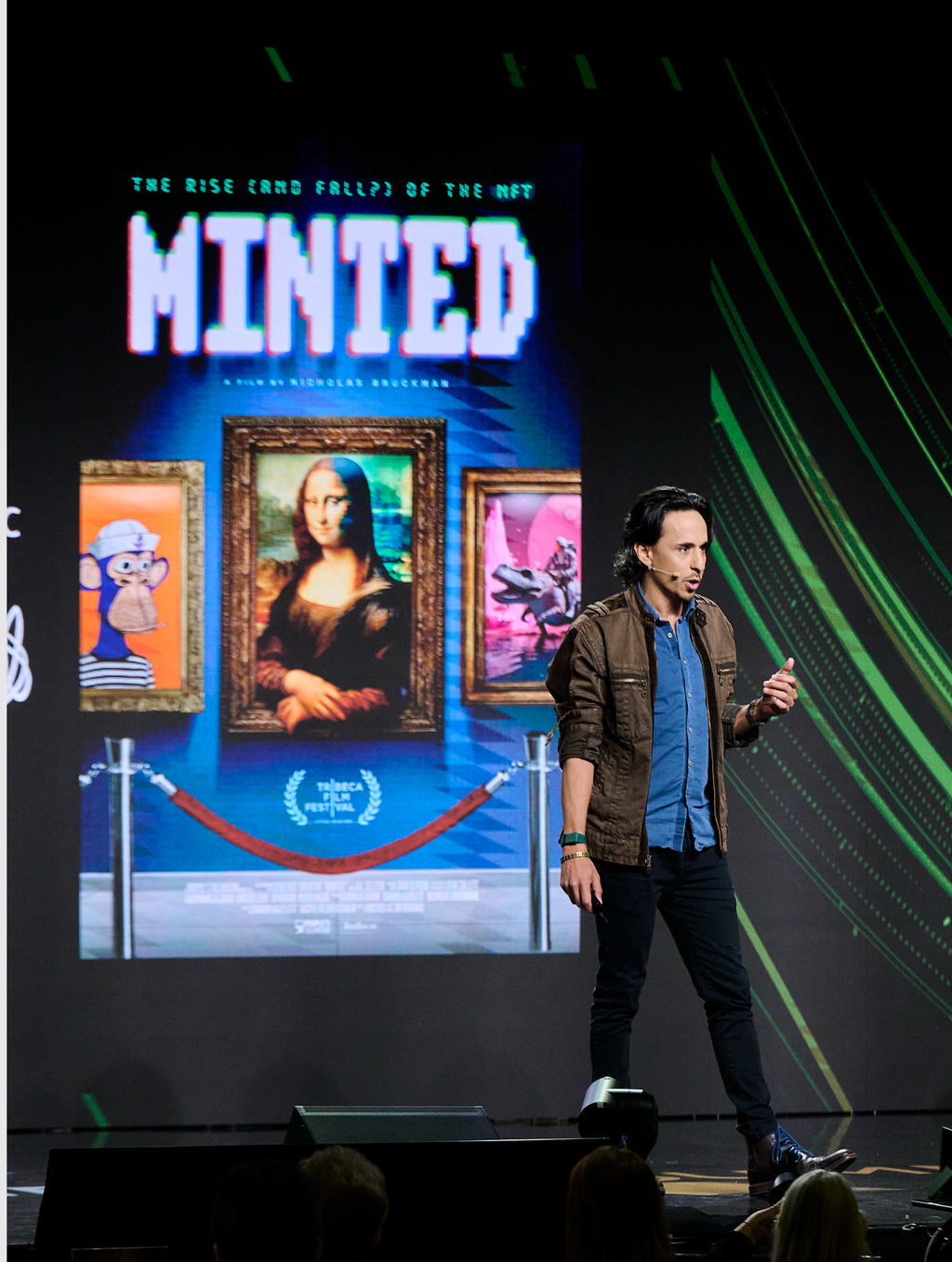
Nicholas Bruckman
The independence clause
People’s Television operates on a theory most of the media industry has been slow to accept: that brands, foundations, and advocacy organizations are sitting on powerful, untold stories — and that independent filmmakers are the right people to tell them. Not as typical vendors. As artists with editorial independence.
The studio has made branded documentary work for Meta, Airbnb, the Robert Wood Johnson Foundation, and the Simons Foundation. Two campaigns — Particles of Thought for PBS Nova and Stories of Impactfor the Simons Foundation — are 2026 Webby nominees. The model lives or dies on one principle: the filmmakers have to be genuinely empowered to tell the story.
"It’s important that brands and organizations give artists the freedom to do that so the work is received as true filmaking," Bruckman says. “Otherwise, audiences will see it only as marketing.”
Minted, his documentary about the NFT art market, was funded by the crypto community and sold to Netflix, premiering in over 100 countries. Not Going Quietly was partially funded by Be a Hero, the political nonprofit Barkin led — and still maintained the critical distance that made it credible to skeptical audiences. In both cases, journalistic independence was a condition of production.
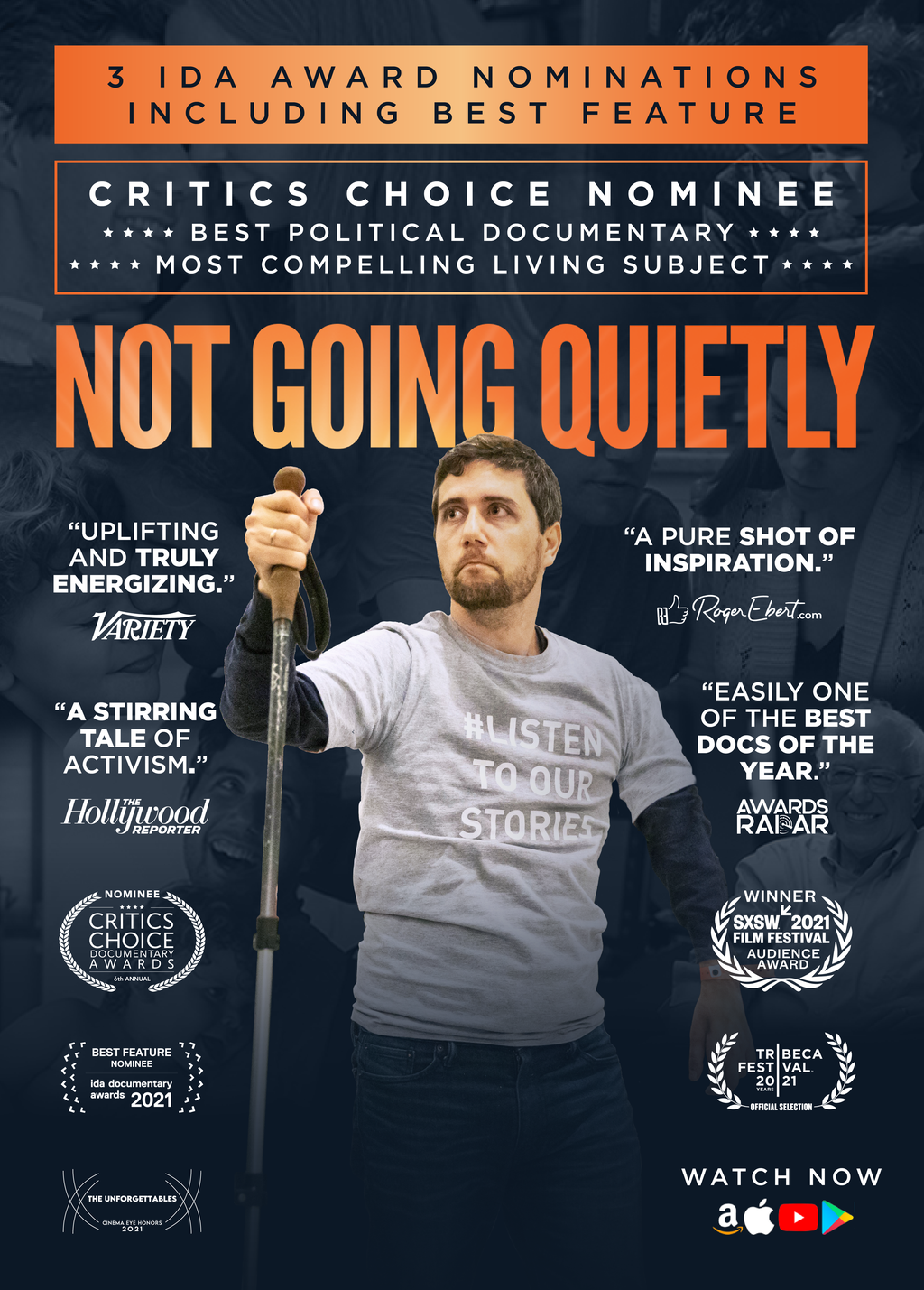
Not Going Quietly FYC poster | People's Television
What's really in your milk
The Price of Milk is the purest expression of this model yet. Oatly’s only stipulation was that the film had to be about milk. What Bruckman and co-director Yoni Brook found was stranger than anyone expected. The "Got Milk?" campaign — one of the most beloved ad campaigns in American history — was in fact a mandatory government program, funded by fees extracted from every dairy farmer in the country, administered by Dairy Management Inc., and designed primarily to benefit large industrial agriculture. Small farmers despised it. Some sued all the way to the Supreme Court.
The series also traces how the Checkoff program entrenched milk in public school lunches, despite the fact that the vast majority of African American and Asian American students are lactose intolerant.
"What happens with checkoff dollars is much bigger than milk and bigger than food," Bruckman said. "It's about how large corporate forces can kind of co-opt our democratic processes."
In January, he screened the series on Capitol Hill. Staffers from Senator Cory Booker’s office, Senator Adam Schiff's team, agricultural policy experts, and Oatly representatives gathered alongside dairy farmers — an unlikely alliance united by a common enemy: the stranglehold of big ag over Congress.
"There's no way without an independent film vehicle that any of those people would have been brought together," Bruckman says. "It opens doors for brands to be part of conversations they couldn't otherwise."
The Price of Milk Poster | People's Television
The baked goods theory of change
The lesson is not a tactical one. It is about what storytelling is for — a question Bruckman has been turning over since he skated downtown with a camera at 16.
He often returns to something the late activist Judy Heumann told him: during the 504 protests in San Francisco, many disability rights activists who couldn’t reach the demonstrations would bake goods and send them to those who could. Great filmmaking, she said, is the baked goods — the emotional currency that organizers need to keep going.
"I’ve carved out this nontraditional path of being a CEO and an artist at the same time," Bruckman says. “It’s not easy, but each role makes the other possible.”
With The Price of Milk heading to streaming and a narrative adaptation of Ady Barkan’s life in development, along with several upcoming branded and independent documentary projects, People's Television is betting that audiences, exhausted by algorithmic content and AI noise, are hungry again for stories that cost something to tell. Not a consumer choice. A political one. But it starts with someone willing to pick up a camera and go looking.
At Conspiracy of Love, we help changemakers tell their most powerful stories — stories that inspire action, build movements, and create lasting impact.
Find out more about our Values-Driven Storytelling and GPS to Purpose workshops, and how we can help you scale your impact.