A Thank You Note Worth $25 Million: How Darla Moore Is Betting On New York's Cultural Future
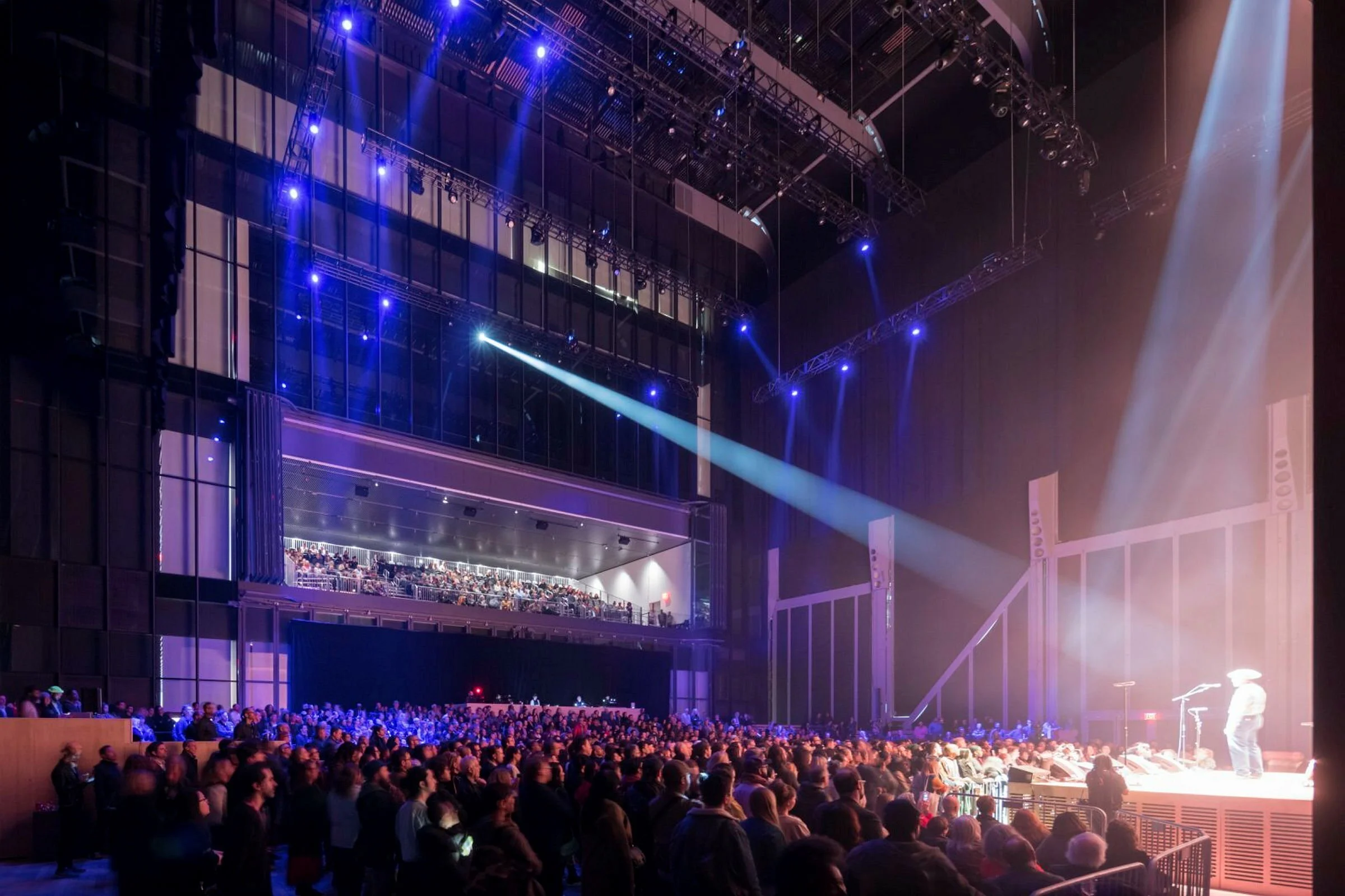
The Shed, New York City | Iwan Baan
New York City in the 1980s was not a place that welcomed you. Unemployment was above 10 percent. Oil shocks had helped send inflation surging. Interest rates hovered near 20 percent. The city was still clawing its way back from near-bankruptcy, and the streets showed it. Into this walked Darla Moore — a newly minted MBA from the Deep South, young, ambitious, and, by her own account, completely unprepared for what she was stepping into.
She stayed anyway. And New York, eventually, delivered.
"Through the years and the work and the opportunities that I was given in New York," Moore recalls, "if you're a young American and ambitious and willing to do the work and willing to get in there, it was the most extraordinary place on earth."
Four decades later, Moore — the first woman profiled on the cover of Fortune magazine, a founding board member of The Shed, and one of the most consequential private philanthropists in American culture — has found her way to say thank you. On April 30, 2026, The Shed announced a transformative, unrestricted $25 million gift from Moore to the institution as a whole — strengthening its artistic ambition and long-term financial foundation. As a mark of that commitment, The Shed's Level 2 Gallery will be named the Darla Moore Gallery in her honor.
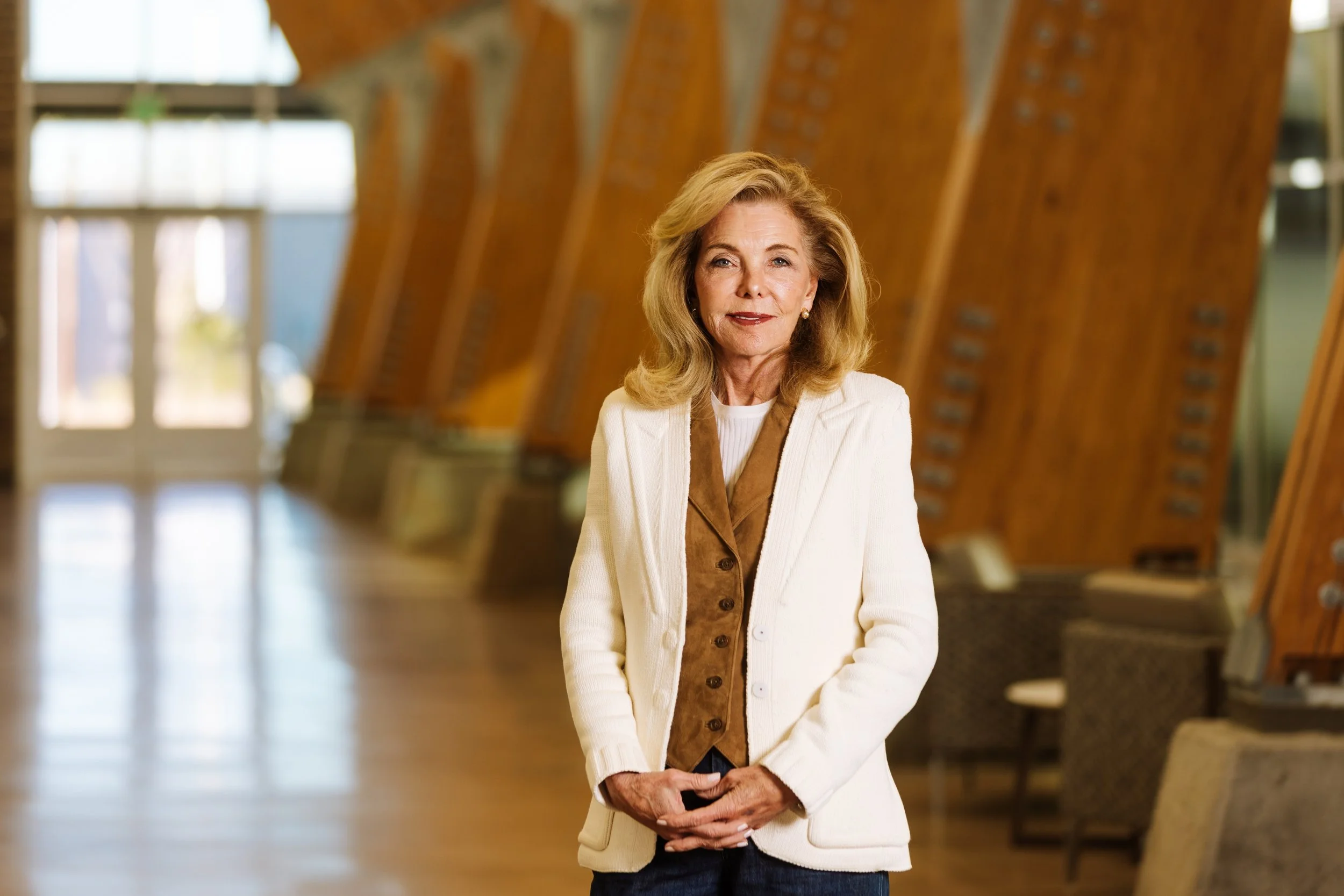
Darla Moore, investor and philantrophist | Mike Baker, Second Floor Media
The Happy Accident
The origin story has the quality of a happy accident that was always meant to happen. Years before The Shed opened its doors in 2019, Moore found herself in someone else’s meeting — a pitch being made by Dan Doctoroff, founding board chair and former deputy mayor of New York City, and architect David Rockwell, for support of an audacious new idea: a cultural institution unlike anything New York had seen, with a telescoping outer shell that could expand or contract to accommodate virtually any artistic vision.
The person being pitched wasn't interested. Moore was.
"This is it," she thought. "It's a blank slate. There's not a shovel in the ground. It's got some risk to it. It's incredibly forward thinking." She raised her hand and said she would support it. A small group of early believers began showing up to meetings on the west side of Manhattan — finance people mostly, hammering out the foundations of what would become one of the most ambitious cultural projects in American history, with little in the way of arts credentials between them. "I think the most artistic person in the room," Moore laughs, "was Diane von Furstenberg." What they shared instead was a willingness to bet on an idea before it had earned the right to be believed in.
That group would stay with The Shed through its $475 million construction project — "the most significant cultural building built since the Pompidou in Paris in the '70s," Moore says — through its 2019 opening, through the crushing disruption of the pandemic, and out the other side. What began as high-risk venture philanthropy has now matured into something more intentional. Moore sees this latest gift not as a rescue but as a graduation: the institution has earned its footing, and it is time to build from strength rather than scramble for survival.
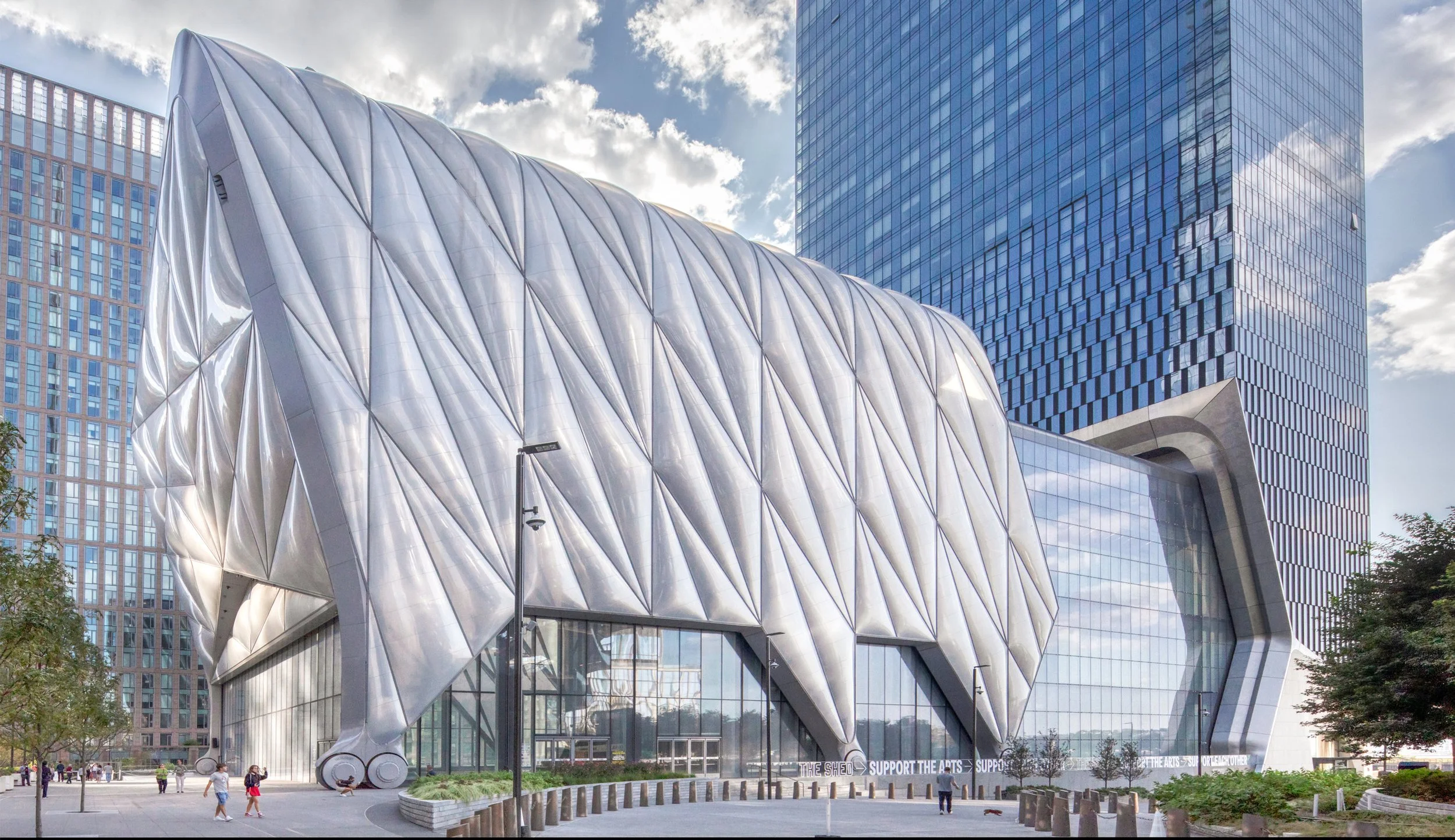
The Shed, New York City | Brett Beyer
What the Gift Unlocks
The Shed was built on a founding principle that still feels radical in the institutional arts world: no permanent collection, no fixed form, no allegiance to a single discipline or a single audience. Under CEO Meredith "Max" Hodges, who joined in late 2023, the institution has produced world premieres of new theater, large-scale public art installations, and the kind of genre-defying work that drew more than 250,000 visitors last year — many of them for free.
Its recurring program, Open Call, is perhaps its most defining. Each year, The Shed receives more than 1,000 applications from early-career New York City artists. A cohort is selected, commissioned, mentored, and ultimately presented to audiences at no cost. Since opening, more than 100 artists and collectives have been commissioned this way. It is, in its own way, the same offer the city once made to Moore — here is a stage, here is a chance, now show us what you've got.
Hodges is direct about what Moore's gift changes. "It is really hard for a new nonprofit to take big risks on an ambitious artistic idea when there is no margin for error," she says. "What Darla's gift does — it strengthens and secures our foundation from which we can keep reaching forward, taking those risks, reaching for the future."
That future arrives first this summer, when The Shed opens the New York City premiere of Doug Aitken's Lightscape in the newly named Darla Moore Gallery. Running June 25 through September 13, the LA-based artist's large-scale, seven-screen immersive installation examines hope, struggle, and interconnection — exactly the kind of ambitious, boundary-pushing work the gallery was always meant to house.
Nourished by the Same City
What also moves Moore is the national breadth of The Shed's donor community: people who came from Michigan, from South Carolina, from California, who arrived in New York, built something, and then turned around to give back. "All these people came to New York and did really, really well," she says. "New York was a tremendous opportunity for every one of those people. And they gave back."
It is a vision of American possibility that feels increasingly fragile — and all the more worth defending for that fragility. "New York City provides opportunities in all disciplines, whether they’re artistic, whether they’re financial, whether they’re any kind of creative," Moore says. "That is the reputation, that is the dynamic and the ethos of New York City to me." Arts and commerce, in her view, don't compete — they nourish each other, drawing from the same restless energy that has always defined the city.
Believe Before the Shovel Hits the Ground
The insight Moore's story offers is deceptively simple: believe early, and stay. Not just when the vision is proven and the risks are gone, but at the beginning — when it's an idea on a piece of paper and there's not yet a shovel in the ground. That kind of conviction is rarer than money. It is the thing that makes institutions possible in the first place.
The Darla Moore Gallery will open its first exhibition this summer. But the more lasting opening happened decades ago, in a young woman's decision not to leave a city that was in crisis — and to trust that the work, and the city, would meet her halfway.
"Never, ever, ever, ever count New York City out," Moore says.
She is proof of exactly that.
At Conspiracy of Love, we help changemakers tell their most powerful stories — stories that inspire action, build movements, and create lasting impact.
Find out more about our Values-Driven Storytelling and GPS to Purpose workshops, and how we can help you scale your impact.