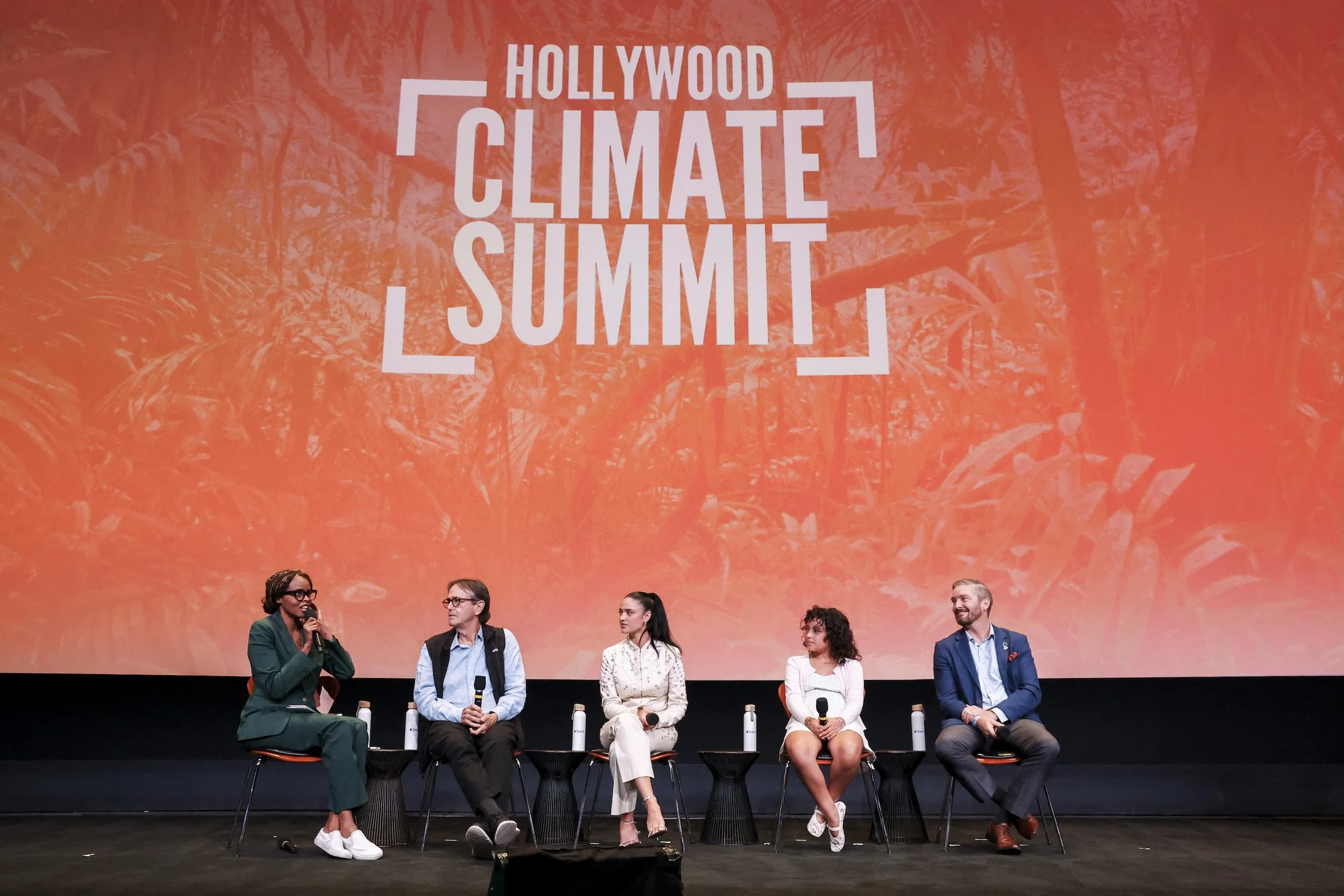
Hollywood Climate SHollywood Climate Summit 2025 | Chelsea Lauren / Shutterstock
When Don't Look Up landed on Netflix, it became one of the most-watched films in the platform's history. Not one of the most-watched climate films. One of the most-watched films. Full stop. A dark comedy about a comet nobody wanted to believe in had done what years of earnest climate documentaries couldn't — it had made the crisis impossible to look away from. For most of Hollywood, it felt like a revelation.
For Allison Begalman, it felt like confirmation.
She had already seen this coming. Not because she’s a climate scientist — she isn’t — but because she’s a community organizer, one who spent years inside labor movements and queer spaces learning how to read the gap between what an industry says it cares about and what it’s actually built to do.
When she looked at Hollywood’s relationship with climate around 2019, she didn’t find indifference. She found confusion. Storytellers who cared but didn’t know where to start. Executives who wanted to act but had no room to learn. "I noticed that climate was very much something that a lot of people did not understand, including myself," she says.
So she and co-founders Heather Fipps and Ali Weinstein built the Hollywood Climate Summit — a space, as Begalman puts it, that made the conversation "super accessible to people, not just in LA and New York, but all over the world, because Hollywood is a global industry."
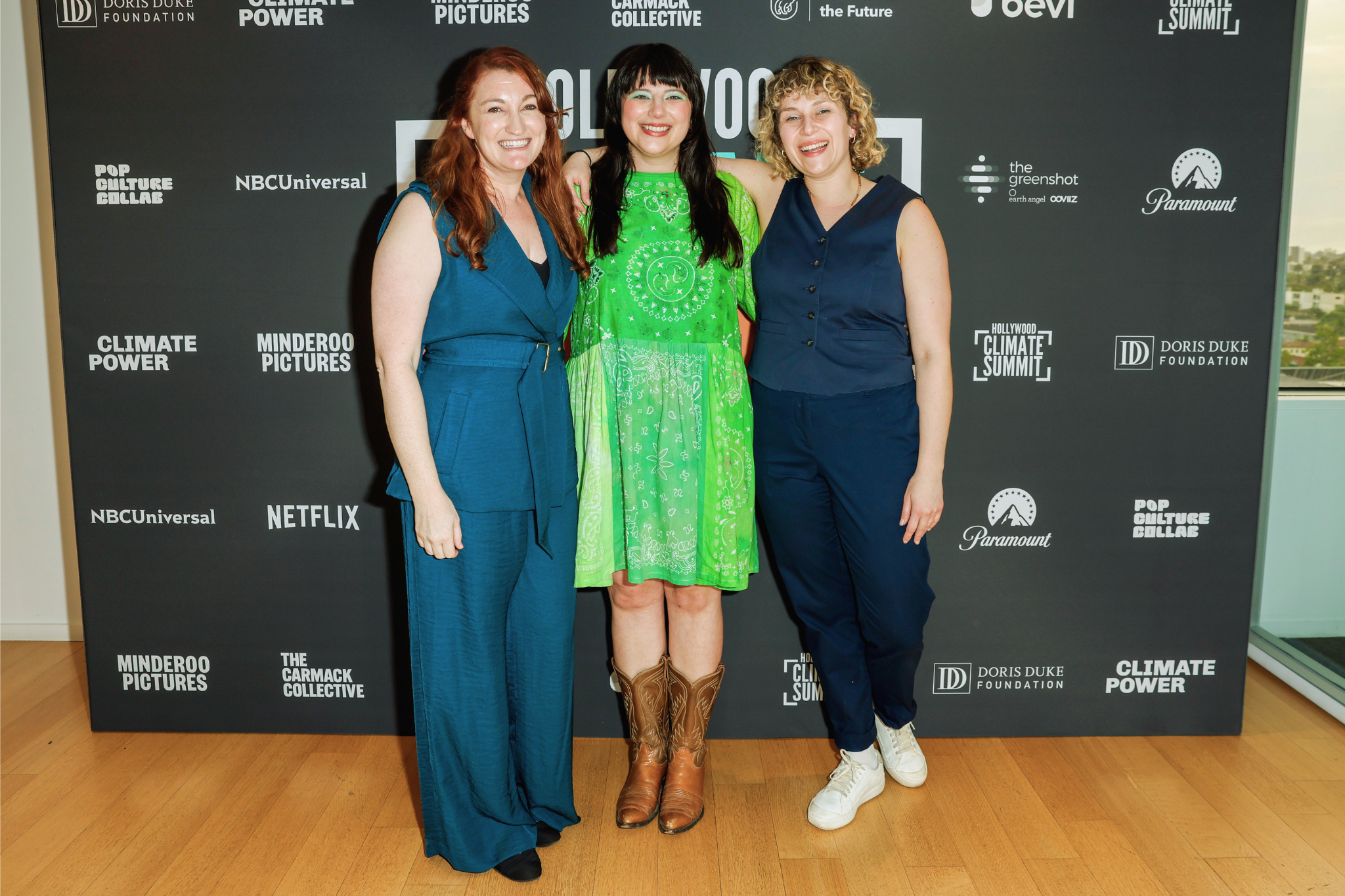
Hollywood Climate Summit co-founders, from left to right: Heather Fipps; Ali Weinstein; Allison Begalman | Chelsea Lauren, Shutterstock
Building the Room Where It Happens
That was 2020. The summit launched online during COVID — accidental genius, as it turned out, seeding an international community from day one. Seven years later, it has become a multi-day festival in Los Angeles, this year on June 3rd and 4th, with a live stream pulling in creators well outside the industry's coastal centers. It now sits under a new parent organization, Context Collaborative, built to meet a media landscape that no longer separates film from games from publishing from digital — because the stories don't either.
Across their annual conference and on-tour events, they’ve featured speakers like Bill Nye, The Daniels, Quinta Brunson, Al Gore, Jane Fonda, Alexis Nicole Nelson. Even Bill McKibben being roasted by comedian and actor Joey Bragg during a comedy mock trial against the Messaging of Big Oil and having the best time, showcasing a fun, hilarious side to climate experts typically poised as academic. The summit doesn't segregate experts from creatives and hope something trickles across — it puts them in the same room and trusts the friction.
"The magic of it is creating special conversations and interactions for these people to have on stage," Begalman says, "spotlighting really incredible and poignant stories that show audiences, especially audiences of creatives, that there are compelling stories that come from the climate movement."
The Stories Are Already There
And audiences keep proving her right. After Three Body Problem featured Rachel Carson's Silent Spring prominently in its storyline, sales of the book jumped. The Morning Show's fourth season wrapped climate disinformation, environmental justice, and the echoes of Extinction Rebellion into a drama so layered that audiences absorbed it as a corruption story, a workplace story, a human story — and it was all of those things, and also unmistakably a climate story. "I don't care if it says climate in it or not," Begalman says. "Maybe someone watching that story wouldn't really think it's about climate — they're seeing corruption. But we in the climate space know you're also seeing climate, and I think that's an impactful tie."
Hollywood figured something similar out with seatbelts, with smoking, with drunk driving — not through PSAs, but through characters making choices in worlds that felt real. The summit is building the infrastructure to do the same for climate, gathering case studies, forging connections, and making the creative case that climate storytelling isn't a sacrifice of craft. It's an expansion of it.
Beyond the Screen
Context Collaborative has extended that argument into gaming, publishing, and digital media. In partnership with the UN, the NRDC, and Playing for the Planet, the organization co-stewarded a climate storytelling playbook for the gaming industry — recognizing that as IP migrates between books, screens, and consoles, every adaptation is another chance to shape how millions of people understand the world they live in.
New awards, built alongside Jackson Wilde — decades deep in nature and conservation media — now honor work across fiction, drama, comedy, unscripted, podcasts, games, and branded content. The breadth is intentional. "You can come and know nothing," Begalman says. "Maybe you become climate literate, you get educated, and then you go down your own learning journey. But you also might decide — I didn't even know I could do sustainability and entertainment."
People walk into the summit not knowing what they're looking for and leave having found a career. "We know for a fact that people come and then go and get jobs in the space," Begalman says. "We are a job pipeline." Netflix, NBCUniversal, Paramount Global, and Warner Bros. Discovery have all become partners — not as acts of corporate conscience, but because they're watching the same data Begalman is. Audiences are responding. The stories are landing. Climate, it turns out, is not a niche.
From years of organizing people who didn't yet know they were part of a movement, Begalman learned that industries don't transform through obligation. They transform through desire. "We try to be as inclusive as possible while creating a space that's just too great not to go to," she says. "Media industry is about making things cool and fun and entertaining. And I think climate education needs to be the same."
The seventh Hollywood Climate Summit arrives in Los Angeles this June, with tickets still available. Somewhere in that room will be a writer who came in curious and leaves with a storyline. A game designer who didn’t know climate was their subject until someone showed them it already was. A studio executive who finally sees not a risk to manage, but a story worth telling. That's the bet Begalman has been making for seven years. The returns are starting to come in.
At Conspiracy of Love, we help changemakers tell their most powerful stories — stories that inspire action, build movements, and create lasting impact.
Find out more about our Values-Driven Storytelling and GPS to Purpose workshops, and how we can help you scale your impact.