All Voting Is Local Is Building Democracy The Only Way It Works: Locally, Patiently, Together
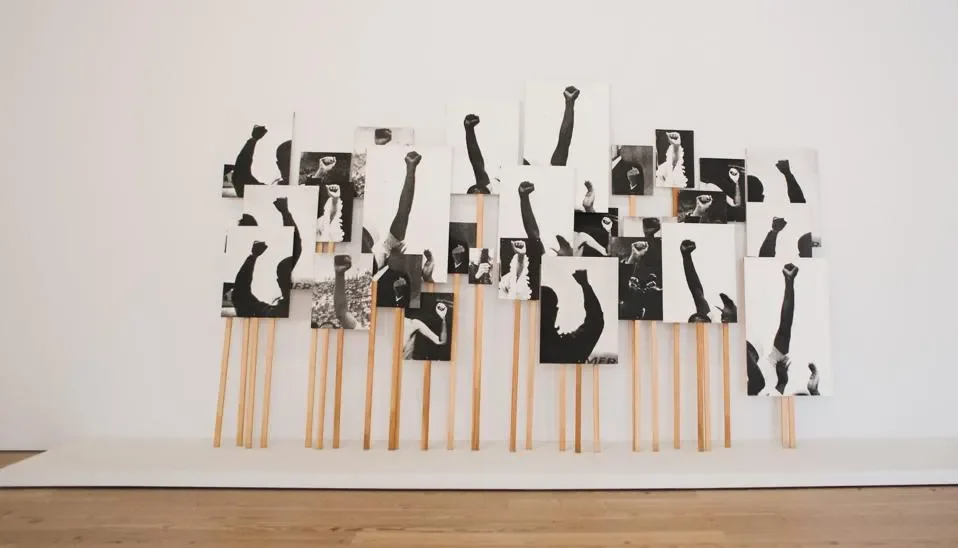
@ All Voting Is Local
How do you protect a right that was never designed for everyone? For Hannah Fried, this isn’t abstract. It’s the daily work of making sure ordinary people can do an extraordinary thing: cast a ballot and have it count. Her path began in voter protection.“Coming out of law school, I worked on the 2008 Obama campaign, ” she said and it led to a simple realization: if access is decided locally and constantly, then protection must be local and constant too. As she puts it, “They are making decisions every single day about your ability to register and to vote.
Behind the policy talk is a human story. Fried understands what it means for families to come to the United States because it represented hope—and what it feels like to watch that promise wobble. That’s why All Voting Is Local (a 2025 Elevate Prize Winner) was built to be present not just in election season, but in every season.
The Year-Round Practice
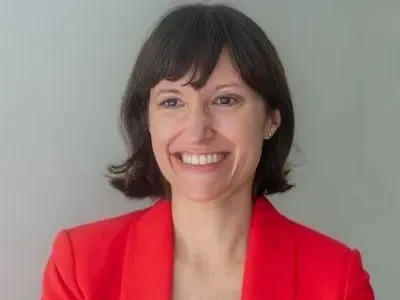
Hannah Fried, Executive Director, All Voting Is Local
All Voting Is Local concentrates on the unglamorous hinges that determine whether people actually vote: where early voting sites are placed, how language access is delivered, and which rules help or hinder a ballot being counted. The edge is consistency and proximity—relationships with election officials and community partners that exist long before the headlines.
Those relationships are not decorative; they are the infrastructure that allows small, practical changes to happen at the moment they matter. As Fried explains, “The thing that we do that I think is really a big contribution to the space is that we have this year-round ground game that is totally focused on the decisions that state and local officials, especially election officials, are making about people’s ability to register.”
That approach doesn’t chase moments; it prepares for them, so when a county meeting appears on a rainy Tuesday, someone is already in the room with the data, trust, and staying power to move a decision. Over time, that steadiness compounds: one site added, one form clarified, one process fixed—and a real person’s vote protected.
From History To Present Stakes
Clarity about the present begins with honesty about the past. Fried is plainspoken about the architecture of U.S. elections: “Our elections have always been designed to keep people out.” The expression of that exclusion changes—closures, intimidation, discarded ballots—but the throughline is power withheld, too often from voters of color. What feels different today is the scale and brazenness, including efforts to constrain voting by mail that tens of millions relied on in 2024.
Naming that history isn’t pessimism; it’s the starting point for practical progress, the ground on which local action can actually take hold. It’s also a compass for prioritization: if exclusion is both structural and adaptive, inclusion has to be systematic and persistent. That is why a year-round posture matters; it keeps attention on the small, technical choices that add up to whether a community feels invited—or warned off.
The Quiet Majority
Despite the noise, most people agree on something fundamental. All Voting Is Local’s research found that “83% of Americans believe that voting should be safe and accessible because it is a fundamental right and responsibility.” That consensus shows up in everyday life: a caregiver securing vote-by-mail, a deployed service member sending a ballot from abroad, neighbors speaking up for a drop box at a local board meeting. It is not partisan theater; it is daily logistics. Or, as Fried puts it, “Americans want to be able to vote.” The work is to turn that shared value into durable practice—one rule, one site, one translated instruction at a time. In other words, to meet a broad moral agreement with specific administrative care.
Young People, Real Momentum
The next generation is reinforcing that center in quiet, determined ways. Beyond turnout statistics, All Voting Is Local sees young people learning how elections actually run—interning, serving as fellows, showing up at meetings, and protecting access rules from being weakened. The energy is less performative and more procedural, the kind of stewardship democracies rely on but rarely celebrate. Fried’s view from the field is simple and hopeful: “We see an enormous amount of energy.” That energy is not just enthusiasm; it is skill-building. Every time someone helps a peer navigate registration or sits through a long board discussion to ensure a practical rule doesn’t get stripped away, they are practicing the habits that keep systems honest: patience, presence, precision. This is the quiet craft of democracy—less a moment, more a muscle.
Meeting People Where They Are
Meeting people where they already are is another constant. Sometimes the most effective civic education happens in spaces built for sports or culture, not policy. That’s why partnerships matter when they’re practical and local. Fried points to a collaboration that did exactly that: “We did some work with the Miami Heat and had voter education information during the Heat games.” The principle is portable across communities and channels: “Meeting people where they're at, and I think that's really true in our work also.” It’s a simple idea with real consequences: if the information lives in the places people trust and frequent, friction decreases and participation rises. And it echoes the organization’s core method—bring the work to the lived context, not the other way around.
All Means All
In the end, the name says more than it seems to at first glance. “Local” matters because local officials shape the lived experience of registration, casting a ballot, and getting it counted. But the animating word is “all”: a vision where every eligible American who wants to vote can do so, including people with disabilities, young voters taking their first steps into civic life, and Native communities for whom standard mail systems don’t work.
The goal isn’t just higher turnout; it’s a more humane process—one early-vote site, one translation, one policy fix at a time. The emphasis also clarifies the organization’s posture: not to speak for communities, but to work alongside them, to build trust that outlasts any single cycle and makes the next improvement easier to win.
The Takeaway
The takeaway is that democracy is not an event; it’s infrastructure. All Voting Is Local shows how patient, year-round work—data, relationships, advocacy—turns shared values into durable practice. Progress happens in inches, not headlines, and yet those inches add up to something people can feel at the check-in table and inside the booth: a quiet, reliable welcome, the sense that their voice belongs.
And while the national conversation can lurch from alarm to apathy, the local work continues at human scale. It’s measured by whether a polling place is reachable after a bus transfer, whether a form is readable in a family’s first language, whether a mailed ballot is counted because the rule is clear and fair. These are modest things, and that is exactly the point. When modest things are done relentlessly, they become a culture—one that tells people their participation isn’t an exception but an expectation.
In that culture, the everyday becomes extraordinary. A line forms. A name is checked. A vote is cast. The system does what it promised, not by accident, but because someone tended to the details long before the doors opened. That is the work All Voting Is Local has chosen: to make democracy feel like a welcome, not a wager; to ensure that what is possible on paper is dependable in practice; and to keep going, season after season, until “access” is not a fight but a fact.
At Conspiracy of Love, we help changemakers tell their most powerful stories — stories that inspire action, build movements, and create lasting impact.
Find out more about our Values-Driven Storytelling and GPS to Purpose workshops, and how we can help you scale your impact.