California Service Corps Swearing-In Ceremony - October 2026 | California Service Corps
In Richmond, California, a young man fresh out of incarceration signed up for a youth service program in his own community. At the time, Richmond had the highest murder rate in the state. Elsewhere in California, an undocumented college student joined a program that pays students to tutor and serve. Both told the same official almost the same thing.
“I just never thought I had anything positive to contribute to society.”
“I just never thought I’d be given the chance to contribute.”
Both young people had spent years on the margins, convinced they had little to offer. That conviction is where much of today’s loneliness begins. People who believe they lack a role drift away from others, and anxiety fills the space. Nearly one in four young men in America say they lack a single close friend.
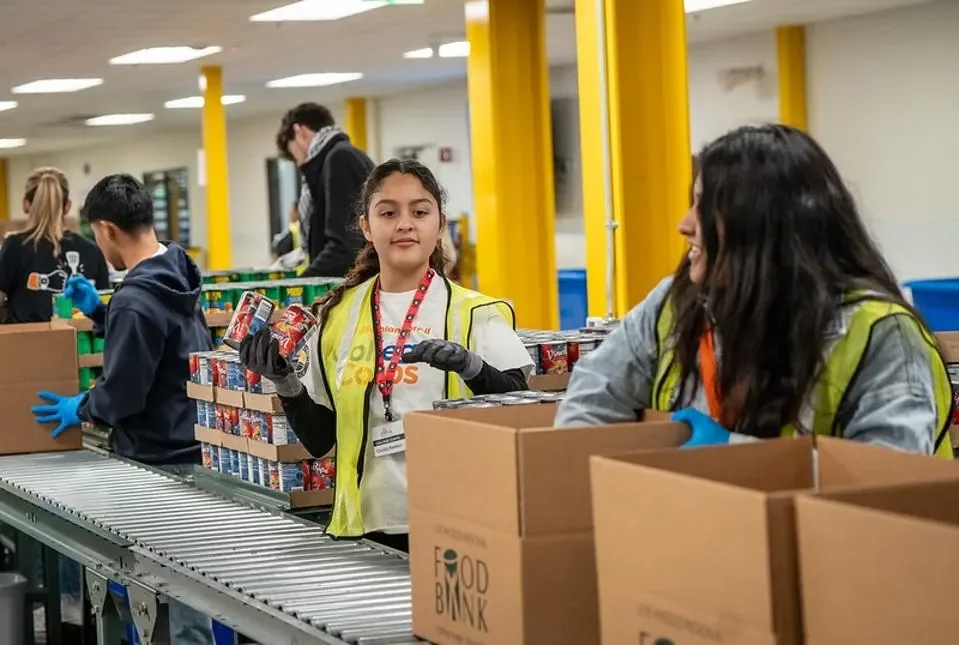
California is answering with work. Since 2019, more than 50,000 Californians have joined the California Service Corps, a family of paid programs where members tutor and mentor students, staff food banks, take on climate projects and help communities recover from disasters. Members earn a stipend or money for college, and they work in teams. Today the corps outnumbers the entire Peace Corps.
Josh Fryday, Director of the Governor’s Office of Service and Community Engagement | California Service Corps
A Local GI Bill
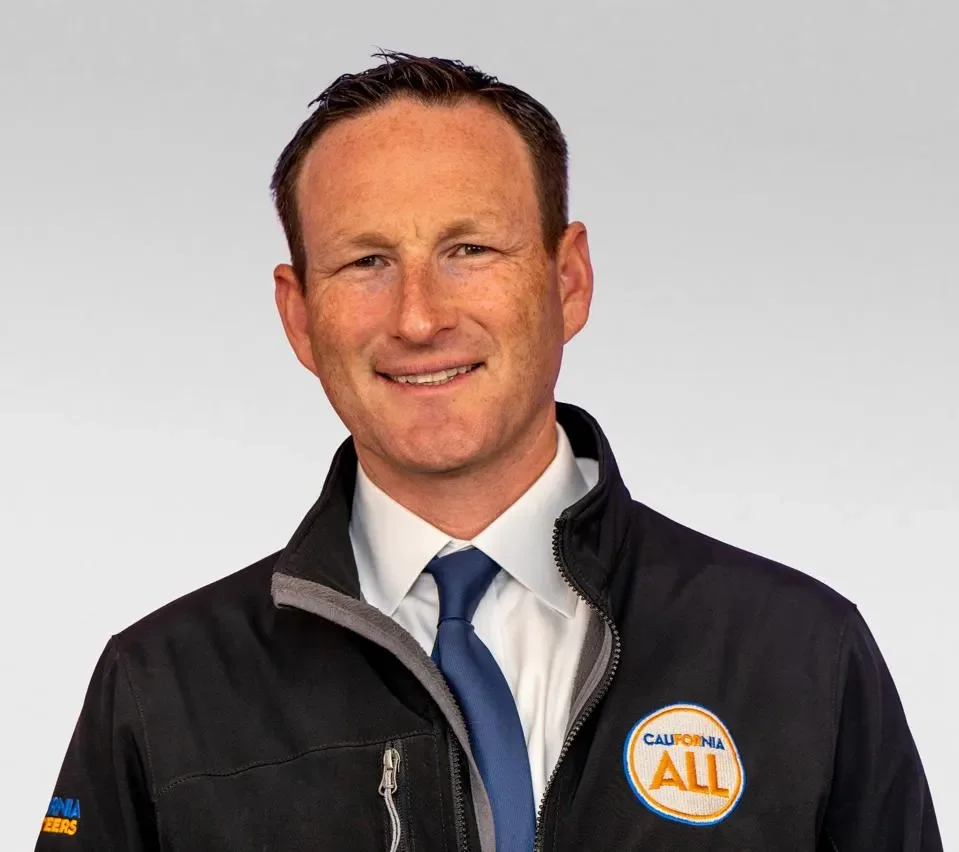
The official who heard both sentences is Josh Fryday, Director of the Governor’s Office of Service and Community Engagement, known as GO-Serve, and California’s Chief Service Officer.
After serving as a lawyer in the Navy, Fryday came home to Novato, north of San Francisco, and became its mayor. For years he had worked with General Stanley McChrystal and others on national service as a way to bring a divided country back together. He had also concluded that “Congress wasn’t really ever going to get their act together on this stuff.” So he started with his own town. Any Novato high school graduate admitted to nearby Dominican University who committed to two summers of service received what amounted to a full ride. He called it a local GI Bill.
Around the same time, Gavin Newsom was running for governor and worried about how polarized the country had become. He and Fryday started talking, and the idea of service grabbed Newsom. It echoed his political hero, Sargent Shriver, who launched the Peace Corps. Once elected, Newsom created a cabinet post for service and gave it to Fryday.
“It’s a deeply American idea,” Fryday says. “And we kind of stopped creating these opportunities for a generation.” The military kept that idea alive for decades, and Fryday wants to widen it. “It can’t just be military,” he says. “Military is not big enough.”
The Power Of Being Needed
Los Angeles Regional Food Bank | California Service Corps
Fryday traces the country’s anxiety, loneliness and political rage to a shared root. “When you feel like you don’t have a role, you feel like you’re not valued, you feel like you don’t matter, that creates intense anxiety, and it’s unhealthy,” he says.
The Navy showed him the other side. “All of a sudden, you matter, and you’re valued, and you feel like you have something to contribute, and you get to be part of something.” He wants every young Californian to have that experience, in a classroom or a food bank. His guiding belief is simple. “Everyone has something to offer and everyone needs to serve,” he says.
Service also opens people’s eyes to one another. During the pandemic, Fryday met a young member at a food bank who had grown up white and conservative in a rural community. “I grew up thinking that people who needed food, it was because something was wrong with them, or they were lazy,” the young man told him. Working beside the families he served changed his mind. “I just have a completely different viewpoint now.”
Fryday sees that kind of change as the foundation of a healthy democracy. “If we’re going to live in a democracy where we all take care of each other,” he says, “we need to figure out how to build that perspective and that empathy at a much greater scale.”
Pizza, T-Shirts And Belonging
For Fryday, belonging lives in the details. When California launched College Corps, it opened the program to Dreamers, the undocumented students excluded from federal programs like AmeriCorps. State funds covered their stipends. State rules, however, blocked spending on the extras every other member received, like bus rides to team retreats, pizza and T-shirts.
Fryday saw what those small things meant to a team. They “ended up being really important to making someone feel like they belong,” he says. His office found private donors to cover them, and the Dreamers joined the team on equal footing.
“It wasn’t the money,” Fryday says of the Dreamers. “By having the chance to serve and contribute, it sent the message to them that they mattered, that this was their community.”
This is the heart of his leadership. Governments measure hours served and meals delivered. Fryday also asks one more question. Does the person doing the work feel like they belong to it?
From One Town To The Whole State
The Novato experiment has grown into College Corps, now on more than 50 campuses and paying students up to $10,000 for 450 hours of service. In Riverside, one student tutored at an elementary school, then changed her degree to become a special education teacher.
Philanthropy often provides the first spark. The California Climate Action Corps, the country’s first state climate corps, began with 50 members and donor funding. “We had to rely on partnering with philanthropy and partnering with donors and with companies who were willing to take a leap of faith,” Fryday says. Its results won over the legislature, which now funds it at tens of millions of dollars a year. Twelve other states have followed, and it served as the model for the federal American Climate Corps.
Corps to Career, which connects former members with employers, followed the same path, moving from a privately funded pilot to state funding this year. “We used to call them soft skills, but really the hard skills of our economies,” Fryday says. Showing up, looking people in the eye, working as a team.
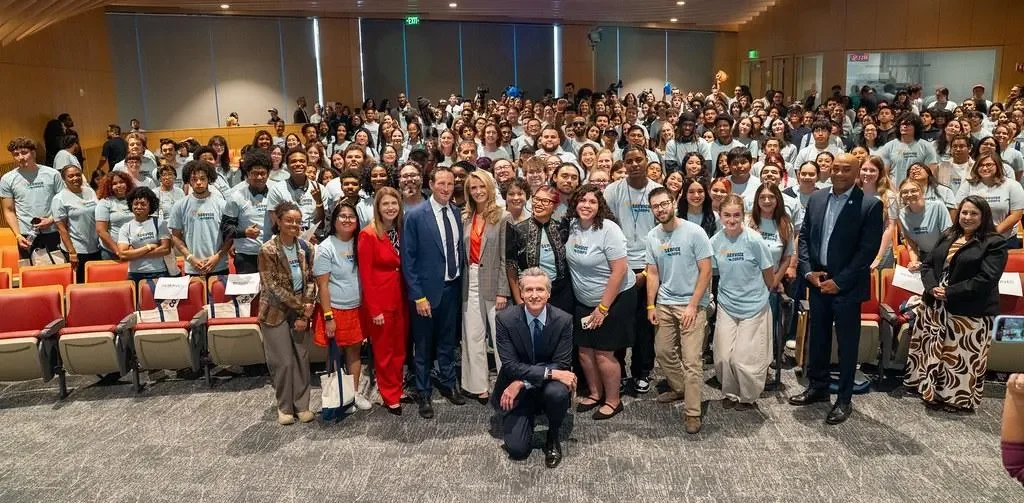
On October 7, 2026, more than 10,000 new members took their oath. As California prepares for what may be its strongest El Niño season on record, they stand ready to help communities through it.
Building Civic Infrastructure
Fryday describes his work in the language of public works. “We’re really rebuilding a new infrastructure for where society is right now, and it’s a civic infrastructure that is just sorely missing,” he says. A new alumni network will keep all 50,000 past members connected to careers and to each other, and more states keep borrowing California’s playbook.
He wants a country where “every Californian, every American is given the chance to serve.” By his own measure, the work is just getting started. “We feel like we’re just starting to scratch the surface,” he says.
The young man in Richmond got his chance to prove he had something to give. Fryday is building a state where millions more get theirs.
At Conspiracy of Love, we help changemakers tell their most powerful stories — stories that inspire action, build movements, and create lasting impact.
Find out more about our Values-Driven Storytelling and GPS to Purpose workshops, and how we can help you scale your impact.